
Civil society welcomes Govt decision to review banned NGOs
“The work has not been going on. Most were laid off; they cannot pay office rent, pay staff salaries, or do the work they are funded to do, which benefits the public. Everything has been at a standstill,” Sekaggya said.
(Front row) The internal affairs minister Prof Ephraim Kamuntu (4th L), state minister Juma Witonze Kisekka (3rd L), Denmark ambassador Signe Winding Albherg (4th R) and the NGO Bureau secretary Dr Stephen Okello (3rd R) with the representatives of NGOs after the stakeholders meeting at Kampala Serena Hotel on Tuesday, November 10, 2026. (Credit: Francis Emorut)
KAMPALA - Civil society leaders have welcomed the Government's decision to review restrictions imposed on 10 non-governmental organisations (NGOs), raising hopes that the affected organisations could resume operations after almost a year of suspension.
The Minister of Internal Affairs, Prof Ephraim Kamuntu, announced that the Government was reviewing the cases of the affected organisations individually, with those found suitable expected to resume activities within two weeks.
The announcement was made on Tuesday (November 10) during a quarterly dialogue between the Ministry of Internal Affairs and civil society leaders at Serena Hotel in Kampala.
Margaret Sekaggya, the executive director of Human Rights Centre Uganda (HRCU), which convened the meeting, welcomed the minister's commitment, saying the suspensions had severely affected the organisations' ability to operate and serve communities.
She said the restrictions had left some organisations unable to sustain their offices, pay employees or implement activities for which they had received funding.
“The work has not been going on. Most were laid off; they cannot pay office rent, pay staff salaries, or do the work they are funded to do, which benefits the public. Everything has been at a standstill,” Sekaggya said.
She described the minister's announcement as encouraging, particularly for organisations that had been waiting for an opportunity to resume their work.
“The minister has come out to say that those suspended NGOs are going to be considered and reviewed, and then they will see if they have the right to continue or if they have any problems with them,” she said.
However, the minister clarified that the review was not a blanket lifting of restrictions, but an individual assessment of each organisation's circumstances.
“I have reviewed the cases on a case-by-case basis; it is not a blanket exercise. Those whose cases have been reviewed and found suitable for lifting the restrictions will be allowed to resume their activities,” Kamuntu said.
The organisations identified for consideration include the National NGO Forum, Human Rights Network for Journalists-Uganda (HRNJ-U), Alliance for Election Finance Monitoring (ACFIM), Centre for Constitutional Governance (CCG) and National Coalition of Human Rights Defenders Uganda (NCHRD-U).
Others are the African Centre for Treatment and Rehabilitation of Torture Victims (ACTV), Network of Public Interest Lawyers, African Centre for Media Excellence (ACME) and Chapter Four Uganda listed among the affected organisations.
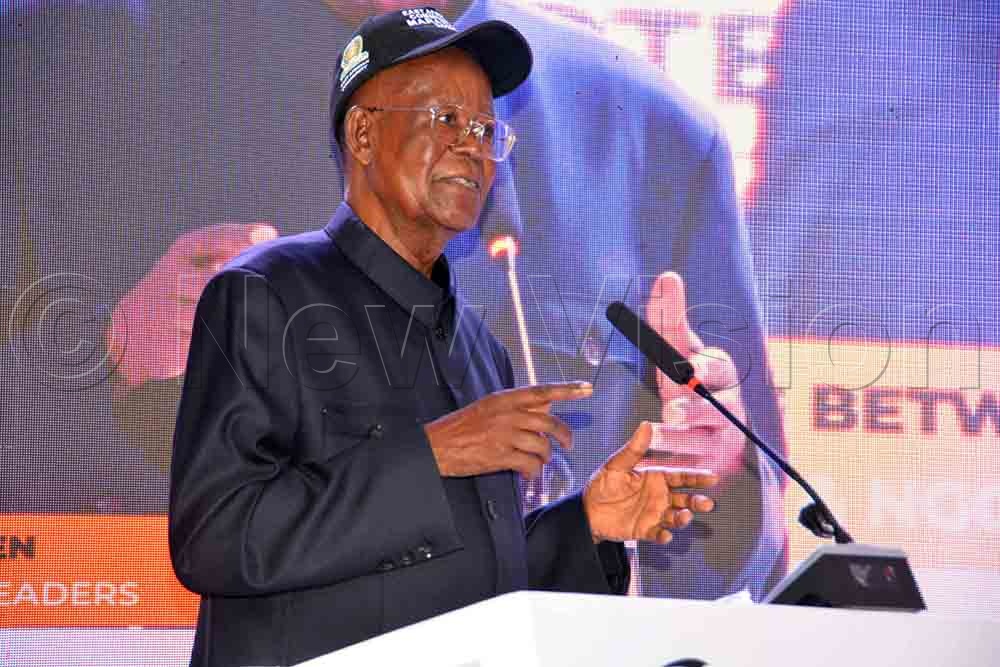
Internal affairs minister Prof Ephraim Kamuntu addressing participants during the NGOs and Government stakeholders meeting at Kampala Serena Hotel on Tuesday, November 10, 2026. (Credit: Francis Emorut)
NGOs seek improved government relations
Yona Wanjala, the executive director of Civic Advisory Hub, who represented civil society at the dialogue, said the decision presented an opportunity to rebuild trust between government and non-governmental organisations.
He urged government to recognise NGOs as development partners whose work complements public programmes instead of treating them as institutions requiring excessive policing.
Wanjala presented an issues paper consolidating concerns raised by civil society organisations between 2023 and 2025, highlighting challenges affecting their operating environment.
Among the issues raised were disruptions affecting organisations working in the oil and gas sector, some of which had reportedly been accused of advancing foreign interests.
According to Wanjala, such experiences have contributed to mistrust between NGOs and government institutions, making regular engagement necessary to address misunderstandings.
He said the quarterly dialogue provided an important opportunity for civil society to present concerns directly to the minister, receive government feedback and identify areas requiring joint action.
Government explains suspensions
Responding to concerns raised by civil society, Kamuntu said the restrictions had followed intelligence reports indicating that some organisations were allegedly conducting activities contrary to their mandates.
He said there had been misunderstandings involving some NGOs, but stressed that the concerns should not be generalised to the entire sector.
The minister acknowledged the contribution of civil society organisations to national development, particularly their role in reaching communities and addressing gaps in service delivery.
“Some NGOs have made immense contributions, and their impact is visible. They have filled strategic gaps in our development work and reached areas which government would have taken years to reach,” he said.
Kamuntu called for cooperation between government and NGOs, noting that both had responsibilities in advancing national development.
George William Lugalambi, the executive director of ACME, one of the organisations affected by the suspension, said the organisation was waiting for formal communication from the NGO Bureau before confirming its position.
The dialogue was hosted by Human Rights Centre Uganda in partnership with the National NGO Bureau and Uganda National NGO Forum under the theme, “Enhancing a Sustainable Relationship between Government and the Civil Society Sector in Uganda through Dialogue.”
It was attended by Internal Affairs State Minister Juma Witonze Kisekka, Permanent Secretary Lt Gen Joseph Musanyufu, Denmark's Ambassador to Uganda, Signe Winding Albjerg, Deputy Inspector General of Police James Ocaya and Electoral Commission head of public relations Julius Mucunguzi, among other government officials and civil society representatives.