
Buganda South, Karamoja record highest water insecurity
The report shows that 8.5% of households faced moderate-to-high water insecurity, while Karamoja recorded the highest overall level at 46%, followed by Buganda South at 38%.
Vincent Ssenono, UBOS Deputy Executive Director, addressing participants during the commemoration of African Statistics Day 2026 at the Uganda Bureau of Statistics on November 18, 2026. (Photo by Juliet Kasirye)
_______________
Nearly one in five Ugandan households experienced some level of water insecurity, with Karamoja and Buganda South recording the highest levels, a new report by the Uganda Bureau of Statistics (UBOS) has revealed.
The report shows that 8.5% of households faced moderate-to-high water insecurity, while Karamoja recorded the highest overall level at 46%, followed by Buganda South at 38%.
The findings were presented on November 18, 2026, during the Africa Statistics Day celebrations at Statistics House in Kampala by Dr Vincent Ssennono, the UBOS deputy executive director, on behalf of the bureau’s executive director, Dr Chris Mukiza.
The United Nations defines water insecurity as the lack of reliable, affordable and safe access to sufficient water for health, livelihoods, ecosystems and daily well-being.
Unlike physical water scarcity alone, water insecurity also encompasses poor water quality, unreliable supply, flood or drought risks, and weak governance or infrastructure.
According to the report, West Nile also emerged as a major hotspot, recording the country’s highest proportion of households experiencing high water insecurity at 9%. Another 9% of households in the sub-region faced moderate water insecurity.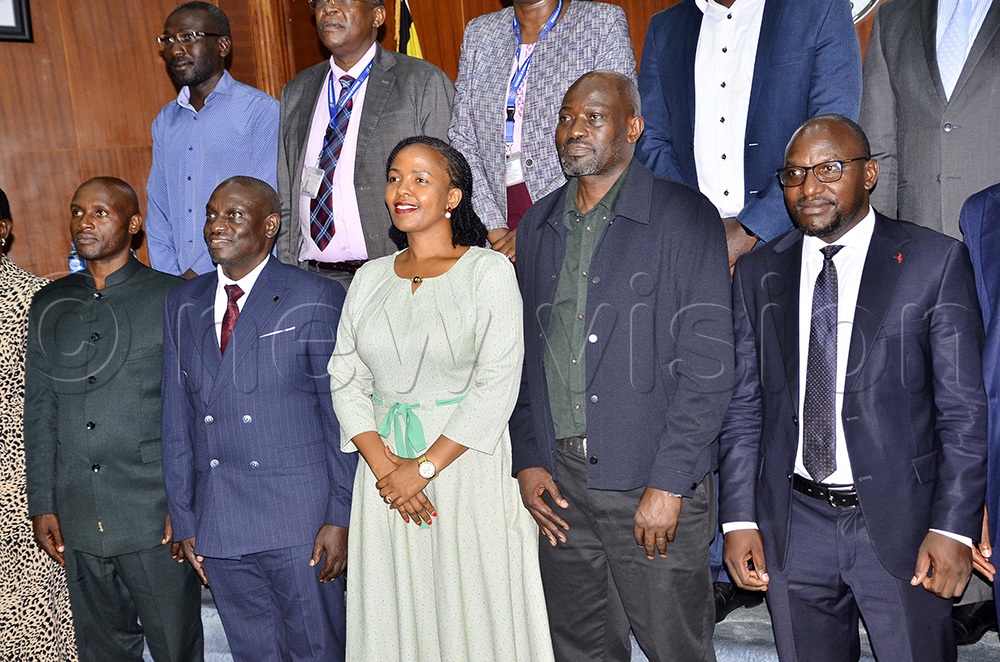
Stakeholders pose for a photo during the African Statistics Day 2026 at the Uganda Bureau of Statistics on 18th November 2026. (Photo by Juliet Kasirye)
The assessment was incorporated into the third round of the Uganda Harmonised Integrated Survey (UHIS) annual panel, which covered 5,310 households between November 2024 and December 2025.
Unlike conventional measures that focus on access to improved water sources, the HWISE assessment examines people’s actual experiences, including difficulties obtaining water, interruptions in supply and the effects of water shortages on household activities.
The survey found that 54% of households in Karamoja reported no-to-marginal water insecurity, while 27% experienced low insecurity and 17% moderate insecurity.
In Buganda South, 62% of households reported no-to-marginal insecurity, 25% low insecurity and 10% moderate insecurity.
Kampala and Teso also recorded notable levels of water stress. In Kampala, 17% of households experienced low water insecurity and 9% moderate insecurity. Teso recorded 13% low and 12% moderate insecurity.
Bunyoro and Tooro had the lowest overall levels of water insecurity, at 5% and 6% respectively.
Water shortages disrupt household routines
Worry and anger over water availability were among the most frequently reported experiences, affecting 21% of households.
Another 18% reported interruptions or limitations in their main water supply.
Other difficulties included being unable to wash clothes, changing daily schedules because of water shortages, altering meals and going without washing hands or bathing.
The findings point to challenges that may not be captured by statistics showing how many households use improved water sources.
UBOS said the HWISE tool provides a way of measuring water insecurity from the perspective of households, helping policymakers understand not only whether people have access to water but also whether that access is reliable and sufficient for their needs.
The scale is recommended by the WHO/UNICEF Joint Monitoring Programme and draws on the approach used by the Food Insecurity Experience Scale to measure hunger and food insecurity.
UBOS said the findings would help the Government identify communities facing the greatest difficulties, direct investments to affected areas and assess the impact of water interventions.
The assessment is also expected to strengthen monitoring of progress towards Sustainable Development Goal 6, which seeks to ensure access to water and sanitation for all.