
Why you should be mindful of your child’s eye health
According to new data released by the International Agency for the Prevention of Blindness (IAPB), a non-government organisation, identifying and correcting vision problems early in childhood could have significant consequences not only for children’s education, but also for their future economic opportunities.
Why you should be mindful of your child’s eye health
_____________________
On September 30, 2020, Haspha Nassolo gave birth to her fourth child, a girl she named Shanaz Nsubuga. For Nassolo, this was a joyful blessing, a new life to nurture after two daughters and two sons. But the happiness did not last long.
“My daughter started having recurrent eye problems. At first, I thought it was a minor infection, but with time, things got worse,” Nassolo recalls.
Little Nsubuga suffered from a congenital cataract, a condition that clouded her eyesight and required multiple surgeries before her first birthday. Her early months were marked by hospital visits, sleepless nights, and endless prayers.
“We spent most of our time looking for the right doctors. Everyone kept referring us to Mengo Hospital, and that’s where the diagnosis was made. She underwent more than eight surgeries at a cost of more than sh20m, but in the end, she lost her sight. Even after losing her sight, she is still on medication. We spent so much money that we had to appeal to well-wishers and philanthropists for support,” she says.
When Nsubuga turned four, her parents faced a new challenge, of education. Finding a school suitable for a visually impaired child was not easy. After searching through several primary schools in Kampala, they discovered that the nearest appropriate one was in Entebbe. However, the family lives in Matugga, Wakiso district, nearly 40km away.
“I couldn’t take her to boarding school because she is still young and needed her mother’s care. So, I decided to take her to school every day,” Nassolo explains.
Every morning, she would wake up at 4:00am, to prepare Nsubuga, pack her breakfast, and by 5:00am, they would be out of the house. They take a taxi from Matugga to Bwaise, another one to Busega, and then one more to Entebbe Municipality via the Entebbe Expressway. From there, a bodaboda takes them to school.
“I reach Entebbe around 7:30am, after dropping her off, I rush to my workplace in Lubowa. In the evening, I leave at 5:00pm, but because of traffic, I reach the school close to 7:00pm”, she says, her voice heavy with fatigue.
The return journey is even harder. By the time they get to Matugga, it’s often past 9:00pm. “Sometimes I find my daughter sitting at the school gate alone, waiting for me. It breaks my heart, but I have no choice,” Nassolo says.
As the world celebrated World Sight Day on October 8, eye healthcare professionals called for more investment in the sector to enable Ugandans, especially children, to reach their full potential.
In an interview with the New Vision, Sylvester Kasozi, the country director of Light for the World, an organisation that supports persons with disabilities, appealed to the Government to treat eye health as an essential part of the country’s healthcare and education systems rather than an afterthought.
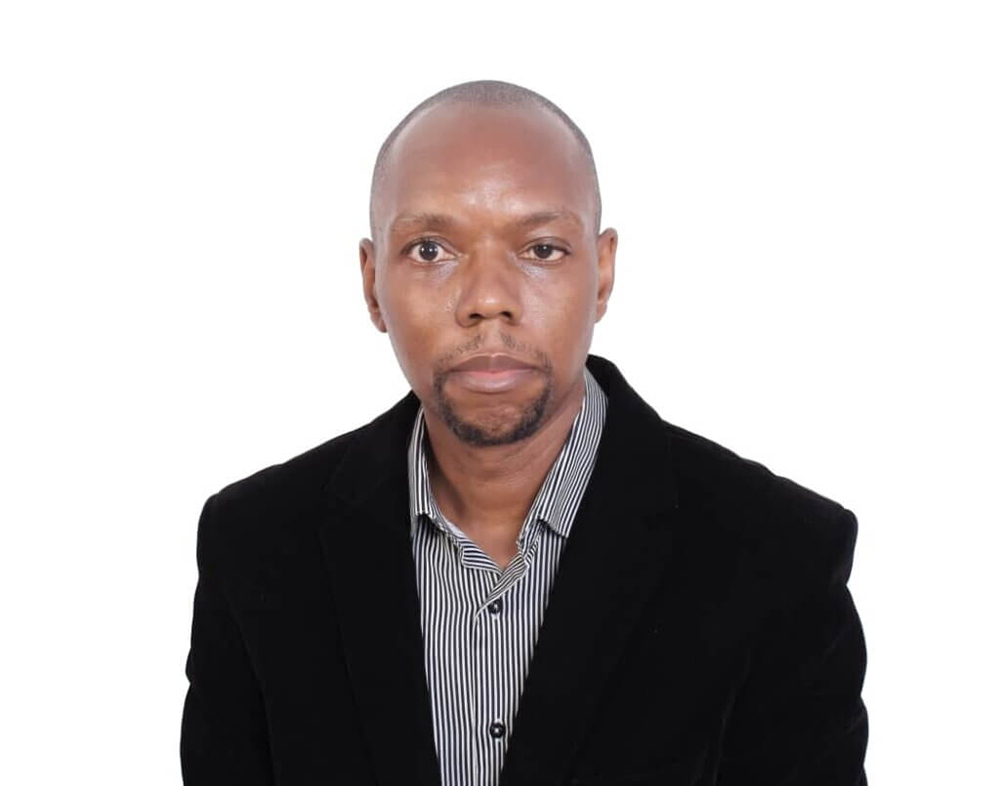
ylvester Kasozi, the country director of Light for the World, an organisation that supports persons with disabilities. (Courtesy)
“Eye health should be prioritised because if a child cannot see, they cannot learn effectively. We need to invest in prevention, early detection and treatment so that no child is left behind simply because they cannot see.”
He says this financial year, the ministry’s budget for eye health reduced from sh5.8b to sh5.2b. The unfortunate reality, he said, is that while the budget continues to decline, there is no earmarked budget specifically for eye health.
“The eye health budget is included in the Uganda Minimum Health Care Package, which is channelled through general prevention and treatment of non-communicable diseases. This means that it has no specific budget, and if any, it is much less than one per cent of the health budget.”
Kasozi also said the country faces a severe shortage of eye care professionals.
“We only have 60 ophthalmologists in Uganda serving a population of more than 40 million Ugandans, which means that one ophthalmologist has to serve about 7,000,000 Ugandans.”
These specialists operate in both private and public hospitals, which, Kasozi said; helps explain why eye health services can be expensive.
“Just an operation for cataracts in one eye can cost as much as sh2m for an operation that takes not more than two minutes.”
He says because of little investment by the Government, private players have flooded the market, making eye care services extremely expensive.
“We have reached a point where wearing glasses is perceived as an expensive or luxurious undertaking, yet poor vision is a serious health problem.
Children’s sight problems in school
Whereas children who are completely visually impaired, like Nsubuga, are easy to spot and help, their colleagues who suffer from mild eye problems usually suffer.
In a school setting, teachers may not realise that a child has an eye problem, creating challenges for both the child and the teacher.
According to new data released by the International Agency for the Prevention of Blindness (IAPB), a non-government organisation, identifying and correcting vision problems early in childhood could have significant consequences not only for children’s education, but also for their future economic opportunities.
According to the IAPB, uncorrected refractive errors are the leading cause of vision impairment among children and contribute to an estimated 19,183 years of lost schooling in Uganda every year
Uganda is among 23 countries identified by the IAPB where correcting childhood vision problems could potentially result in lifetime earnings more than doubling.
Eye health-education link
Peter Holland, the chief executive officer of the IAPB, says: “A simple eye test and glasses could be one of the best investments a parent can make for their child’s future.”
Holland says the Government should subsidise eye care for people who may not be able to afford it.
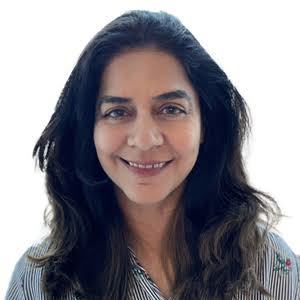
Sumrana Yasmin, Technical Director for Inclusive Health at Sight savers. (Courtesy)
Sumrana Yasmin, Technical Director for Inclusive Health at Sight savers, agrees with Holland, insisting that all children should undergo eye checks by qualified medical personell before they go to school. He says improving children's access to eye care could help them reach their full potential.
“Every child deserves the chance to see, learn and thrive, and supporting child eye care is a smart decision,” she says.
Yasmin adds that investing in eye tests and glasses goes beyond preventing avoidable vision loss, arguing that it can also help unlock children's potential and ensure they are not left behind.
He says that early identification and treatment of eye problems could help children learn with greater confidence and eventually contribute more fully to their communities.
In an effort to make eye care affordable globally, stakeholders will hold the first Global Summit for Eye Health, scheduled for November 2 in Antigua and Barbuda, where heads of state and other partners are expected to make commitments aimed at improving access to eye-care services around the world.