
Going the extra mile for families living with sickle cell disease
Mulago National Referral Hospital’s Sickle Cell Clinic receives about 200 patients a day from across Uganda, far more than the facility was originally designed to accommodate.
Hon. David Bahati, Minister of State for Trade, Industry and Cooperatives, speaking at dfcu bank’s Hope in Motion walk to raise awareness about sickle cell. (Courtesy photo)
________________
Sickle cell disease places a heavy burden on Ugandan families and the health system. Uganda ranks among the countries most affected by the inherited condition.
Between 13 and 15 per cent of Ugandans carry the sickle cell trait, equivalent to an estimated six to eight million people, and about 20,000 to 25,000 babies are born with the disease each year. Without timely care, many affected children do not survive beyond the age of five.
For those who live with the disease, care extends far beyond diagnosis. Sickle-shaped red blood cells can block blood flow and cause severe pain, anaemia, infections and damage to vital organs.
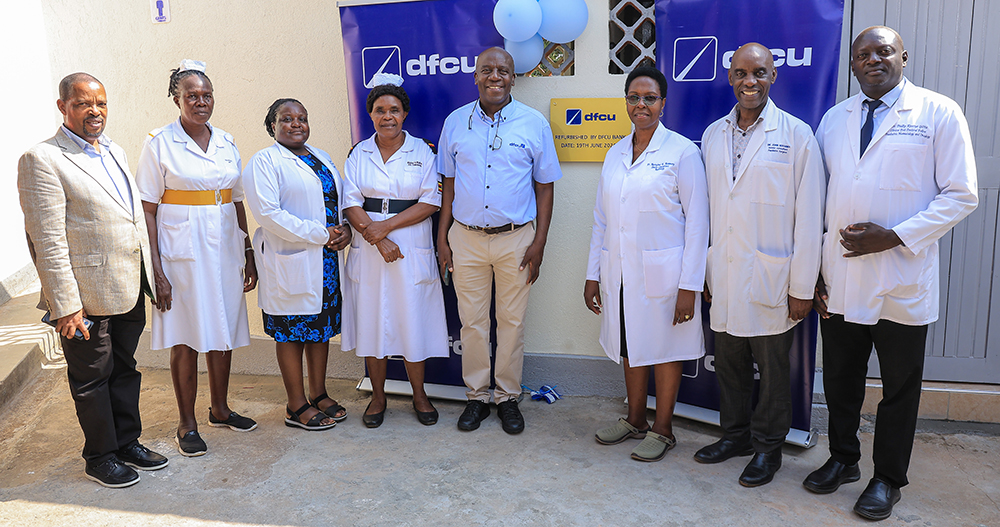
dfcu Bank Chief Executive Officer Charles Mudiwa and representatives from Mulago National Referral Hospital during the handover of the refurbished facility at the hospital’s Sickle Cell Clinic.
Children may miss school during repeated pain crises, while parents and caregivers juggle hospital visits, treatment costs and time away from work. Regular access to medical care, blood products, safe sanitation and reliable information can determine both the quality of a patient's daily life and the course of the illness.
dfcu Bank employees encountered these conditions in 2024 when they visited the clinic and made donations through the 60 Acts of Kindness campaign marking the Bank’s 60th anniversary. Their interaction with patients, caregivers and health workers provided a closer understanding of the demands of managing a lifelong condition and informed the Bank’s subsequent work on sickle cell awareness, screening and patient care.
On 10 May 2026, hundreds of people joined the Hope in Motion Walk for Sickle Cell in Kampala. Organised by dfcu Bank with Mulago National Referral Hospital and Mengo Hospital, the walk brought together people living with sickle cell disease, caregivers, health professionals, volunteers, corporate leaders and government representatives. Participants called for wider screening, more blood donation and stronger support for families affected by the disease.
The event also mobilised support for the refurbishment of facilities at the Mulago Sickle Cell Clinic. On 20 June 2026, dfcu handed over upgraded sanitation facilities and improved patient waiting areas.
The works provided modern washrooms and better spaces for patients and caregivers at a clinic where hygiene and hydration are especially important because people living with sickle cell disease are more vulnerable to infections and other complications.
The clinic upgrade addressed an everyday part of treatment that can easily be overlooked. Patients may spend hours waiting for consultations, tests, treatment or transfusions, often accompanied by relatives who provide practical care throughout the visit. Clean washrooms and adequate waiting space affect hygiene, privacy and dignity during that time.
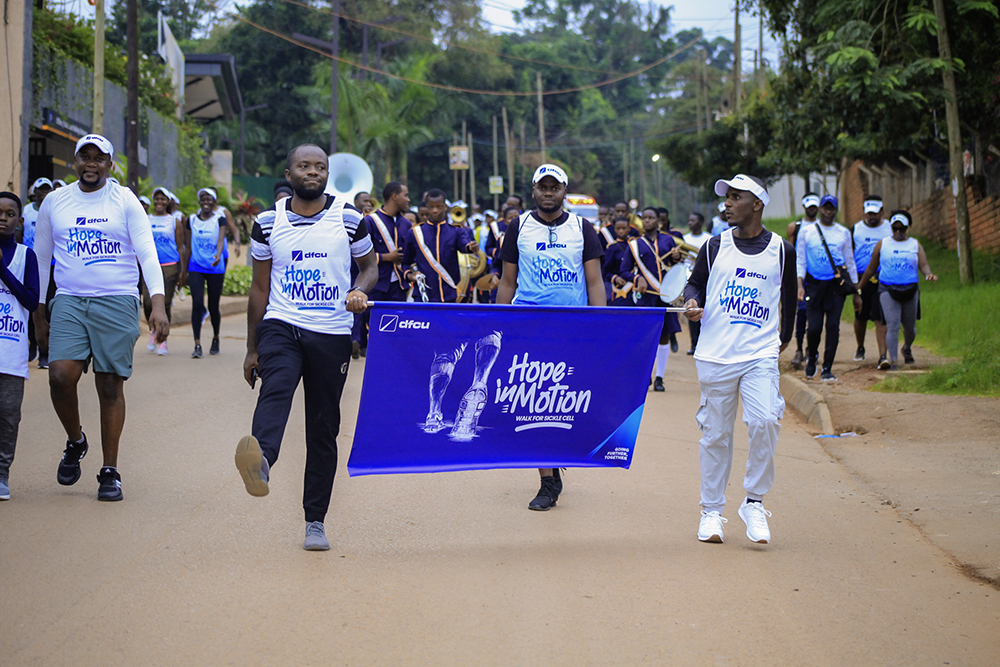
Participants in dfcu Bank’s Hope in Motion initiative walk to raise awareness about sickle cell disease.
Screening has remained central to the programme. At dfcu's Head Office, 146 employees and members of the public were tested; 21 were identified as carriers of the sickle cell trait and received counselling and guidance. The exercise also showed why testing matters in a country where many people carry the trait without knowing their status.
In August 2026, more than 400 students at the Islamic University in Uganda's Kampala Campus received free sickle cell screening and health services through an outreach organised by dfcu Bank and Rotary Uganda. Many learnt their status for the first time. Medical consultations, health education, nutritional counselling, mental health awareness and referrals were also provided.
The sickle cell work is part of dfcu's three-year, sh1 billion health partnership with Rotary Uganda. The partnership has reached more than 30,000 people through screening, treatment, referrals and health education in more than 30 communities. It has also supported 22 paediatric heart surgeries for children from Western Uganda.
For families living with sickle cell disease, support often comes through small but important interventions: access to information, a screening that provides answers, a blood donor who steps forward, or a clinic that offers greater comfort and dignity during treatment.
Over the past two years, partnerships involving Mulago National Referral Hospital, Mengo Hospital, Rotary Uganda and dfcu have contributed to each of those areas, helping expand awareness, strengthen support systems and improve conditions for patients living with the disease.
The journey from a staff visit during the 60 Acts of Kindness campaign to clinic improvements, community screening programmes and the Hope in Motion Walk reflects the same idea captured in dfcu's purpose of Transforming Lives and Businesses in Uganda.
It is a reminder that meaningful impact is often created through partnerships, sustained commitment and a willingness to engage with challenges that sit far beyond the traditional boundaries of banking.