
UVRI to launch East Africa’s centre of excellence in virology
“UVRI used to be the East African Virus Research Institute until the break of the East African Community, but now we have been selected to be the East African Centre of Excellence in Virology,” Kaleebu said.
The director general ministry of health Prof Dr Charlse Olaro (4th L) launching the month of the 90 years celebrations of Uganda Virus Research Instute at ministry of health headquarters in Kampala on Thursday 26/5/2026, with other officials 2nd right the director of Uganda Virus Research Institue Prof. Pontiano Kaleebu. (Credit: Ponsiano Nsimbi)
KAMPALA - Uganda Virus Research Institute (UVRI) is set to be launched as the East African Centre of Excellence in Virology to strengthen regional disease surveillance, outbreak response and virus research across East Africa.
The official launch of the regional centre will take place on July 22 during the institute’s main anniversary celebrations in Entebbe, where President Yoweri Museveni and World Health Organisation African leaders are expected to grace the occasion.
The announcement was made by UVRI Director Prof Pontiano Kaleebu during the launch of the institute’s 90th anniversary celebrations held at the Ministry of Health on May 26.
Kaleebu said the East African Community had selected UVRI as the regional centre of excellence in virology because of its long history and contribution to virus research globally.
“UVRI used to be the East African Virus Research Institute until the break of the East African Community, but now we have been selected to be the East African Centre of Excellence in Virology,” Kaleebu said.
90 years of scientific breakthroughs
Founded in 1936 as the Yellow Fever Research Institute, UVRI later became the East African Virus Research Institute before assuming its current name in 1977.
Kaleebu described the institute as one of the world’s longest-running virus research institutions and among those that have discovered the highest number of viruses globally.
He said over 40 viruses, including the globally known Zika and West Nile viruses, were first isolated or identified through work conducted at the institute.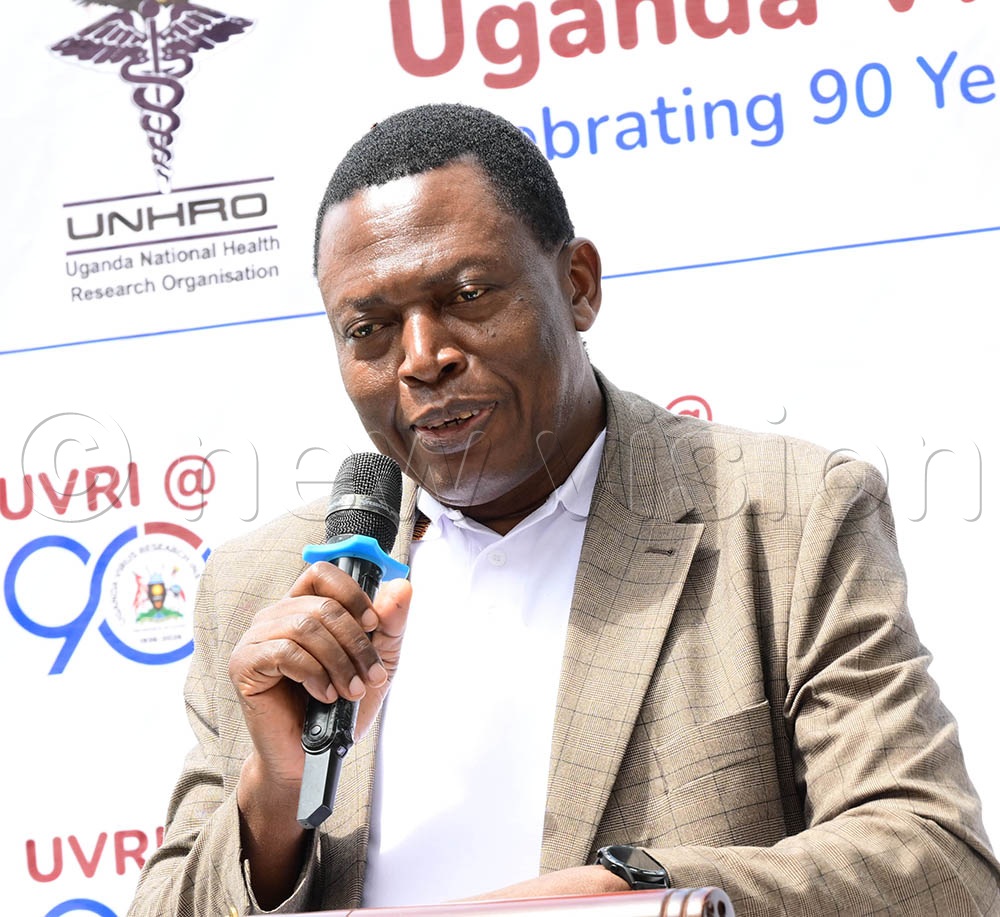
Kaleebu described the institute as one of the world’s longest-running virus research institutions and among those that have discovered the highest number of viruses globally. (Credit: Ponsiano Nsimbi)
“Many viruses have been discovered at UVRI. Some are well known, like the Zika virus and West Nile virus, while others have local names. These viruses are important because you never know which one may become a future public health threat,” Kaleebu said.
He added that UVRI has played a major role in HIV research, emerging infections and training scientists at the master's and PhD levels who are now supporting outbreak response and virus research across the region.
“There’s a lot that has been done at the institute in the last 90 years that we need to celebrate, like the discoveries, the work on emerging infections, the work we have done in HIV, vaccines, treatment and training people who can really understand and confront viruses,” he said.
Expanding regional outbreak response
The virologist noted that the institute’s growing regional role comes at a time East Africa continues to face repeated outbreaks of Ebola, Marburg and other emerging diseases.
He revealed that UVRI was already discussing deployment of mobile laboratories to the Democratic Republic of Congo (DRC) following the ongoing Ebola outbreak there.
“In fact, even now, as we have the Ebola outbreak, we are discussing sending mobile labs to DRC. We are also discussing using our labs at the border,” Kaleebu said.
During the July celebrations, UVRI will also launch a new World Health Organisation-accredited polio sequencing laboratory aimed at supporting global efforts to eradicate polio.
Kaleebu said the institute had worked on polio research and vaccines since the 1960s and had now been selected as a reference laboratory for sequencing vaccine-derived polio strains.
“We think we are towards the end of polio, and we hope the lab will contribute to eradication efforts,” he said.
Push for African-led science
Makerere University Lung Institute Director and Chief Research Scientist Dr Bruce Kirenga said UVRI’s survival and scientific contribution over the last 90 years demonstrated the importance of investing in African-led science and research institutions.
Kirenga said Uganda and Africa needed to move beyond simply identifying viruses and begin developing homegrown medical solutions, including vaccines, diagnostics and therapeutics.
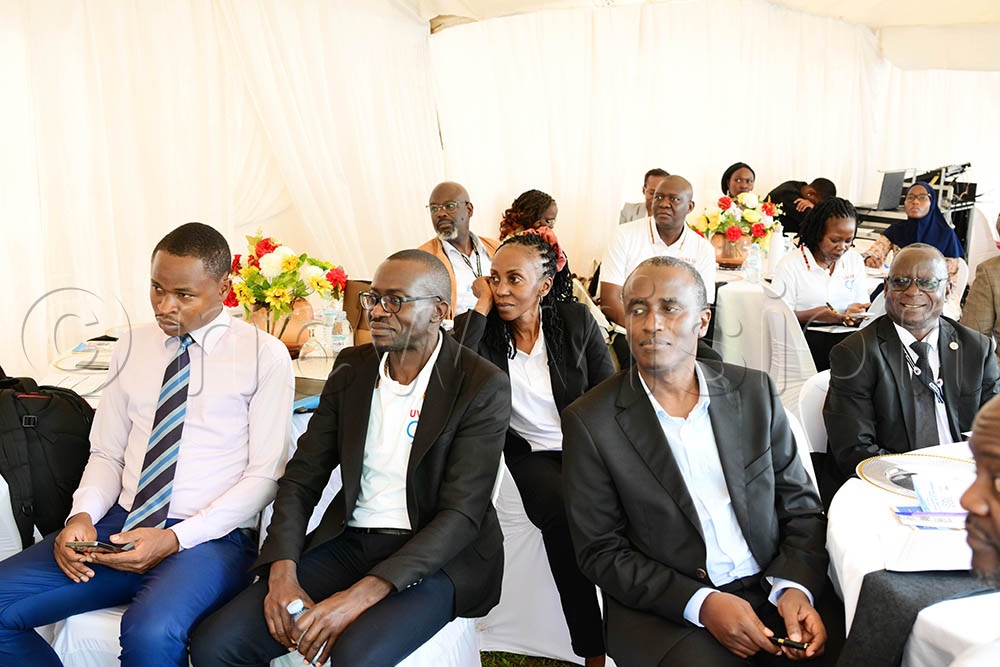
Some of the officials who attended the launch of the one month events of Uganda Virus Research institute at ministry of health headhunters in Kampala. (Credit: Ponsiano Nsimbi)
“At this point, the issue of science sovereignty is very important for Africans. Whatever little effort we are doing in our small institutes and laboratories can be done in any other lab, and they send us the results and everything. But we must be seeing ourselves,” Kirenga said, adding, “We need to go beyond describing these pathogens but also be able to create local medical solutions because these solutions will reach our people faster.”
Kirenga revealed that Ugandan scientists were already collaborating with UVRI on promising Ebola-related innovations ranging from diagnostics to vaccines, although he declined to disclose details.
He welcomed ongoing discussions for UVRI to become a degree-awarding institution under Makerere University, saying the move would strengthen scientific training and research capacity in Uganda.
Ebola context
The announcement comes at a time Uganda is battling the Ebola Bundibugyo virus disease that broke out in the neighbouring DR Congo.
The Director General of Health Services, Prof Charles Olaro, said the country had registered seven cumulative Ebola cases, most of them linked to the index case that crossed from DR Congo.
“So far, the majority of contacts whom we have taken into isolation have been health workers,” Olaro said.
He, however, said Uganda’s surveillance systems remain active, and urged the public to report symptoms early to allow quick testing and isolation.