
Ebola: Uganda and development partners discuss unified response plan
“Uganda will never export Ebola; that is our commitment and pledge. We must support our neighbours in putting up systems,” Atwine said.
The meeting, led by Ministry of Health Permanent Secretary Dr Diana Atwine, focused on strengthening coordination between government and international partners as Uganda intensifies surveillance and emergency response measures after confirming imported Ebola cases from eastern DRC.
KAMPALA - Uganda has called for a unified international response framework to support the country’s Ebola containment efforts, as the government warned that fragmented interventions could weaken regional efforts to stop the spread of the deadly virus.
The call was made on May 22 in Kampala during a high-level meeting convened by the Ministry of Health and attended by: ambassadors, heads of missions, United Nations agencies and development partners in Kampala following the recent Ebola outbreak linked to the Democratic Republic of Congo (DRC).
The meeting, led by Ministry of Health Permanent Secretary Dr Diana Atwine, focused on strengthening coordination between government and international partners as Uganda intensifies surveillance and emergency response measures after confirming imported Ebola cases from eastern DRC.
Dr Atwine urged donors and partners to align behind a single national response structure built around one plan, one budget, one monitoring and evaluation framework and one communication strategy.
She said Uganda wanted a coordinated response that avoids duplication while ensuring transparency and accountability among all actors involved in the outbreak response.
“We need mutual accountability, transparency and clarity from government,” Dr Atwine told the meeting.
The Permanent Secretary said Uganda remained committed to preventing local transmission and strengthening regional cooperation to contain the outbreak before it escalates further across borders.
“Uganda will never export Ebola; that is our commitment and pledge. We must support our neighbours in putting up systems,” Atwine said.
She added that Uganda was ready to share its technical expertise and outbreak management experience with the DRC to help reduce transmission and limit further loss of life.
Uganda has previously contained multiple Ebola outbreaks and has built one of the region’s strongest emergency surveillance and response systems over the years.
According to the Ministry of Health, Uganda currently has no local transmission despite confirming imported Ebola Bundibugyo strain cases involving Congolese nationals who entered the country seeking treatment.
The government has since intensified contact tracing, screening at border points, laboratory surveillance and public health sensitisation campaigns across high-risk districts.
Diplomatic missions and development partners attending the meeting commended the Ugandan government for what they described as transparency and timely communication during the outbreak response.
Participants agreed to regularly update their respective headquarters using official information provided by the government in order to reduce misinformation and ensure consistency in international reporting about Uganda’s Ebola situation.
The meeting also emphasised the importance of maintaining strong cross-border collaboration between Uganda and the DRC because of extensive population movement between the two countries.
“Vigilance must be maintained throughout the outbreak and until Ebola is fully contained in Uganda and DRC,” a joint outcome statement from the meeting noted.
The World Health Organisation Representative in Uganda, Dr Kasonde Mwinga, praised Uganda’s leadership and experience in handling Ebola outbreaks, describing the country’s response systems as resilient and people-centred.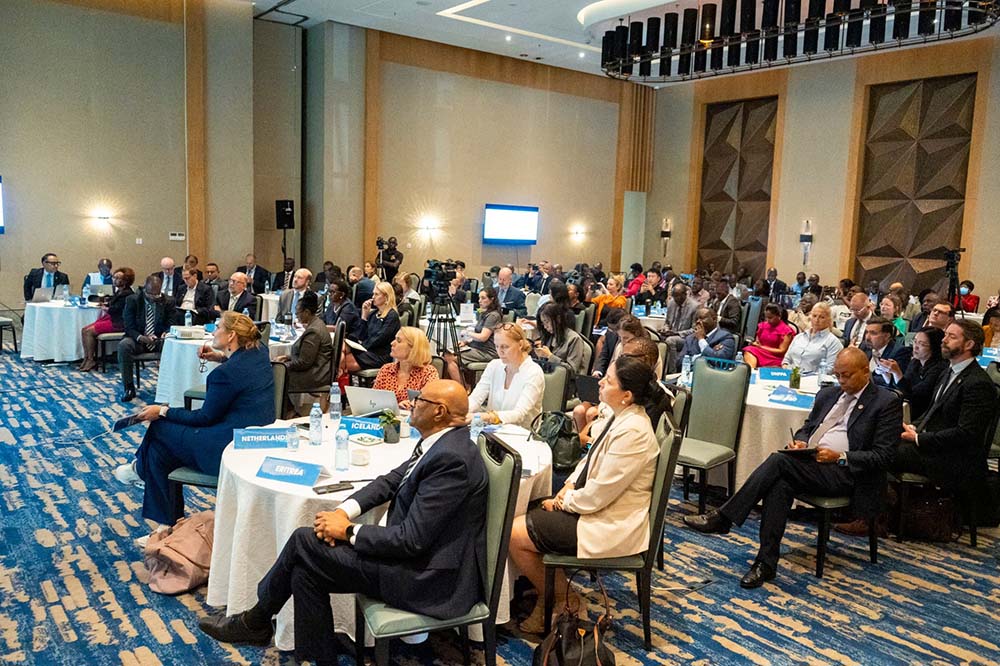
The meeting also emphasised the importance of maintaining strong cross-border collaboration between Uganda and the DRC because of extensive population movement between the two countries.
She said the World Health Organisation’s declaration of the outbreak as a public health emergency of international concern underscored the need for stronger international coordination and urgent action.
“Uganda’s resilience, experience and people-centred approach remain vital strengths in containing the outbreak,” Dr Mwinga said during a discussion at Four Points Hotel.
She identified surveillance, contact tracing, infection prevention, laboratory expansion and cross-border coordination as some of the key priorities needed to stop further spread of the disease.
Dr Mwinga also stressed the importance of building public trust during outbreaks through timely and accurate communication.
“Equally critical is building and sustaining community trust, ensuring timely, accurate information, active participation and early care-seeking,” she said.
She called on the diplomatic community and development partners to provide flexible and timely support to sustain Uganda’s outbreak response operations.
“This is not Uganda’s challenge alone; it is a shared responsibility. Together, with urgency, alignment and solidarity, we can contain the outbreak, prevent further spread and safeguard health security across the region and beyond,” she said.
The latest outbreak has already triggered several preventive measures in Uganda, including intensified screening at border points, temporary suspension of some public gatherings in border districts and strict Ebola prevention guidelines for schools, transport services and places of worship.
Atwine said Uganda remains on high alert because of the worsening outbreak situation in eastern DRC, where hundreds of suspected cases and more than 130 deaths have already been reported.
As of May 22, DRC has almost 750 suspected cases and 177 suspected deaths. No Ugandan has gotten Ebola, and the two imported cases are no more after one died and the other is under treatment and tested positive in the Mulago Isolation Centre.