
AFCON 2027: MPs question readiness of Hoima, Lira referral hospitals
The legislators raised alarm over the state of key regional referral hospitals designated to serve as primary medical facilities during the continental tournament, warning that critical gaps could undermine the country’s readiness to host the prestigious event.
Parliamentary Committee on Health chairperson Joseph Ruyonga, during the session. (Credit: Miriam Namutebi)
________________
With just over a year remaining until the 2027 Africa Cup of Nations (AFCON), Members of Parliament have raised concerns over the country’s preparedness, particularly in the health sector.
The legislators raised alarm over the state of key regional referral hospitals designated to serve as primary medical facilities during the continental tournament, warning that critical gaps could undermine the country’s readiness to host the prestigious event.
While interacting with the management of regional referral hospitals, including Hoima, Lira and Mubende, the MPs on the Parliamentary Committee on Health said they had found a troubling situation at the facilities.
They cited deteriorating infrastructure, insufficient medical equipment, staffing shortages and persistent funding constraints as major obstacles that could compromise emergency response capacity during AFCON.
Committee chairperson Joseph Ruyonga also raised concerns over alleged malpractice within Hoima Regional Referral Hospital.
He stated, “I will start with Hoima. You never commented about anything regarding extortion, and yet yesterday someone complained that they had a patient who needed to be operated on, and someone in the hospital was asking for money. The patient was worked on the following day but passed on after three hours.”
On his part, deputy chairperson of the committee, Samuel Acuti Opio, emphasised the urgency of aligning healthcare preparedness with ongoing infrastructure developments tied to AFCON.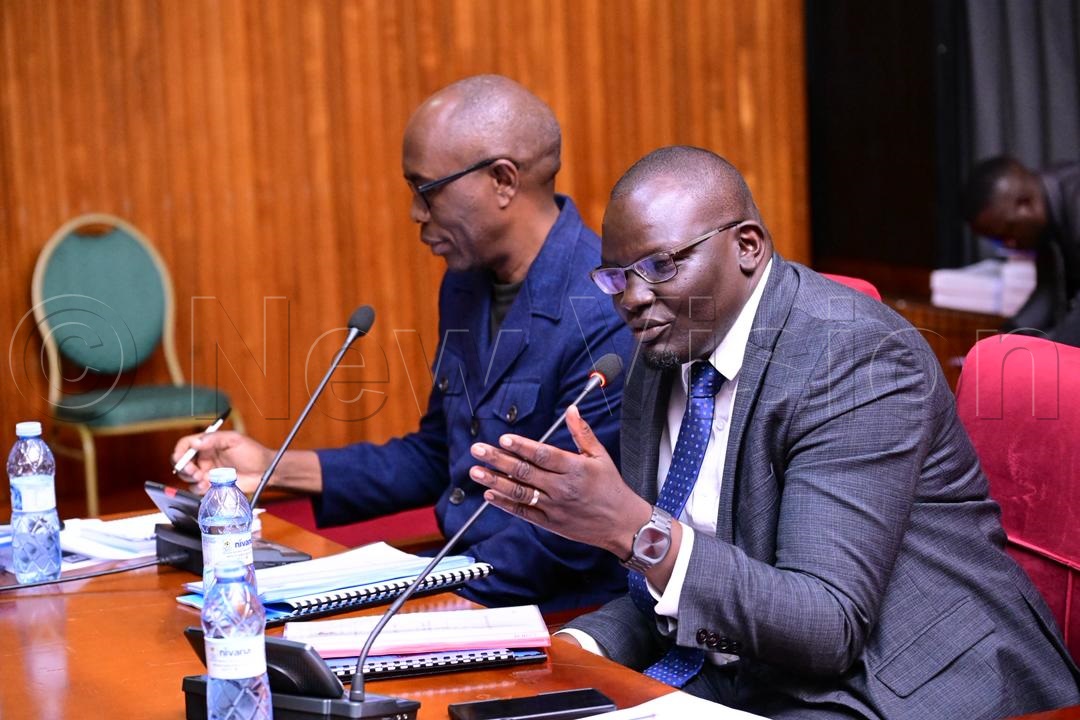
Deputy Parliamentary Committee on Health chairperson of the committee, Samuel Acuti Opio. (Credit: Miriam Namutebi)
He pointed out that while construction of key facilities such as stadiums and airports is progressing, the medical aspect remains neglected.
“My first issue is on the AFCON project because Hoima and Lira are some of the facilities that are supposed to host the event, and the construction of Akii-Bua Stadium and Hoima International Airport is ongoing. But I am mainly concerned about the medical aspect itself,” he said.
He added, “When I look at Hoima Regional Referral Hospital, your asset register shows you have just two ambulances, and you have indicated that the second one has worn-out tyres, meaning you effectively have only one operational. So, for an emergency in a stadium with about 20,000 fans, do you people have the capacity to provide medical services to support AFCON?” he asked.
He further questioned the hospital’s diagnostic readiness, noting, “Your report on the X-ray machine shows zero per cent, and yet we know AFCON is a sport where injuries occur. Also, blood transfusion is about 41 per cent, so we want to know if these two regional referral hospitals are ready.”
Opio also expressed concern over the imbalance in investment priorities.
“We have seen heavy investments in the stadium and hotels, and I have not heard these hospitals talking about investments for AFCON. Hoima Hospital has talked about sh7.2 billion for renovations, and I don’t know if Lira Hospital has sufficient resources to handle services in case of emergencies and all the other related services that will be required. What are the gaps that need to be filled for you to be ready?”
Other legislators echoed similar concerns, widening the discussion beyond infrastructure to systemic challenges affecting service delivery nationwide. John Paul Ninkusiima highlighted persistent power outages and medicine shortages.
“Mubende and Hoima are facing power outage challenges. Then about National Medical Stores, every hospital is talking about drug stockouts, because some facilities are saying that some cycles are not supplied with medicines and other cycles are combined. What do you say about that?” he said.
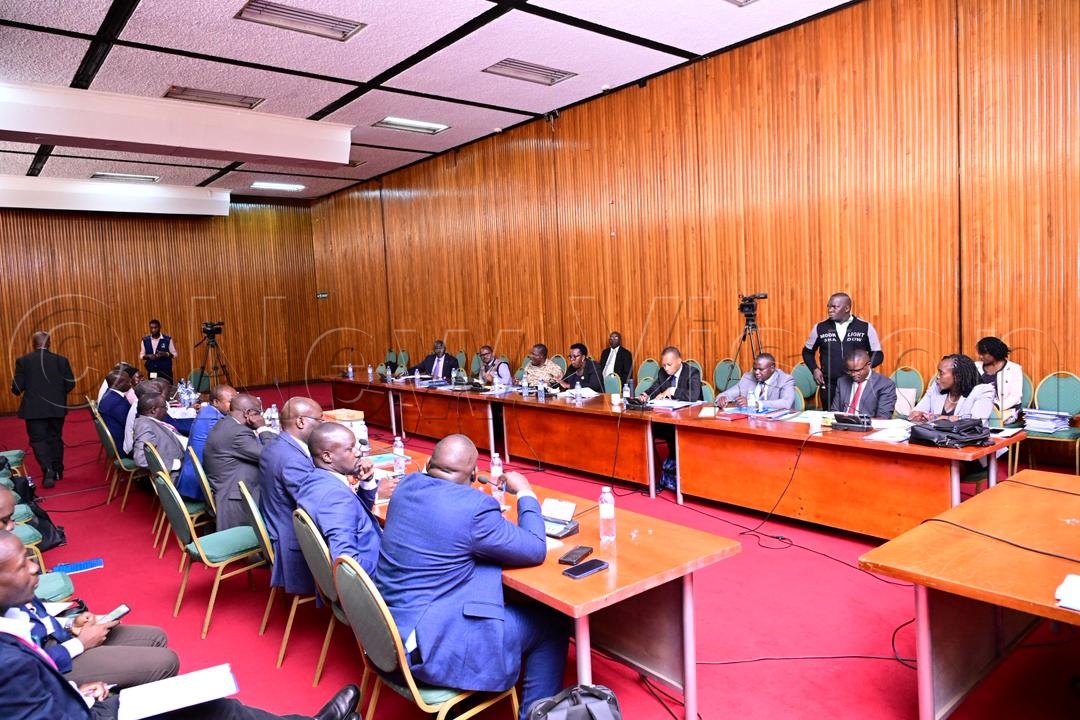
(Credit: Miriam Namutebi)
Accountability, planning queries
Meanwhile, Elisa Rutahigwa raised questions about financial accountability and planning within hospital budgets.
“When you look at the unfunded priorities for Lira and Mubende, we have always had problems of corruption and embezzlement; they start at an early stage. How do you put sh100 billion to construct a maternal and child health care complex? Fencing sh2 billion, sewage overhaul sh2 billion, etc. You have these exorbitant figures; how did you reach them? Do you have bills of quantities that inform these figures?” he queried.
However, Margaret Ayebare, the Mbarara Woman MP, urged a more holistic approach, stressing that the challenges extend beyond the health sector alone.
“The issues of Hoima and Lira Regional Referral Hospitals should be treated differently because they are multisectoral. It is not only about budget shortfalls. It stretches to even the budgets of local governments that have to work on feeder roads leading to the stadiums. We are not going to look at the budgets only, because there are other sectors that feed into your issues, as hospitals, especially as we prepare for AFCON,” she said.
Ayebare also raised concerns about preventive healthcare metrics and questioned hospital management on how they are leveraging media to create public awareness.
“On prevention and rehabilitation, I was looking at the percentage of HIV tests done and family planning. Thirty-eight percent for family planning is concerning. Should we think that women are not coming for these services? Then even HIV at 38 per cent, these are low. Are we lacking testing kits? Then your staffing levels are so low. We are asking what the challenge is and how we can help you as a committee,” she asked.
Hospital administrators, in response, acknowledged many of the concerns and pointed to chronic underfunding as a root cause of stalled projects and service disruptions.
Mubende Hospital executive director Dr Emmanuel Paul Batiibwe explained, “Projects have stagnated due to non-release of funds. We also face continuous power outages that have led to disruption of services, and this has also led to the destruction of machinery and equipment. There are also insufficient utility funds to clear water and power bills, and threats to cut off services by utility service providers.”
At Lira Regional Referral Hospital, director Dr Andrew Odur outlined pressing infrastructure needs.
“We have unfunded priorities like the sh100 billion maternal and child health ward complex, sh3 billion medicines store, sh2 billion for fencing the hospital land, and sh2.5 billion sewage overhaul. We also lack proper medicine storage space,” he said.
In Hoima, Dr Ibrahim Bwaga said that the government had allocated sh26.5 billion towards improving and rehabilitating the hospital in preparation for AFCON 2027.
“However, we are also suffering from an unstable power supply that often happens at night. Then, delayed health infrastructure projects, in that the planned Maternal and Child Health Complex to date has not been considered, yet space was reduced where wards like paediatrics, maternity, and gynaecology were demolished,” he explained.
He also highlighted a critical shortage of specialised personnel, saying that this issue is affecting operational efficiency. “The entire region has one consultant across all specialties. Fortunately, some other regions have over 20 consultants. So we don’t have a radiologist or ophthalmologist. We have one orthopaedic surgeon, but he is not enough. And we have staff that qualify for these positions, but the issue is the wage,” he revealed.