
Uganda to deploy technical support in DRC as Ebola threat leads to border closure
Uganda says it is committed to supporting neighbouring DRC with technical expertise and coordinated surveillance efforts aimed at reducing transmission and preventing further loss of life.
Dieudonné Sezabo, a health worker, shows his colleagues the list of patients at Rwampara Hospital in Ituri, in the eastern Democratic Republic of the Congo, on May 26, 2026. (AFP)
_________________
EBOLA UPDATE
Uganda's health ministry has revealed plans to deploy health experts and technical response teams to the Democratic Republic of Congo (DRC) as part of broader regional efforts to contain the worsening Ebola outbreak linked to the rare Bundibugyo strain.
The move comes amid growing concern over rising infections in eastern DRC and increased cross-border movements that Ugandan authorities said continue to pose a major threat to public health and regional safety.
Speaking during a government briefing on Wednesday (May 27), health ministry permanent secretary Dr Diana Atwine said Uganda is committed to supporting neighbouring DRC with technical expertise and coordinated surveillance efforts aimed at reducing transmission and preventing further loss of life.
“We remain committed to sustained collaboration with the Government of DRC. Recently, both countries agreed to strengthen cross-border collaboration, enhance joint surveillance mechanisms and coordinate response efforts to effectively prevent and control the spread of Ebola,” she said.
"All these will be highly monitored to ensure no cross-border transmission from them and are among the few categories allowed to cross the border."
Atwine noted that Uganda’s previous experience in managing Ebola outbreaks had equipped the country with strong surveillance systems, rapid response capacity and trained health workers capable of supporting regional outbreak control efforts.
She said discussions are ongoing regarding logistics and deployment arrangements for the Ugandan response teams that may be sent to assist authorities across the border.
“We are working on the logistic part of it. We will be able to let you know. But we are planning with our counterpart across. We will be able to let you know when we are moving that."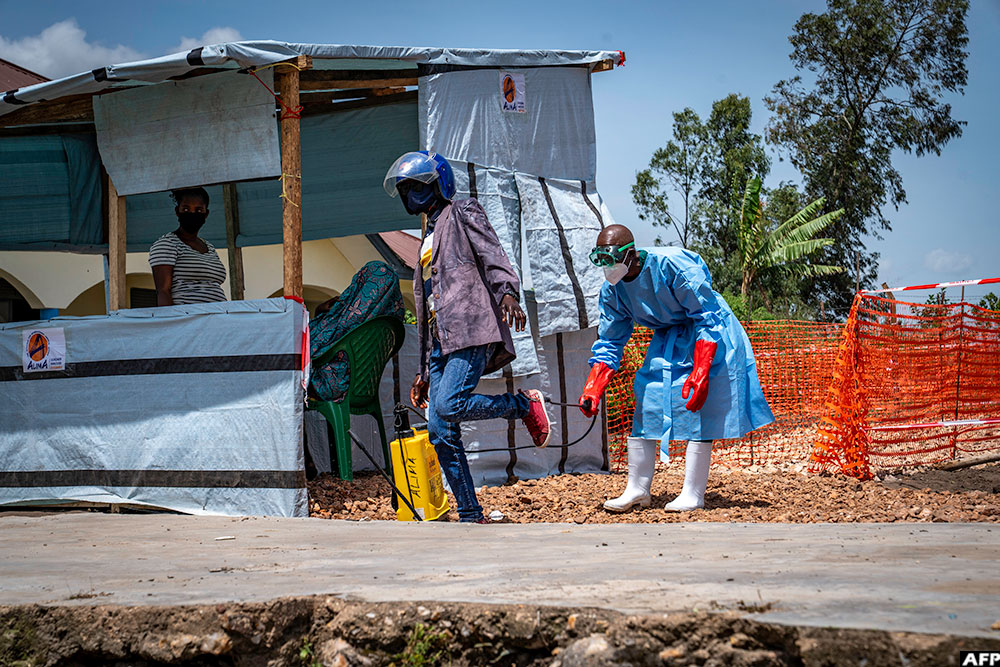
Dieudonné Sezabo, a health worker, decontaminates the clothing of a motorcycle taxi driver who transported a patient suspected of having Ebola to the Rwampara Hospital in Ituri, in the eastern DRC, on May 26, 2026
Health workers form majority of contacts
The announcement came as Uganda maintained that the country had not registered any new confirmed Ebola cases beyond the seven already identified, including the index patient who later died.
However, the Ministry of Health warned that the number of contacts under follow-up had significantly increased, with many of them being health workers exposed while attending to infected patients.
“Most of these contacts are health workers because they were getting it from one source,” said Atwine.
She said surveillance teams continue monitoring all identified contacts while strengthening infection prevention measures in health facilities handling suspected Ebola patients.
Border closure
As fears of further importation intensified, the National Task Force on Ebola Response, chaired by Vice-President Jessica Alupo, resolved to temporarily close the Uganda-DRC border with immediate effect.
Under the new measures, only authorised Ebola response teams, humanitarian operations, cargo transport and essential security personnel will be allowed to cross under strict health screening and monitoring protocols.
“All authorised entrants shall be subjected to strict health screening. We have locator forms at all ports of entry requiring detailed information and monitoring,” said Atwine.
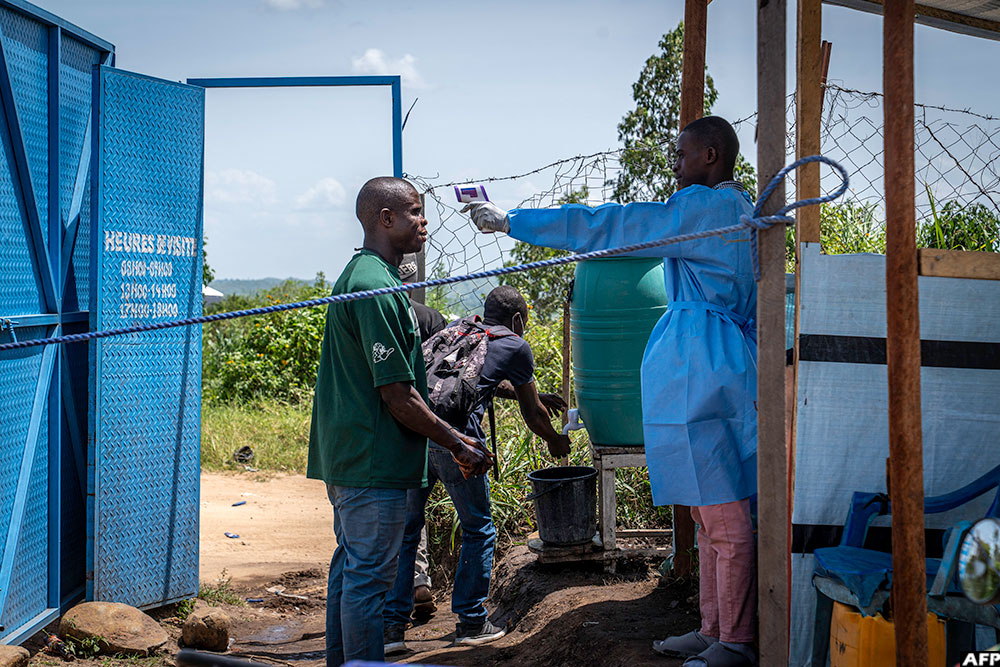
A healthcare worker takes a visitor's temperature at Rwampara Hospital in Ituri
Government also directed that any person entering Uganda from DRC must undergo mandatory 21-day self-isolation under the supervision of Ministry of Health surveillance teams.
The mandatory isolation requirement would apply to all travellers arriving by road or air after visiting the DRC.
“We shall do strict supervision of that isolation both in Kampala and in all border districts where movements have been taking place,” said the health ministry PS.
Border schools to remain open
Despite escalating regional concern, the government said schools in border districts would remain open but under heightened Ebola surveillance and strict observance of Ministry of Health Standard Operating Procedures.
School administrators have been directed to identify all learners arriving from DRC and ensure their temperatures are monitored and recorded daily for 21 days, which corresponds to Ebola’s incubation period.
“If any learner develops fever, abdominal pain, vomiting, diarrhoea or weakness during this period, districts must have designated health facilities where such students can be isolated and tested immediately,” said Atwine.
She explained that learners who enter schools without symptoms may later become infectious if they begin developing signs of Ebola during the observation period.
The health ministry also ordered schools to strengthen handwashing, temperature screening and reporting mechanisms while discouraging unnecessary physical contact among learners.
Government has urged Ugandans to remain calm but vigilant and immediately report anyone presenting Ebola-like symptoms, including fever, vomiting, diarrhoea, unexplained bleeding and general body weakness.
The health ministry maintains that Uganda remains on high alert as surveillance teams continue monitoring border districts and points of entry to prevent further spread of the virus.