
Uganda Cancer Institute budget allocation handles only 30% of patients
With cancer cases surging to over 35,000 new cases annually, the UCI is frustrated over what it calls a chronically low and shrinking budget that is crippling cancer care in the country.
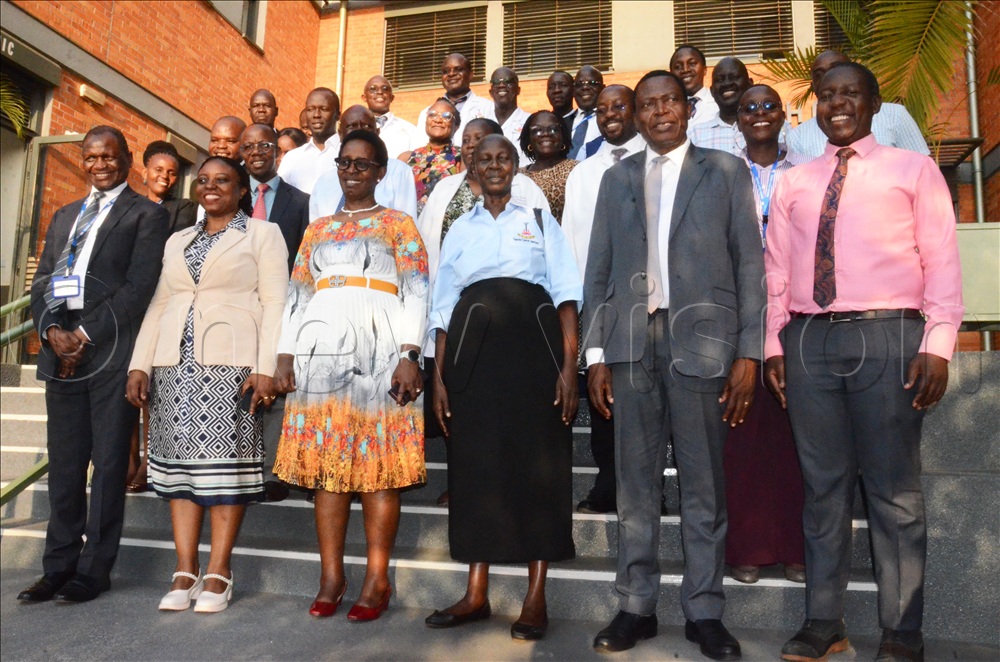
Permanent Secretary Dr Diana Atwiine, together with Uganda Cancer Institute staff at the facility on Thursday, September 3, 2026. (Photos by Isaac Nuwagaba)
________________
Uganda Cancer Institute (UCI) Executive Director has revealed that the current budget allocation to the facility can only treat 30% of patients who need care, leaving over 70% to die without treatment or to abandon treatment midway.
“We are frustrated. Our budget is not in line with the disease burden. We need over sh110b shillings annually if we are to treat cancer ideally. We need this money to be able to manage cancer well. Our staff need to be increased to be able to treat new patients from regional centres in the country,” Dr Jackson Orem, said on Thursday, August 3, during a working visit by the Ministry of Health Permanent Secretary, Dr Diana Atwiine, that included a budget advocacy meeting with the stakeholders at UCI Mulago in Kampala.
With cancer cases surging to over 35,000 new cases annually, the UCI is frustrated over what it calls a chronically low and shrinking budget that is crippling cancer care in the country.
Despite being Uganda’s only public cancer referral and treatment centre handling patients from Uganda, South Sudan, Democratic Republic of Congo (DRC), Rwanda, Burundi and Kenya, UCI’s annual government budget has stagnated at about sh56b allocated for cancer drugs and consumables.
“Much of the money allocated goes to wages, but we need drugs now that we have got the state-of-the-art equipment. These machines also need maintenance, but many of our people do not want to pay when they come here for treatment.
UCI data shows that 45% of patients abandon treatment before completion due to drug stock-outs and inability to afford private purchase.
“Cases are increasing by 7% every year due to lifestyle changes, but funding is static. In 5 years, we will have over 50,000 new cases. If we don’t act now, we will be burying Ugandans daily,” Dr Orem warned.
Power outages damage new cancer machines
“We get shocked and rely heavily on high-tech machines that require stable, uninterrupted power supply, but persistent power blackouts affect us. These equipment need stable power because they are highly sensitive,” he said.
“When this happens, it forces doctors to suspend radiotherapy and chemotherapy sessions,” he noted.
Increased govt funding pledge
Dr Atwiine promised increased government funding for cancer treatment, following public outcry over drug stock-outs, broken radiotherapy machines and a crippling budget gap at the facility.
“I want to assure UCI management, patients and Ugandans that the government has heard your cry. Cancer is no longer a small disease. It is killing our mothers, fathers and children. We are going to significantly increase funding for UCI, for cancer drugs and for regional cancer centres,” she promised.
We agreed to treat cancer as a national emergency, similar to HIV/AIDS in the early 2000s, so the government shall create a deliberate fund and mobilise donors.