
Prof. Lubega: 50 years of innovation and global impact
At 78, Professor John Lubega has a career marked by scientific breakthroughs. In 1984, while pursuing his PhD at Loughborough University in the UK, he investigated how maternal antibodies cross the placenta to protect unborn babies.
In 1991, Lubega (Pictured) was part of the team that introduced HIV testing in Kenya. (Credit: Ritah Mukasa)
Professor John Lubega’s 54-year medical career spans groundbreaking scientific research and leadership at leading universities and hospitals across Europe, the Middle East and East Africa.
A specialist in clinical pathology and laboratory medicine, his contributions extend beyond the laboratory to preaching, instrumental music and composition. Now back in Uganda, he has established a clinical research centre and laboratory to advance local healthcare. He shares his journey with Ritah Mukasa.
At 78, Professor John Lubega has a career marked by scientific breakthroughs. In 1984, while pursuing his PhD at Loughborough University in the UK, he investigated how maternal antibodies cross the placenta to protect unborn babies.
By studying specialised receptors, he helped explain the mechanism behind this transfer, advancing scientific understanding of a process first theorised by Brambell in 1964. His findings, published in peer-reviewed journals, attracted international recognition. “I became famous,” he recalls.
His research has since generated more than 1,200 publications and informed studies by researchers and medical students worldwide. Scientists have also used his model to identify seven additional molecules.
In 1991, Lubega was part of the team that introduced HIV testing in Kenya.
The Kenyan Ministry of Health subsequently recruited him and 10 other physicians to champion nationwide testing.
He also established a modern laboratory at Nairobi Hospital, where he served as consultant and head of pathology and laboratory medicine while teaching at the University of Nairobi. Earlier, in 1983, he taught at the University of Leicester, where he became head of the Department of Chemical Pathology.
He was reportedly the second Black academic, after fellow Ugandan Dr Richard Ddungu, to hold the position in the university’s history.
In 2005, Lubega moved to the Middle East, where he expanded the Department of Pathology and Laboratory Medicine at King Fahad Medical City in Riyadh, Saudi Arabia. Impressed by his work, the government of Sharjah invited him to establish similar facilities at University Hospital Sharjah.
He later taught at the University of Sharjah in the United Arab Emirates. After completing a four-year contract, he moved to Mombasa, Kenya, where he spent two years establishing a medical centre in Nyali.
He returned to Uganda in 2016. Beyond medicine, Lubega is a preacher, an accomplished instrumentalist who plays the organ, piano and guitar, and a composer with more than 120 songs.
He is also a devoted family man. His wife, Esther, is a computer scientist, and they have been married for 45 years. They have five children, including three UK-trained doctors specialising in cardiology, dentistry and nephrology.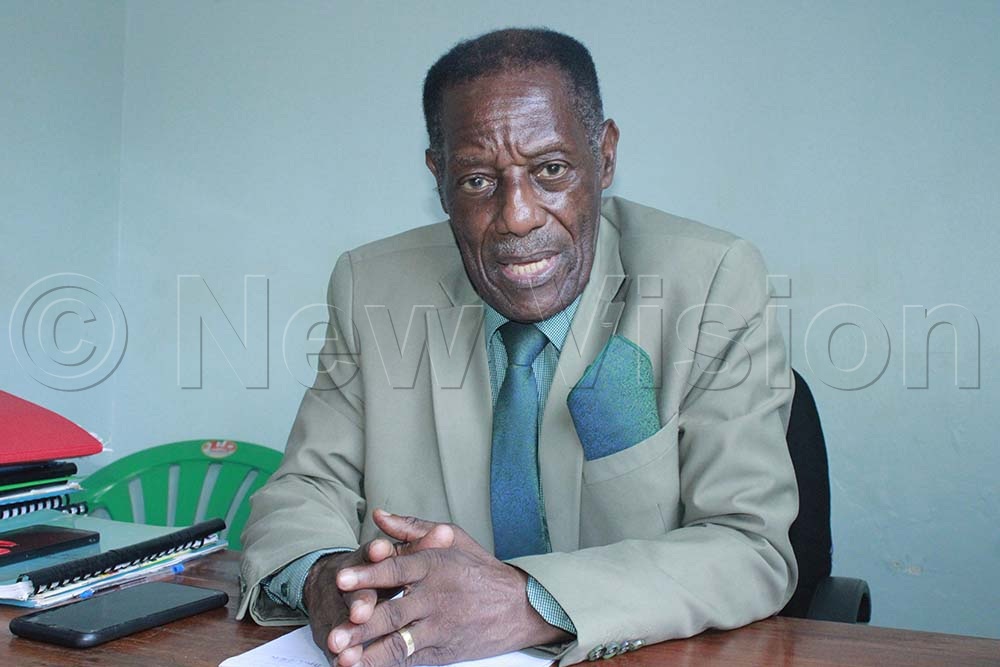
Lubega is leading research into the potential applications of vitamin D in malaria, diabetes, hypertension and reported adverse effects following COVID-19 vaccination. (All Photos by Ritah Mukasa)
His current work
Lubega is leading research into the potential applications of vitamin D in malaria, diabetes, hypertension and reported adverse effects following COVID-19 vaccination.
He says some patients have reported memory loss, brain fog, fatigue and loss of smell and taste. His team is investigating these symptoms alongside treatment, with some patients reportedly showing improvement.
He acknowledges team leader Brenda Walyaula and science minister, Jonard Asiimwe, for their contributions. Internationally, Lubega is an associate member of the UK’s Institute of Medical Laboratory Sciences and a member of the Royal Society of Biology.
He also shares his research through Academia.edu, a California-based platform used by researchers to disseminate scholarly work.
The COVID-19 innovation he says saved lives. After returning to Uganda in 2016 following decades abroad, Lubega took time to rest in 2017. In 2018, he became head of the laboratory at Mengo Hospital.
A year later, he founded Windsor Laboratory in Ntinda, Kampala, venturing into social entrepreneurship just before the COVID-19 pandemic struck. In April 2020, he joined PRESIDE (the Presidential Scientific Initiative on Epidemics), a 23-member task force established by President Yoweri Museveni under the guidance of Dr Monica Musenero, then senior presidential advisor on epidemics.
The team brought together researchers from Makerere, Gulu, Mbarara and Busitema universities. “It was a tough time for the country, but it was intense for our team,” he recalls.
“We had to look for quick solutions to save lives.” The task force divided into specialised units covering vaccines, diagnostics, therapeutics and support services.
Lubega’s team focused on repurposing existing medicines and exploring new treatments for COVID-19. He credits the initiative’s work with helping save lives during the pandemic.
Over four years, Lubega developed an approach centred on high-dose vitamin D, drawing inspiration from research into the vitamin’s potential role in fighting respiratory infections.
While conventional supplementation commonly involves hundreds to about 1,000 international units (IU), his approach used doses ranging from 10,000 to 300,000 IU.
As supplies became scarce, he began importing vitamin D from India for use in patients, including those in intensive care.
“We started administering high dose vitamin D to patients in two hospitals,” he says. He reports that more than 95 per cent of the patients treated survived. However, these results should be interpreted cautiously.
The reported outcomes do not, on their own, establish that vitamin D caused the recoveries or that high doses are safe and effective against COVID-19.
Such claims require independently reviewed clinical evidence, and very high doses can cause serious toxicity. Lubega also points to research investigating vitamin D and inflammatory responses.
He says findings from studies associated with the US National Institutes of Health and Sweden’s Karolinska Institute supported further investigation into the vitamin’s potential role in managing cytokine storms.
The following year, with support from the presidential task force, he launched a nationwide study to assess vitamin D levels in Uganda.
“The results were alarming,” he says. According to Lubega, samples from every region studied showed vitamin D levels below the 30 ng/ mL threshold he used as a healthy benchmark, including among fishing and pastoral communities whose livelihoods keep them outdoors.
Low vitamin D levels, he notes, can affect immune function. Lubega argues that sunlight alone is an unreliable way to ensure adequate vitamin D intake because exposure varies with clothing, time of day, weather and other conditions.
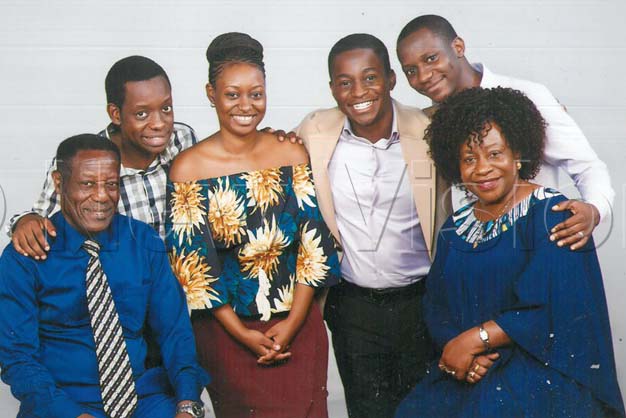
Prof. Lubega (left) with his wife and children.
His team is therefore exploring local production of vitamin D supplements to improve access to standardised doses. He is in discussions with Indian manufacturers about producing the supplements in Uganda.
He also advocates drug repurposing as a practical research priority for a country that imports much of its medicine.
“Scientists should conduct extensive research into how existing drugs can be used to treat diseases while aligning with government medical guidelines,” he says.
As an example, he cites a combination of existing medicines that he developed to treat Guillain Barré syndrome, a neurological disorder that can cause severe muscle weakness and paralysis.
He says three previously paralysed patients regained the ability to walk following the intervention.
Building on this work, Lubega is expanding his research into the potential use of repurposed medicines for diabetes, malaria, stroke and persistent symptoms reported after COVID-19 vaccination.
His ambition is to translate decades of international scientific experience into practical healthcare solutions for Uganda.
The next challenge is to subject promising interventions to rigorous clinical testing so that innovations developed locally can deliver safe, reliable and measurable benefits to patients.
Building a career in Europe
After his internship at Mulago Hospital, Lubega worked briefly at Butabika Psychiatric Hospital under Professor Christopher Bbosa. Although trained in internal medicine, he developed a keen interest in psychiatry.
“My speciality was in internal medicine, but psychiatry fascinated me,” he says. He was particularly struck by how quickly medication could calm some patients experiencing acute psychosis.
“I didn’t see changes that dramatic in other fields,” he recalls.
In 1976, while at Butabika, he secured an opportunity to pursue a conjoint diploma awarded through the Royal College of Physicians of London and the Royal College of Surgeons of England.
He had been admitted to the two-year programme while still at Makerere, where he was also a member of the International Medical Students Association. Renowned surgeon Professor Denis Burkitt, who discovered Burkitt lymphoma, encouraged him to apply.
The two had met in 1972 during Lubega’s visit to London. After passing his examinations, Lubega worked at Guy’s Hospital in London before winning a scholarship to pursue a Master of Science degree at the University of Cambridge.
Cambridge subsequently recommended him for a teaching position at the University of Leicester’s medical school, where he spent seven years.
Despite being the only Black lecturer, he recalls being respected for his Cambridge credentials. His career later took him to the Middle East and Kenya before he returned to Uganda.
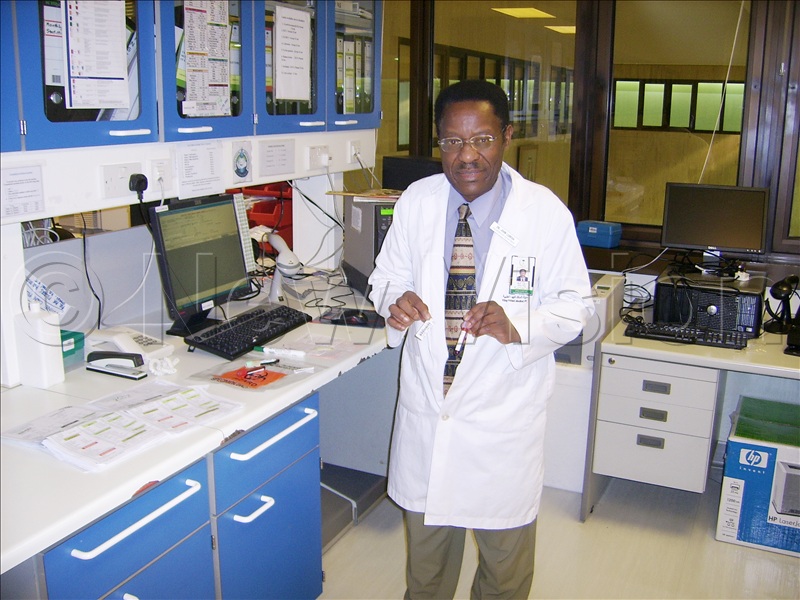
Prof. Lubega in his Lab
Lubega urges Ugandan doctors in the diaspora to return and help transform the country’s healthcare system.
He also calls on the government to invest in young medical professionals by sponsoring advanced training at leading international universities.
To attract and retain specialists, he recommends competitive salaries, housing and other incentives, alongside deliberate efforts to harness the expertise of returning professionals.
He believes such measures would do more to strengthen healthcare delivery than simply establishing more medical schools.
“Many doctors refuse to come back, fearing they will be frustrated,” he says.
Returning home after more than four decades abroad was not easy. Lubega says he struggled to find his footing, having lost touch with many relatives and friends, some of whom had died while others had moved on. He recalls that returning to Uganda during earlier political upheavals could be dangerous.
On one occasion, he was nearly detained at the airport by operatives of Idi Amin’s State Research Bureau and had to explain why he was living abroad.
Even after his permanent return, rebuilding his life and professional networks required time and patience.
His sons have faced similar challenges. Despite persuading them to leave lucrative jobs abroad and join him in Uganda, he says they are finding the transition difficult.
Nevertheless, Lubega remains grateful for the opportunities his international career afforded him.
Working across Europe, the Middle East and East Africa gave him extensive experience at leading hospitals and universities.
It also enabled him to educate his children and invest in property, including land in Muyenga, Kampala, a farm in Nakifuma, Mukono district, and his laboratory and clinical research centre.
Today, he continues to contribute to medical training by educating clinical officers under the Allied Health Professionals Council of the Ministry of Health, in partnership with the London-based World Continuous Medical Education Authority. His advice to young doctors is simple: “Don’t give up, even when the going gets tough. One day, your hard work will bear fruit. Always keep researching, stay alert, and look out for new opportunities.”
Early life
Born in 1948 into a family of healthcare professionals, Lubega grew up surrounded by medicine.
His late father, Dr John Kasenene Lubega, was a physician and Ministry of Health medical officer, while his mother, Dorothy Namuddu, worked as a nurse and midwife at Mulago Hospital.
Several of his 16 siblings also pursued medicine, including his sister, Dr Irene Lubega, a consultant paediatrician at Mulago National Referral Hospital.
The family’s medical heritage extends to his maternal uncle, renowned fertility specialist Dr Edward Tamale-Sali.
Namuddu and Tamale-Sali were biological siblings. Lubega began his education at Buddo Junior School, where his mother served as school nurse to neighbouring King’s College Budo.
He later attended Aggrey Memorial Primary School and Nakivubo Settlement School, completing Junior One and Two.
“Primary school went all the way up to eight classes,” he recalls. In 1963, he joined Lubiri Secondary School on a Buganda Kingdom scholarship.
When an opportunity arose to transfer to the prestigious King’s College Budo in Senior Two, he relinquished the scholarship and completed his O’and A’level there.
In 1969, he secured government sponsorship to study at Makerere University Medical School, graduating in 1974 with a Bachelor of Medicine and Bachelor of Surgery.
His classmates included former prime minister Dr Ruhakana Rugunda, Nakasero Hospital proprietor Dr Ben Mbonye, former Mengo Hospital medical superintendent Dr Kaggwa and his uncle, Dr Edward Tamale-Sali.
What others say
Robert Ngonzi, study co-ordinator Vitamin D Research Project:
I have learnt a lot about laboratory medicine and management from Lubega. He is a beacon of knowledge and a popular scientist in East Africa and in Europe.
Derek Lubega, son
We grew up hanging around hospitals in different countries, but we were not pushed into studying medicine. It was just an inspiration. He convinced us to come back to Uganda, and we are now working together to save lives.