
Kadaga calls for regional policy as survivor recounts battle with bipolar disorder
Joy’s experience highlights the stigma that people living with mental health conditions continue to face, particularly in the workplace, where she says her major duties were withdrawn and replaced with smaller assignments after her employer learnt about her condition.
First Deputy Prime Minister and Minister for East African Community Affairs Rebecca Alitwala Kadaga (centre) poses for a group photo with East African ministers, ambassadors and other participants after opening the 2nd East African Mental Health Summit at Speke Resort Munyonyo. (Photo by Violet Nabatanzi).
_________________
Barbara Joy struggled to cope with the death of her father, to whom she was very close. But what began as grief soon took a toll on her mental health.
When she returned home after the funeral, Joy began hearing voices. When she tried to switch on the television (TV), she felt as though it was talking to her.
She became withdrawn, keeping to herself and remaining silent in her apartment. When the situation became overwhelming, she called her aunt, who lives in the United Kingdom, and shared her experience.
Her aunt invited her to the UK, where she was taken to hospital and diagnosed with bipolar disorder, a mental health condition characterised by episodes of significant mood changes, including emotional highs and lows.
When Joy returned home, she decided to keep her condition a secret, partly because she feared disclosing it to her colleagues and worried about how her friends would perceive her.
Today, she is a lawyer with a master’s degree, an adviser and a career woman who advises people on integrity.
Yet her experience highlights the stigma that people living with mental health conditions continue to face, particularly in the workplace.
Joy said she would sometimes tell her colleagues that she had malaria when experiencing mental health episodes, only to return to work after recovering.
She said that after her employer learnt about her condition, she faced stigma, with her major duties withdrawn and replaced with smaller assignments.
Joy also recounted the experience of a friend who had the same disorder but lost her
job, citing it as an example of the discrimination people with mental health conditions continue to face.
She called on the Government to reduce the cost of medication for people living with mental health conditions and urged employers and communities to end stigma and discrimination.
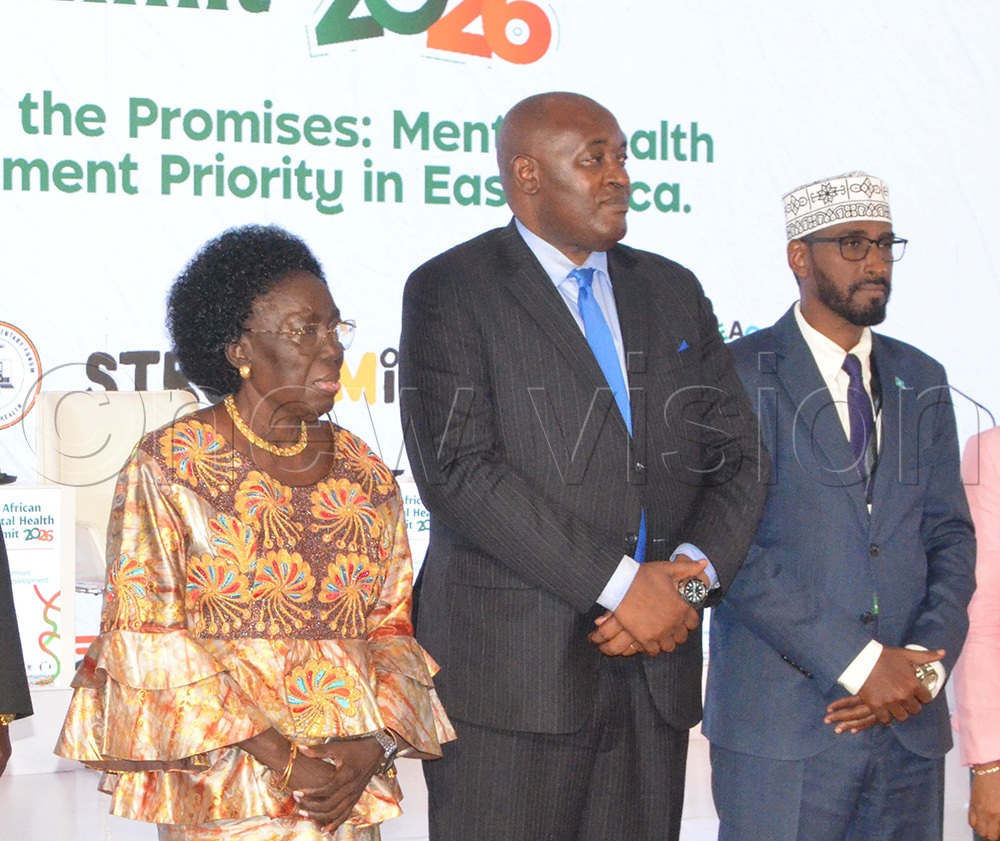
(L-R) First Deputy Prime Minister and Minister for East African Community Affairs Rebecca Alitwala Kadaga, Health Minister Dr Chris Baryomunsi, and Somali Embassy Deputy Ambassador to Kampala Amb. Abdilatif Ali pose for a photo during the Second East African Mental Health Summit at Speke Resort Munyonyo. (Photo by Violet Nabatanzi)
The First Deputy Prime Minister and Minister for East African Community Affairs, Rebecca Alitwala Kadaga, called for the development of a regional mental health policy to strengthen cooperation among East African Community (EAC) member states.
Kadaga said the region lacked a common policy to guide mental health interventions and announced that she had directed the EAC Secretary-General to initiate the process of developing one.
Held under the theme “Delivering on the Promises: Making Mental Health Integration a Development Priority in East Africa,” the summit focused on solutions to the growing mental health burden across the region.
Mental health remains a pressing yet overlooked issue, with an estimated 10% to 25% of the East African population experiencing mental health challenges, including depression and anxiety.
Uganda’s 2024 National Population and Housing Census found that 3.77 million people aged 10 and above reported probable psychological distress.
The country also faces a substantial gap in mental health treatment. Government reports estimate that millions of people are affected, while fewer than one in 10 people who need care receive appropriate support.
Inadequate funding
Dr Chris Baryomunsi, the Minister of Health, said mental health continued to receive inadequate funding across the region, with less than 1% of national health budgets allocated to the sector.
He said health ministers in the region had agreed to pursue joint policies and develop model legislation while strengthening cooperation to enable countries to learn from one another and address mental health challenges collectively.
“We need to tackle this challenge as a region rather than leaving it to individual countries,” Baryomunsi said.
Baryomunsi noted that reported cases of depression at health facilities had increased more than fourfold between 2021 and 2024. Although improved detection may partly explain the increase, he said the rising number of cases remained a major concern.
The plan emphasises stronger leadership and governance, integrated community-based mental health services, prevention and promotion, and improved information systems and research.
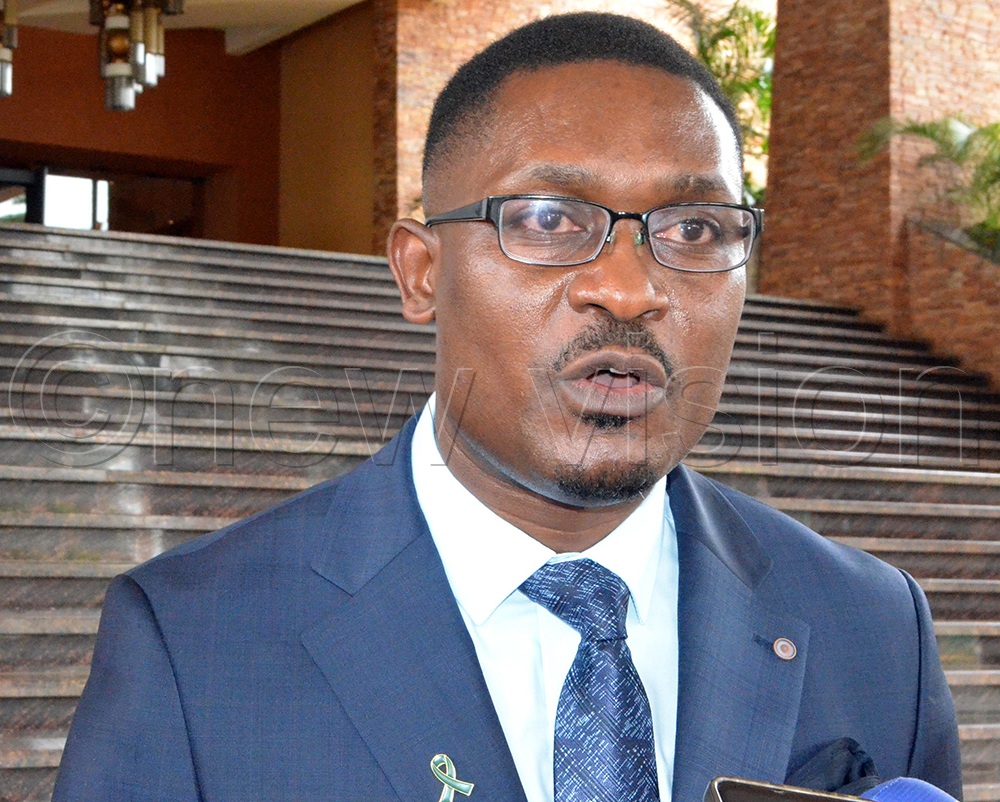
StrongMinds Uganda Country Director Vincent Mujune speaks during the Second East African Mental Health Summit at Speke Resort Munyonyo. (Photo by Violet Nabatanzi).
Vincent Mujune, the country director of StrongMinds Uganda, said the summit aimed to bring East African countries together to address mental health challenges, which remain underprioritised despite their growing impact.
Mujune said the summit had brought together representatives from eight countries to discuss mental health challenges and develop a regional policy framework.
“It is no longer a health matter but a development issue. The participants have come together to plan for the people struggling in the region through a policy framework,” he said.
He emphasised the need to move mental health care beyond specialised referral hospitals and integrate services into communities, where Village Health Teams (VHTs) can help identify people who need support.
Mujune said many mental health conditions could be managed within communities, while patients requiring specialised care could be referred to facilities such as Butabika National Referral Mental Hospital.
Regional support
Faisal Robok, a member of Parliament and commissioner at the East African Legislative Assembly (EALA), representing Somalia, backed the proposal for a regional mental health policy.
He said countries should begin formulating the policy following Kadaga’s directive.
Robok said Somalia also needed such a framework, given the mental health challenges faced by people affected by years of conflict and war.
He called for collective efforts to ensure that people experiencing mental health challenges across the region receive appropriate care and support.