
Polio survivor’s long struggle for dignity, as Rotary renews eradication campaign
“The struggle of a person with a disability in Uganda is a calamitous one. It is one without dignity,” he said. His account lent a deeply personal dimension to the gathering, which brought together Rotary clubs, health officials and community leaders to renew calls for childhood immunisation and stronger health services.
Governor Gerald Obai immunises a child during the commemoration of World Polio Day on October 24. (Courtesy photo).
____________________ Rev. Okello Valentino. (Courtesy)
When Valentine Okello woke from surgery in 1969, his right leg was encased in plaster. For a boy who had spent much of his childhood struggling to walk, the operation at Jinja Hospital offered the prospect of a life less constrained by the effects of polio.
The surgery had been made possible by an unlikely act of kindness. Okello, then a student at Jinja College, had been taken to the hospital by his headteacher, the late Rev. Fr. Joseph Johns, who noticed his difficulty walking and arranged for him to see a doctor. When Okello’s parents were unavailable to sign the consent papers, the headteacher consulted the doctor and signed on his behalf.
The operation was followed by a caliper, a brace that helped Okello stand and walk. The surgery, medication and appliance were provided free of charge. A year later, in 1970, his parents bought him his first pair of shoes.
More than five decades later, the retired reverend of Namirembe Diocese is still measuring the distance between what medical care once made possible and what it now costs to maintain it.
At a World Polio Day gathering in Bweyogerere, on October 24, 2026, Okello spoke not only of his childhood encounter with the disease but also of the difficulties that continue to confront people living with polio-related disabilities, including expensive mobility aids, limited access to specialised orthopaedic services and the loss of support that once helped them move through life with greater independence.
“The struggle of a person with a disability in Uganda is a calamitous one. It is one without dignity,” he said.
His account lent a deeply personal dimension to the gathering, which brought together Rotary clubs, health officials and community leaders to renew calls for childhood immunisation and stronger health services. It also raised a question that can be overshadowed by the global campaign to eradicate polio: What happens to those who have already been affected by it?
The cost of walking
Okello was born in Tororo district in 1955. From childhood, his right leg was weak and bent, leaving him dependent on a walking stick and unable to wear ordinary shoes.
Some people questioned whether educating a child with a disability was worth the expense. His father, Domiciano Zedekia Oana Onyangu Dalit, refused to be persuaded.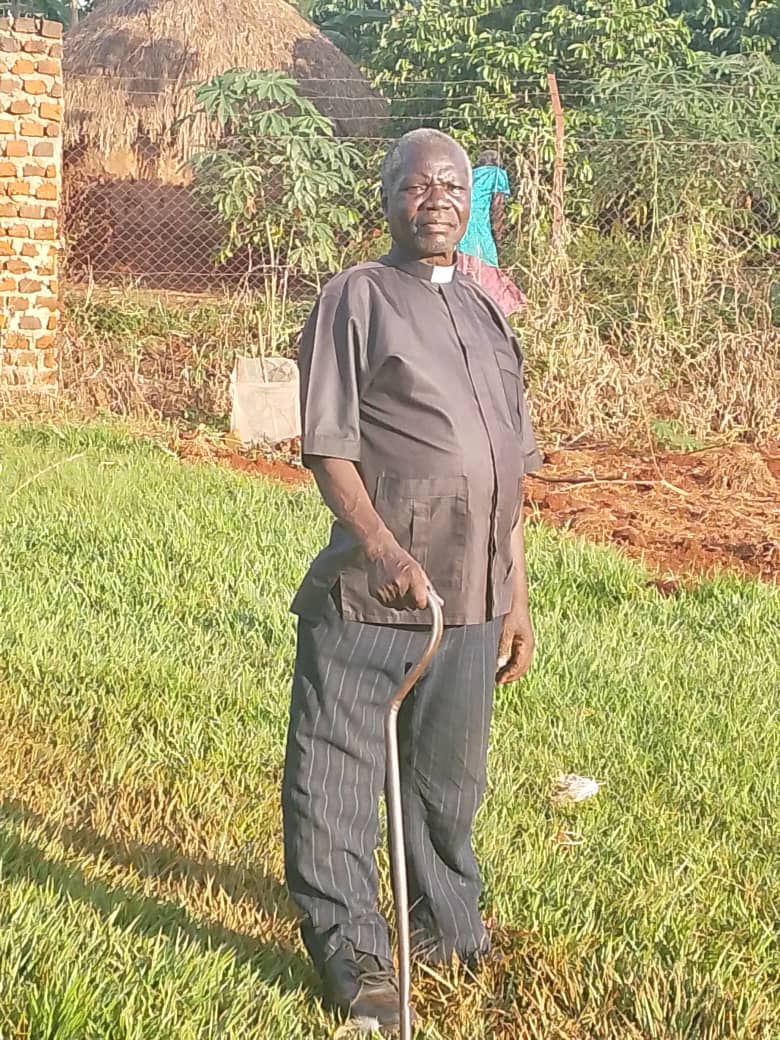
“I remember my father because he kept a deaf ear to all that they were telling him,” Okello said.
But the equipment that once helped make his independence possible has become increasingly difficult to obtain and maintain. Okello said orthopaedic services and replacement callipers had grown harder to access as workshops faced shortages and support declined. The cost of a brace, compounded by transport to specialised facilities, can put essential mobility assistance beyond the reach of people with disabilities.
He can no longer manage his modified scooter as he once did.
“I speak from my heart, from a crying, bleeding heart of neglect and betrayal,” he said. Rev. Okello (centre) with Rotary District 9213 Governor Gerald Obai (right) and past District Governor Mike Ssebalu (left). (Courtesy)
His appeal was a reminder that the consequences of polio can extend far beyond the initial infection. The virus can cause irreversible paralysis, and although vaccination can prevent the disease, people who have already sustained its effects may need lifelong access to rehabilitation, mobility aids and medical care.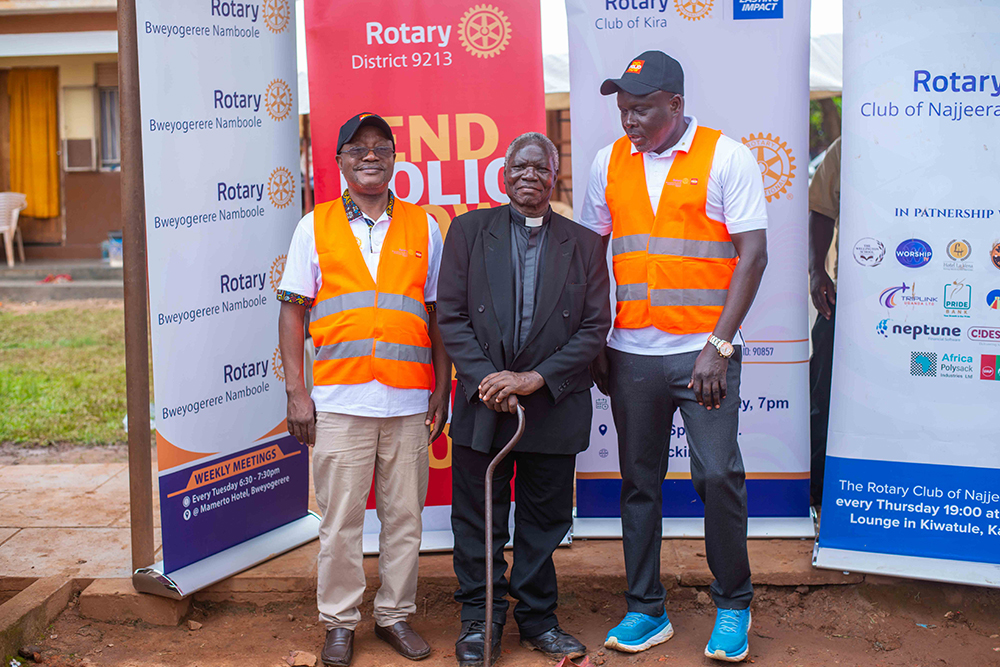
A campaign against a preventable disease
The event, held at Bweyogerere Health Centre III in Kireku under the theme “One Day, One Focus: Ending Polio for Good,” brought together the Rotary clubs of Bweyogerere Namboole, Najjera, Manyagwa, Kira and Nakwero.
Rotary District 9213 Governor Gerald Obai presided over the gathering, which focused on sustaining immunisation campaigns and strengthening local health services.
Polio remains a highly infectious disease, particularly dangerous to children under five. There is no cure, but vaccination offers effective protection. According to the World Health Organisation, about one in every 200 infections results in irreversible paralysis.
Since 1988, wild poliovirus cases worldwide have fallen by more than 99 percent. Transmission of wild poliovirus remains endemic in Afghanistan and Pakistan, while outbreaks of vaccine-derived poliovirus demonstrate the importance of maintaining high vaccination coverage.
Through its PolioPlus programme, Rotary has helped support vaccination campaigns, community mobilisation and advocacy as part of the international effort to eradicate the disease.
For Lillian Bakko, president of the Rotary Club of Bweyogerere Namboole, that effort must remain rooted in the communities where health needs are most immediate.
“Fellow Rotarians, we can do this again and over again. Let’s check out the pocket change and make our community better through quality health care services,” she said.
“It’s a precious gift a parent can give to a child when they get immunised and complete the schedule,” he said.
Parents whose children miss a dose, he added, should return to health workers to establish how vaccination can be completed.
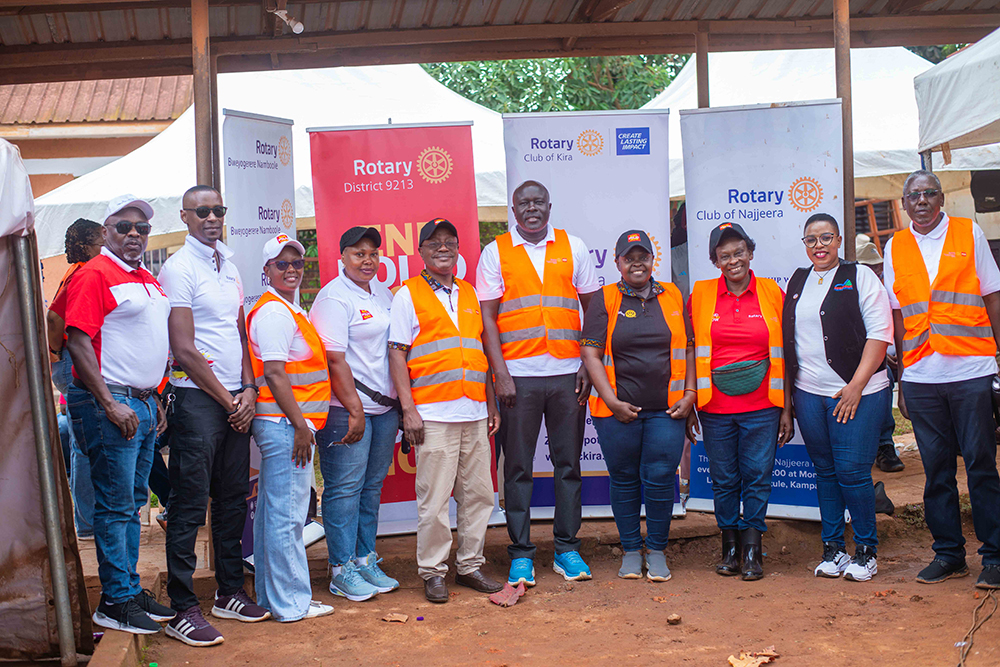
Rotary District 9213 Governor Gerald Obai poses for a photo with presidents of Rotary clubs that participated in the commemoration of World Polio Day on Saturday, October 24. (Courtesy)
A health centre under pressure
The campaign for better health care also turned to the condition of Bweyogerere Health Centre III, a facility serving a growing population and struggling to meet demand.
Mugume said the centre was expected to be upgraded to a Health Centre IV, a change intended to expand the services available to residents.
Dr Samuel Mukasa, the principal municipal medical officer in Kira Municipality, said the facility was handling a heavy patient load and that an upgrade could improve service delivery while creating employment opportunities.
Bweyogerere Mayor Dickson Hakiza said the centre was overwhelmed, forcing some patients to seek treatment elsewhere, including at facilities in Goma, in Mukono District.
For pregnant women and critically ill patients, such journeys can become dangerous when an ambulance is unavailable, he said.
Local leaders appealed to Rotary for help lobbying for an ambulance. Obai encouraged the club to prepare a grant application covering an ambulance and medical equipment for the planned upgrade.
The requests underscored how the success of public health campaigns depends not only on persuading families to seek care but also on ensuring that facilities can provide it.
World Polio Day, observed each year on October 24, is intended to draw attention to the global effort to eliminate the disease. Rotary and its partners continue to urge families to complete childhood immunisation, while survivors like Okello are pressing for a broader understanding of what the fight against polio requires.
The vaccine can prevent a child from enduring what Okello experienced. But his story also points to an obligation that remains: ensuring that those who survived the disease are not left to struggle alone.