
Sh783m polio push: Rotary warns Uganda not to relax
“We cannot relax because polio can be caused through migration and movement,” Mugisha said.
District Governor Daniel Mukasa Ddamulira (Right) shakes hands with some of the Rotarians. (Courtesy photos)
________________
Rotary International District 9214 is targeting $200,000 (about sh783 million) to support the fight against polio, with its leaders warning that Uganda’s recent success in stopping an outbreak should not become a reason for communities to lower their guard.
The fundraising campaign was announced on Thursday (October 1) as Rotary clubs from across the district gathered at Emperor Heights, Kisubi, for the opening of October’s End Polio Month activities.
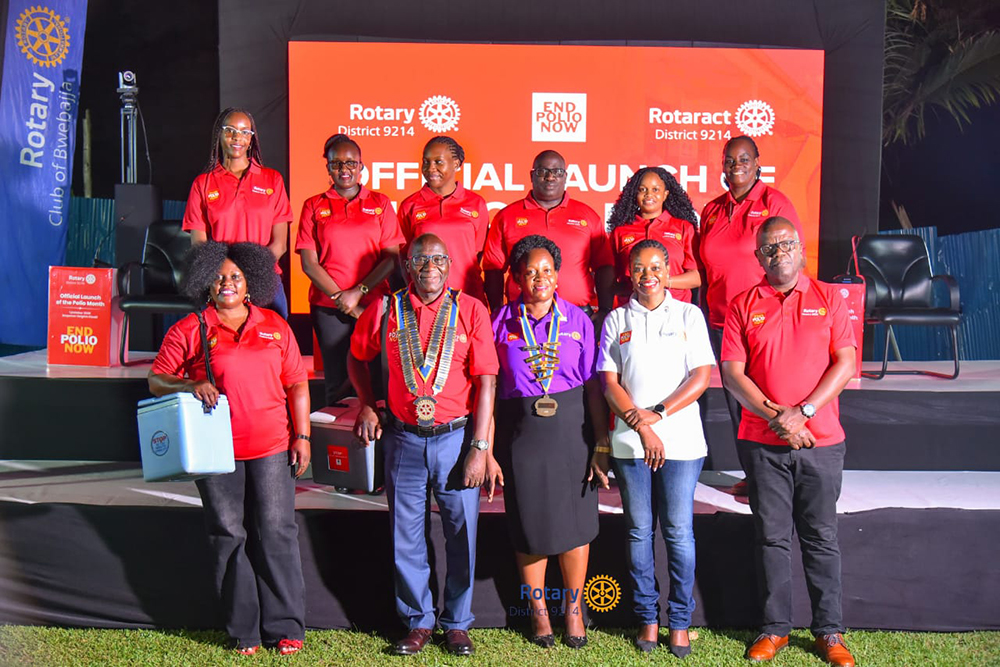
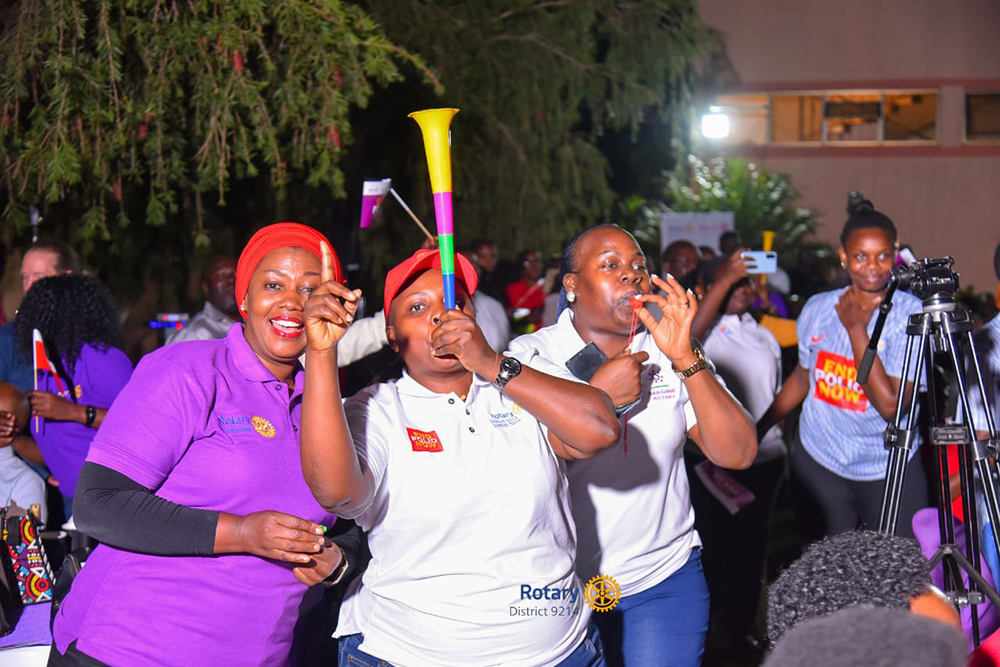
The campaign will combine fundraising with child immunisation, community sensitisation and mobilisation ahead of World Polio Day on October 24.
District Governor Daniel Mukasa Ddamulira said the target would require Rotarians to contribute themselves while also mobilising support from the wider public.
“For now, our district is looking at $200,000 this particular year,” he revealed.
Ddamulira said the money is intended to support the wider effort to reach children in hard-to-reach areas and sustain the global campaign until polio is eradicated.
But the campaign is not only about raising money.
For Uganda, Rotary officials say, it is also about protecting gains made against a virus that can cross borders and return when vaccination and surveillance weaken.
Risk remains
Uganda achieved a significant milestone earlier this year when the World Health Organisation (WHO) confirmed that transmission of circulating vaccine-derived poliovirus type 2 had been interrupted and the country's outbreak formally closed.
The outbreak had been detected in 2024 through environmental surveillance, after poliovirus was found in a sewage sample in Mbale City even though no human case had been reported.
WHO said Uganda formally closed the outbreak in May 2026 after an independent assessment found that the country had met the required standards.
The achievement demonstrates the importance of vaccination and surveillance, but Rotary officials say it is not a signal to stop.
Kenneth Mugisha, a former District Governor and Rotary's End Polio Now coordinator for Zone 22, Region 28, said Uganda's population movement and refugee situation means the country remains exposed to imported poliovirus.
“We cannot relax because polio can be caused through migration and movement,” Mugisha said.
That concern reflects the nature of polio itself. The virus can spread silently because many infected people show no symptoms, while a smaller proportion can develop paralysis when the virus attacks the nervous system.
This makes surveillance particularly important because the virus can circulate before health authorities detect obvious cases.
Why the $200,000 matters
For Rotary, the final stage of the campaign requires resources to reach communities that are difficult to access and to keep vaccination and surveillance systems functioning.
Mugisha said Rotary continues to mobilise resources and channel them through partners including WHO, UNICEF and national health ministries.
He said about 350 million children in 28 countries had been immunised this year.
At district level, the organisation is asking every Rotary club to contribute at least $1,500 towards the global effort.
Peace Taremwa, a former District Governor and the district's Rotary Foundation chair, said giving by Rotarians in Uganda had increased substantially over the years.
He said annual contributions that previously stood at around $20,000 to $30,000 had grown to more than $150,000.
Beyond fundraising
The Rotary Club of Bwebajja, which hosted the district launch, plans to use this month to combine fundraising with public mobilisation.
Club president Sylvia Nabakadde said Rotary would organise activities, including football, biking and a fashion show to raise money for the cause.
The clubs will also support immunisation and community awareness activities.
“We want to make sure that each and every child is immunised, because we don't want any other child to suffer from polio,” Nabakadde said.
For Ddamulira, the role of government is equally important.
He called for continued and intensified immunisation programmes to ensure Uganda maintains the gains it has made.
“The government is already doing something, but we are asking to intensify polio immunisation,” he said.
Final measure of success
The global polio eradication effort began in 1988, when the disease was endemic in more than 125 countries. Since then, the number of wild polio cases worldwide has fallen by more than 99 per cent. But the final stretch has proved difficult.
The remaining transmission is concentrated in places where insecurity, access problems, population movement and gaps in vaccination coverage can allow the virus to persist.
For Uganda, that makes the lesson from the 2024 outbreak particularly relevant: surveillance can detect the virus even before a child is known to have been paralysed by it.
For Rotary District 9214, the immediate test is whether it can mobilise the $200,000 it has set as its target, while helping communities keep children protected.
World Polio Day on October 24 will provide the main focal point for the month's activities, but Rotary leaders say the campaign is ultimately about something bigger than one month of fundraising.
Ddamulira said the ultimate success would come only when polio is eradicated globally.