
Only 40 Cents of every PEPFAR dollar reached frontline HIV care — USA
New data shows that the Trump government is responsible for severe deterioration in programme outcomes, including HIV treatment cut for 77,163 children, 42% reduction in PrEP enrollment, and the closure of 1,700 PEPFAR HIV treatment sites.
The demonstrators accused the Trump administration of undermining the global HIV response through funding restrictions and policy changes affecting PEPFAR-supported programmes.
RIO DE JANEIRO - The United States (US) has defended a sweeping overhaul of the world's largest HIV programme - the President's Emergency Plan for AIDS Relief (PEPFAR), saying that for too long only 40 cents of every dollar spent on global health assistance reached frontline health workers and patients.
According to the US, the remaining 60 cents were absorbed by overhead costs, technical assistance, and programme management.
The revelation came as senior U.S. officials outlined a new strategy for PEPFAR during a pre-conference session at the 13th International AIDS Society (IAS) Conference on HIV Science in Rio de Janeiro, Brazil, on Sunday.
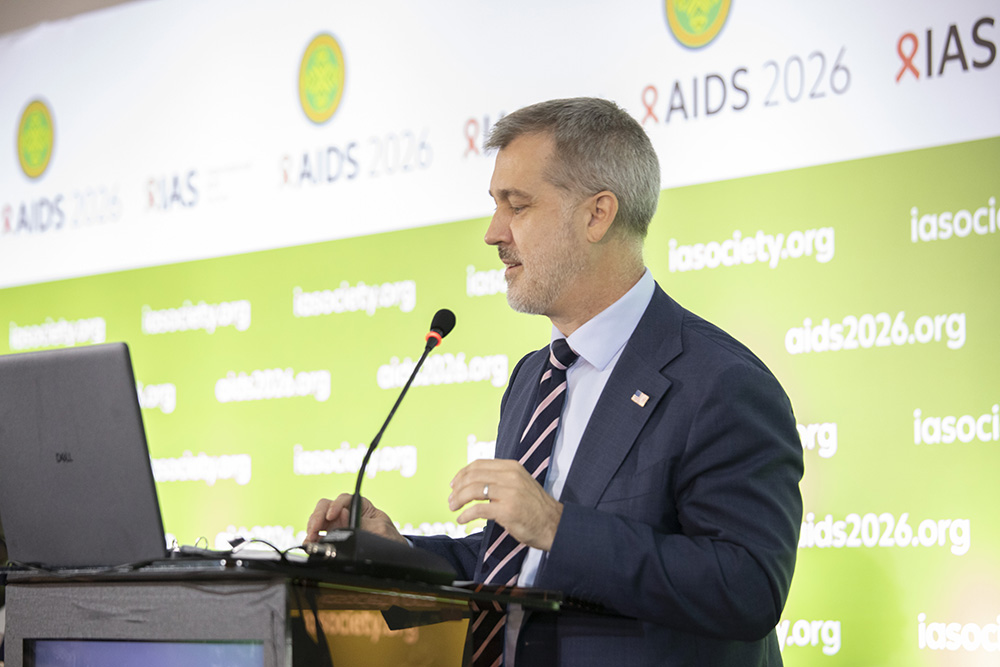
Jeff Graham, the acting U.S Global AIDS Coordinator and Senior Official at the Bureau of Global Health Security and Diplomacy, said the changes are designed to make HIV programmes more efficient, sustainable and increasingly led by recipient countries.
According to Graham, the reforms are intended to redirect more resources to patients rather than administrative costs.
“Under the previous way we moved money in PEPFAR, only 40 cents of every health assistance dollar actually made it to the frontline, to healthcare workers or commodities being delivered. The other 60 cents went to overhead, technical assistance and programme management. That is just too much money. It's an imbalance in the structure, and we can't continue like this,” Graham said.
The comments come as Washington is redesigning PEPFAR after more than two decades of operation.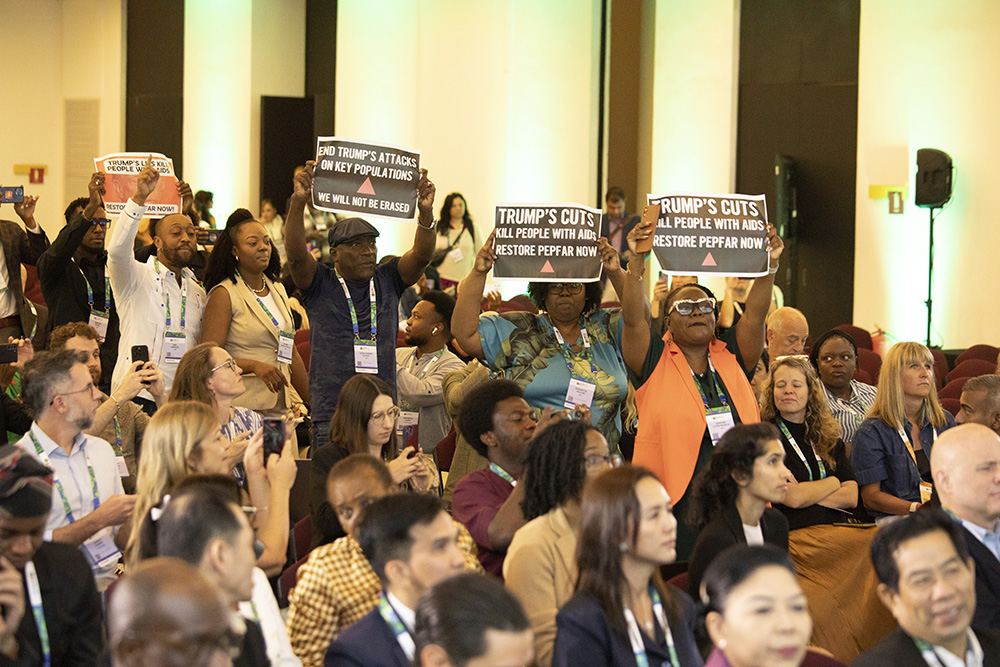
The announcement of the new funding model was overshadowed by protests from HIV activists, who briefly interrupted Graham's presentation during a U.S. government session.
Changing the model, not mission
Despite concerns raised by global health advocates over recent U.S. foreign aid reforms, Graham insisted that US' commitment to fighting HIV remains unchanged.
"I want you to hear this very clearly; the US remains the most generous country in the world. Our commitment to ending HIV is undiminished. We are changing the model, not the mission," he told delegates.
He said misinformation had fuelled fears that the US was abandoning the global HIV response, stressing that life-saving treatment and prevention programmes would continue.
The new strategy shifts away from measuring success by the volume of donor money disbursed and instead focuses on health outcomes, including reducing new HIV infections, increasing viral suppression and strengthening countries' ability to finance and manage their own HIV programmes.
The reforms are a transition from donor-led implementation to government ownership through bilateral Memoranda of Understanding (MOUs).
According to the U.S, 34 countries have already signed five-year health cooperation agreements, while implementation planning is underway in 71 countries supported by U.S global health programmes.
The agreements require recipient governments to gradually increase domestic investment in HIV programmes while the US continues providing financial and technical support.
“We are helping countries build the capacity to solve their own challenges instead of perpetuating dependency,” Graham said.
Under the new approach, the US says it has committed nearly $15 billion in health assistance over the next five years through bilateral agreements, while partner governments have pledged more than $10 billion in domestic financing.
Overall, Washington plans to spend $9.4 billion on global health programmes in the current fiscal year, including HIV, tuberculosis, malaria, maternal and child health, nutrition, polio and global health security.
Rather than relying heavily on international non-governmental organisations, particularly those based in Washington, the U.S government wants more funding channelled through national governments, local organisations, faith-based institutions and domestic private sector companies.
Experts urge focus on impact
Dr Rebecca Fugel, the US Deputy Assistant Secretary for Population, Refugees and Migration, said implementation plans are designed to maximise health impact while strengthening national ownership.
She said governments are being encouraged to integrate HIV with maternal and child health services, tuberculosis programmes, laboratory networks and disease surveillance systems.
“At this time of seismic change, but also of seismic opportunity, all of us have a role in ensuring success. With every action, we should ask not only whether it prevents HIV infections and saves lives, but whether it advances country health sovereignty,” she said.
“We can’t forget any group because if we do, we will fail,” she said.
She was responding to a question about how to include “key populations” – groups most at risk of HIV, including sex workers, men who have sex with men and people who inject drugs – who have been excluded from the new US approach to HIV, which prioritises preventing HIV in mothers and babies.
Activists protest
The announcement of the new funding model was overshadowed by protests from HIV activists, who briefly interrupted Graham's presentation during a U.S. government session.
The demonstrators accused the Trump administration of undermining the global HIV response through funding restrictions and policy changes affecting PEPFAR-supported programmes.
The activists alleged that the administration's approach had resulted in the closure of HIV treatment sites, a reduction in prevention services and disruptions to care for vulnerable populations.
They also criticised what they described as weakened transparency and oversight of PEPFAR programmes.
“The U.S. government must be held accountable for the ongoing global public health emergency they are causing. No matter what the U.S says in conference halls, we must believe the people served by PEPFAR, believe the data, and demand the U.S. reverse course,” said Anele Yawa of South Africa's Treatment Action Campaign.
Asia Russell, Executive Director of Health GAP, said the policy changes threatened to reverse decades of progress in the fight against HIV.
“Erasing decades of progress and accountability to people with HIV and key populations is an outrage, and we must not allow it to continue under our watch,” Russell said.
The protest came as advocacy groups released new figures they said showed significant declines in HIV programme performance under the new U.S policy direction, including reductions in children receiving HIV treatment, a sharp drop in pre-exposure prophylaxis (PrEP) enrolment, and the closure of hundreds of PEPFAR-supported HIV treatment sites.
New data shows that the Trump government is responsible for severe deterioration in programme outcomes, including HIV treatment cut for 77,163 children, 42% reduction in PrEP enrollment, and the closure of 1,700 PEPFAR HIV treatment sites.
The AIDS conference started on Sunday, July 26 and will officially kick off on Monday, July 26, with over 70,000 delegates from around the world, with more than 100 from Uganda who include medics, government, young people, journalists and scientists.