
New tool to enhance diagnosis of respiratory illnesses in children
The application, known as ALRITE (Acute Lower Respiratory Illness Treatment and Evaluation), is designed to support health workers in the assessment, diagnosis, and management of children under five years suffering from acute respiratory conditions such as asthma and other wheezing illnesses.
Stakeholders practice navigating different ALRITE clinical pathways during a stakeholder engagement meeting as part of the optimization and testing of ALRITE, a clinical decision support tool for the management of respiratory illnesses in young children in primary healthcare facilities in Uganda. (Credit: Violet Nabatanzi)
_________________
Health experts have developed a mobile health App aimed at improving the care of children with respiratory illnesses.
The application, known as ALRITE (Acute Lower Respiratory Illness Treatment and Evaluation), is designed to support health workers in the assessment, diagnosis, and management of children under five years suffering from acute respiratory conditions such as asthma and other wheezing illnesses.
The App does not replace routine clinical assessment; rather, it enhances it by guiding health workers through the process of taking history, conducting a physical examination, guiding on treatment, including doses, route of administration and how to assess response to the medicines given to the child.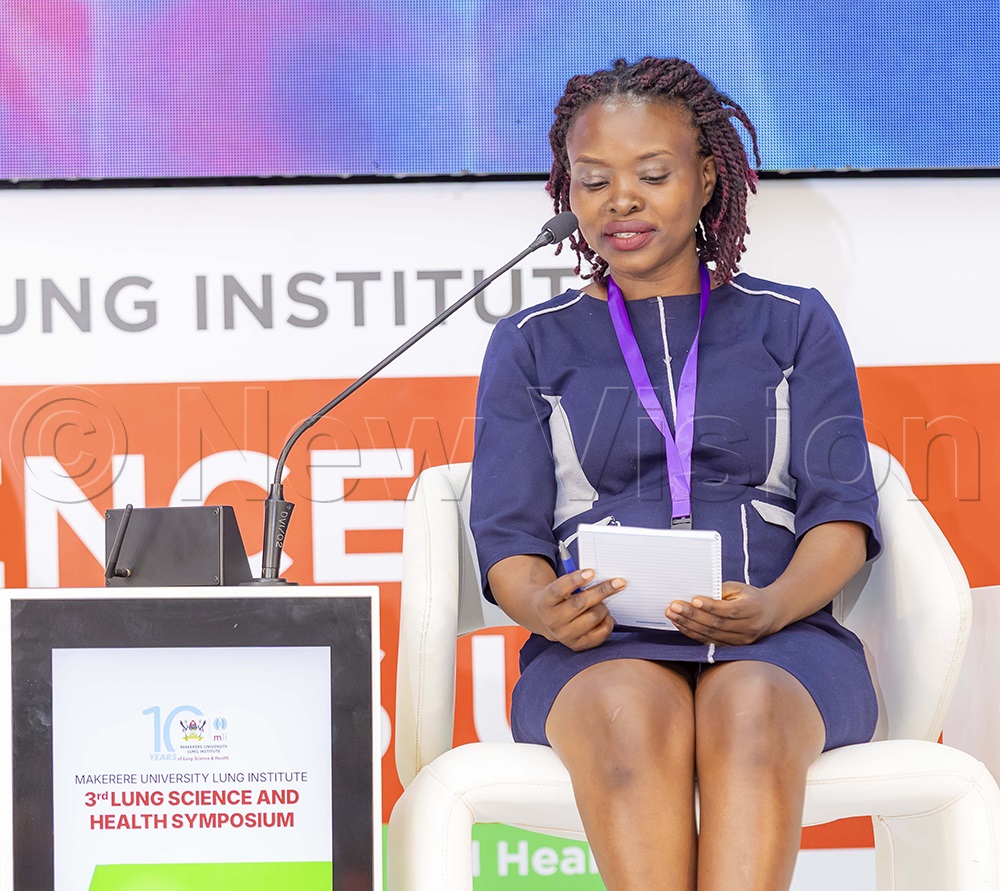
Dr Mary Kuteesa from Makerere University Lung Institute speaking. (Credit: Violet Nabatanzi)
Dr Mary Kuteesa from Makerere University Lung Institute says all this information is incorporated into the mobile tool; therefore, the digital platform makes it easier and faster to do the assessment. It also contains health education materials, including videos, which can be used in providing more information to the caregivers about their child’s illness.
Kuteesa revealed that earlier studies revealed a major gap in the diagnosis of childhood respiratory diseases. Many children presenting with asthma or wheezing symptoms were often misdiagnosed as having pneumonia and consequently treated with antibiotics.
She said this was largely due to overlapping symptoms between asthma and pneumonia, as well as inadequate clinical assessment, including incomplete medical history taking and physical examination.
The App is being developed by Makerere University Lung Institute, in collaboration with the University of Washington and Global Strategies, the Ministry of Health, and the Uganda Paediatric Association. The health workers, too, have been involved in the development of the App right from the start, and their contributions have been extremely useful in making sure that the App is locally relevant.
ALRITE was, therefore, developed to address the widespread underdiagnosis and misdiagnosis of wheezing illnesses and asthma among children below five years.
Statists
Dr Rebecca Nantanda, the principal investigator of the study, explained that asthma statistics from the Mulago National Referral Hospital are alarming.
“Among children under five years who reported with cough and breathing difficulties, we found that 41.2% roughly four out of every 10, had symptoms of asthma,” she said.
Nantanda added that asthma prevalence stands at about 11 % among adolescents and adults, but can rise to as high as 20% in urban settings.
The researchers said ALRITE does not replace routine clinical judgment. Instead, it strengthens it by guiding health workers step by step through proper history taking, physical examination, relevant tests, diagnosis, and treatment.
Speaking on February 13, 2026, in an interview, Kuteesa said the app contains comprehensive guidance on how to assess, diagnose and manage children with acute respiratory illnesses.
"When a caregiver mentions the symptoms of the child and the health workers uses the app to assess the child, the app gives guidance of how to continue with the assessment and treat. It has several pathways which the health worker follows to eventually arrive at a diagnosis and treatment,’’ she said.
Preliminary findings have indicated that the app is very helpful in ensuring that children with respiratory problems are assessed and treated correctly.
Researchers also provide training for health workers on both the clinical content and use of the app, alongside ongoing support, supervision and regular review of data collected through the platform. One of the major impacts of ALRITE has been improved use of medicines.
Kuteesa said the ALRITE is designed to function offline. Internet connectivity is not required during patient assessment and treatment, as data is stored directly on the device. However, the tablet needs to be connected to the internet later to upload information to a secure server for record-keeping.
With respiratory illnesses remaining a leading cause of illness and death among young children, experts believe ALRITE could play a critical role in improving the quality of care, reducing unnecessary antibiotic use, and ensuring children receive timely and appropriate treatment across Uganda.