
NCD Patients lack equal access to multi-month medication
Health experts and patient representatives say the disparity undermines efforts to integrate the management of communicable and non-communicable diseases in Uganda.
Stakeholders attend the 2nd National Annual Communicable and Non-Communicable Diseases and 20th Joint Annual Scientific Health Conference 2026 at Speke Resort Munyonyo on October 29, 2026. (Photo by Juliet Kasirye).
_______________ A cross-section of stakeholders attending the 2nd National Annual Communicable and Non-Communicable Diseases and 20th Joint Annual Scientific Health Conference 2026 at Speke Resort Munyonyo on October 29, 2026. (Photo by Juliet Kasirye).
Patients living with non-communicable diseases (NCDs), including diabetes and hypertension, face unequal access to long-term medicine supplies compared to people living with HIV, forcing them to make more frequent hospital visits and incur additional treatment costs.
Health experts and patient representatives say the disparity undermines efforts to integrate the management of communicable and non-communicable diseases in Uganda.
They called for reforms to ensure patients with stable conditions can also benefit from multi-month dispensing.
The concerns emerged during a discussion organised by AHF Uganda Cares on Wednesday (October 28) at Speke Resort Munyonyo, as part of the 20th Joint Annual Scientific Health Conference and the second National Annual Communicable and Non-Communicable Diseases Conference.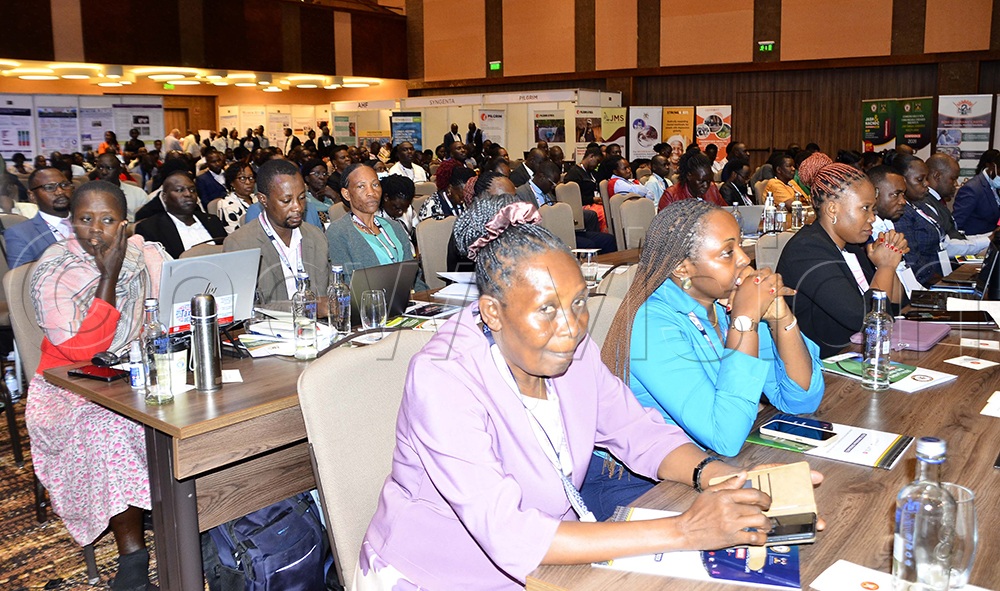
The discussion, held under the theme Equity After Integration: Closing the Multi-Month Dispensing Gap for NCD Care in Uganda, examined how Uganda can extend the benefits of differentiated service delivery to patients requiring long-term treatment for chronic illnesses.
Dr Frank Mugabe, the Ministry of Health’s principal medical officer for non-communicable diseases, said the current arrangement leaves NCD patients at a disadvantage despite the integration of their services with HIV care.
He said 60% of patients with NCDs pay for treatment out of pocket, making the cost of accessing medicines and healthcare a significant burden.
“Health insurance will save this patient from out-of-pocket expenditures, which are catastrophic,” Mugabe said, emphasising the importance of financial protection for people managing chronic illnesses.
He noted that although government has invested significantly in specialised institutions such as the Uganda Cancer Institute and the Uganda Heart Institute, such investments do not necessarily translate into affordable treatment for individual patients.
Mugabe also challenged health facility managers to prioritise NCD medicines and supplies in their budgets, warning that these commodities are frequently affected by stockouts.
He said the Ministry of Health has encouraged the establishment of voluntary patient clubs to help members collectively access medicines and mitigate the effects of shortages.
Mugabe further argued that Uganda should move beyond integrating services at health facilities to achieving financial integration, ensuring patients receive comparable support regardless of the condition they are managing.
Mugabe said multi-month dispensing should be considered alongside the broader needs of patients, including access to screening, monitoring and treatment.
Repeated hospital visits
Explaining the implications of the dispensing gap, Mugabe said patients who receive medicines for shorter periods have to make repeated journeys to health facilities, increasing transport expenses and time away from income-generating activities.
Dr Wilson Kazoora, the Quality Improvement Manager at AHF Uganda Cares, said the imbalance also increases pressure on health workers and facilities.
He said Uganda’s integration of NCD services into existing HIV care structures has improved the identification of patients with conditions such as diabetes and hypertension.
According to Kazoora, case identification for NCDs has increased to more than 72% over the past two years, reflecting improvements in screening and diagnosis.
However, he said identifying more patients must be matched with improvements in the treatment services they receive.
Kazoora noted that stable people living with HIV have benefited from multi-month dispensing models developed over several years, which have reduced unnecessary hospital visits and eased pressure on health workers.
He said extending similar approaches to suitable NCD patients would help reduce the workload at health facilities while lowering the cost of accessing treatment.
Communities demand a stronger role
Flavia Kyomukama, the executive director of the National Forum of People Living with HIV Networks in Uganda (NAFOPHANU), said integration should not undermine existing community support structures that have helped people living with HIV manage their conditions.
Kyomukama, who said she has lived with HIV since 1994 and survived cancer, argued that patients increasingly face multiple health conditions as they live longer.
She said people living with HIV are also developing hypertension, diabetes, cardiovascular diseases and cancers, requiring health systems to respond to multiple conditions rather than treating diseases in isolation.
“We need to move away from beating one disease against the other to actual action," Kyomukama said.
She also raised concerns about the closure of specialised HIV clinics and the transition to general chronic care clinics, saying this could weaken the peer support and psychosocial services that patients previously received.
Kyomukama urged the Ministry of Health to strengthen existing community networks instead of dismantling them during the integration process.
She said community structures could support patient mobilisation, treatment adherence, psychosocial support and village savings initiatives to help households meet healthcare expenses.
She further called for improved community awareness campaigns to address misconceptions and stigma associated with HIV and other diseases.
Government responds
Dr Martha Grace Ajulong, the Ministry of Health’s commissioner for pharmaceuticals and natural medicines, said the decentralisation of medicine distribution already allows patients to collect prescribed NCD medicines from health centre IIIs closer to their homes after assessment at higher-level facilities.
She explained that integration allows patients with different conditions to receive care from the same medical personnel instead of moving between separate clinics.
However, she cautioned against assuming that all NCD patients can immediately receive medicines for several months without clinical monitoring.
Using diabetes as an example, Ajulong said patients require regular monitoring of their blood sugar levels alongside medicine supplies.
She said the government was working to mobilise resources for NCD commodities, adding that a national quantification report had been prepared to guide funding requirements and would be presented to Parliament.
Ajulong also called for stronger accountability in the management of medicines at health facilities to prevent wastage and expiry, particularly as government increases funding for health facilities.
Betty Kwagala, a person with disability, called for special consideration for people like her, saying the cost of transport and difficulties accessing services often make hospital visits particularly challenging.
She said patients using wheelchairs, crutches or requiring sign language interpretation face additional barriers that should be considered in health service planning.