
Mulago to perform 20 kidney transplants by the End of this Year
Prof. Frank Asiimwe, a consultant urologist and transplant surgeon, said the country has so far performed 15 kidney transplants. The milestone comes as Uganda builds local expertise in organ transplant, and is expected to begin performing kidney transplants routinely and independently next year.
Speaking during the 2nd Uganda-UK Health Partnership Summit, which was hosted by the British High Commission in Kampala at the British High Commissioner’s Residence in Nakasero on July 29, Asiimwe attributed the rapid growth of Uganda's kidney transplant programme partly to the partnership between Uganda and the UK, which has supported skills transfer and hands-on training. (Credit: Violet Nabatanzi)
KAMPALA - Mulago National Referral Hospital is on course to perform about 20 kidney transplants by the end of this year, as local surgeons gain the skills needed to independently carry out the complex procedures without relying on visiting surgical teams.
Prof. Frank Asiimwe, a consultant urologist and transplant surgeon, said the country has so far performed 15 kidney transplants.
The milestone comes as Uganda builds local expertise in organ transplant, and is expected to begin performing kidney transplants routinely and independently next year.
“Starting next year, we are going to be doing them routinely because the team of Ugandan surgeons whom I head and lead have picked up the proficiency. We should be able to do them without the visiting teams,” he said.
UK partnership builds local expertise
Speaking during the 2nd Uganda-UK Health Partnership Summit, which was hosted by the British High Commission in Kampala at the British High Commissioner’s Residence in Nakasero on July 29, Asiimwe attributed the rapid growth of Uganda's kidney transplant programme partly to the partnership between Uganda and the UK, which has supported skills transfer and hands-on training.
“In the last three episodes of transplant, the teams that have been coming from the UK and Yashoda Hospital have been allowing us to work while they supervise us,” he said.
Asiimwe said this approach has helped Ugandan surgeons build the confidence and proficiency required to conduct the procedures independently.
Dr Peace Bagasha, a nephrologist at Mulago Hospital, who is one of the beneficiaries of the kidney transplant programme at Mulago, said patients who seek kidney transplants outside the country may require about sh250m, making the procedure unaffordable for many Ugandans.
Bagasha did not pay for the surgery that was carried out at Mulago Hospital, and she is grateful.
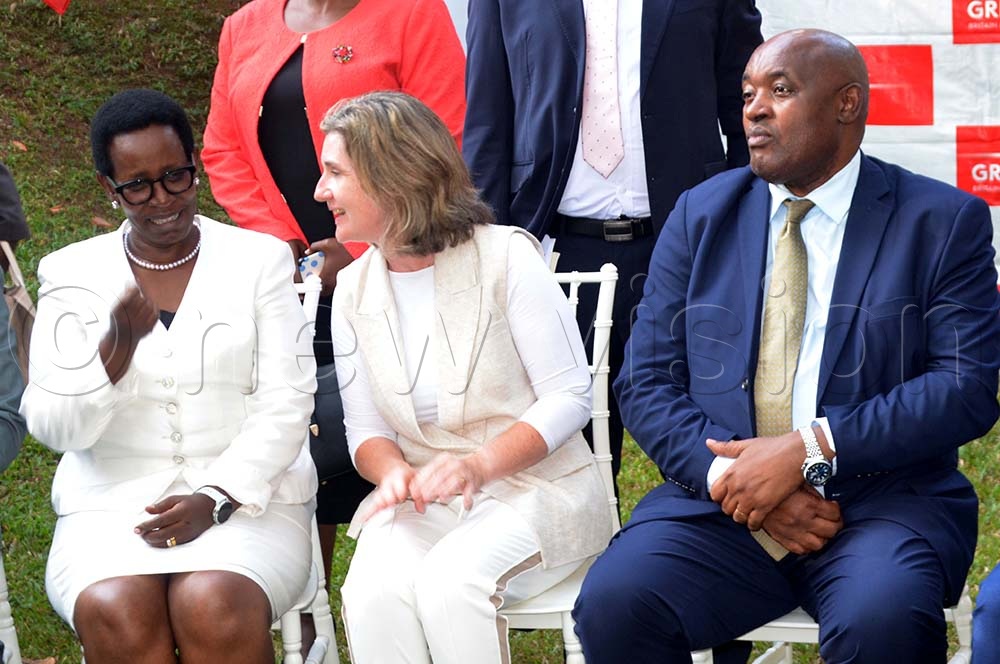
Bagasha said one of the major challenges facing kidney patients is the long waiting period, with some patients waiting for up to two years for a transplant. She said Uganda currently has only about eight nephrologists.
Uganda prepares for liver transplant
Asiimwe said Mulago Hospital is likely to conduct its first liver transplant next year, adding to recent progress in specialised organ transplant services.
Asiimwe said the establishment of the Transplant Council will be critical to expanding transplantation services beyond Mulago National Referral Hospital.
As a result, the Government has set aside about sh5b to operationalise the Uganda Human Organ Donation and Transplant Council this year, paving way for the country to scale up organ transplant services, Dr Charles Ayume, the State Minister for Primary Health Care, revealed.
Ayume said the council is provided for under the law and that it is mandatory for all organ transplant procedures in Uganda to be approved by the council.
“It is going to be a professional council made up of health experts. The Council is a legal body mandated to regulate, organise and supervise human organ, tissue and cell donation and transplantation activities in the country,” Ayume said.
Ayume explained that the council will be responsible for approving hospitals to carry out transplant procedures, rather than requiring individual patients or potential donors to seek approval.
“Not every hospital, doctor or person intending to donate or receive an organ will have to apply. It will be the hospital and the doctor who apply, and the council will give the go-ahead,” he said.
According to Ayume, Rubaga Hospital is capable of carrying out liver transplants.
The minister emphasised the importance of global partnerships in strengthening Uganda’s health system, noting that international support should continue to complement and strengthen domestic capacity.