
King Oyo hailed for championing fight against HIV/AIDS
In his tribute, the Director General of the Uganda AIDS Commission (UAC), Dr. Nelson Musoba, said, "I have engaged with His Majesty severally, and he was a valued, unique partner and champion in Uganda’s response to HIV and AIDS. We remain deeply grateful for his leadership, his voice, and his commitment to the well-being of his people, particularly in supporting efforts to prevent HIV and address its impact on communities."
AIDS Development partners with His Majesty Oyo Nyimba Kabamba Iguru Rukidi IV (RIP) during their visit to Tooro Kingdom. (Credit: Agnes Kyotalengerire)
The HIV/AIDS advocacy fraternity is deeply saddened and devastated by the passing of His Majesty Oyo Nyimba Kabamba Iguru Rukidi IV, the Omukama of Tooro Kingdom, who passed away on Thursday, August 27, 2026.
In his tribute, the Director General of the Uganda AIDS Commission (UAC), Dr. Nelson Musoba, said, "I have engaged with His Majesty severally, and he was a valued, unique partner and champion in Uganda’s response to HIV and AIDS. We remain deeply grateful for his leadership, his voice, and his commitment to the well-being of his people, particularly in supporting efforts to prevent HIV and address its impact on communities."
The Uganda AIDS Commission (UAC) Senior Manager and Partnerships Coordinator, Tom Etti, described the late King as an exemplary leader, particularly among young people. He also hailed him as a unifying, disciplined, and peace-loving king.
“The King played a cardinal role in championing the fight against HIV in the country, particularly in his kingdom. We have witnessed significant progress, including a reduction in new HIV infections in some parts of the Kingdom. For this, we shall deeply miss him,” Etti noted.
The former minister of health in Bunyoro Kitara Kingdom, Joy Catherine Byenkya, described the departed King as amiable.
"Worth noting, King Oyo decried the increased cases of HIV in his kingdom, rallying his subjects to embrace all efforts introduced by the government and other development partners to combat it, Byenkya noted.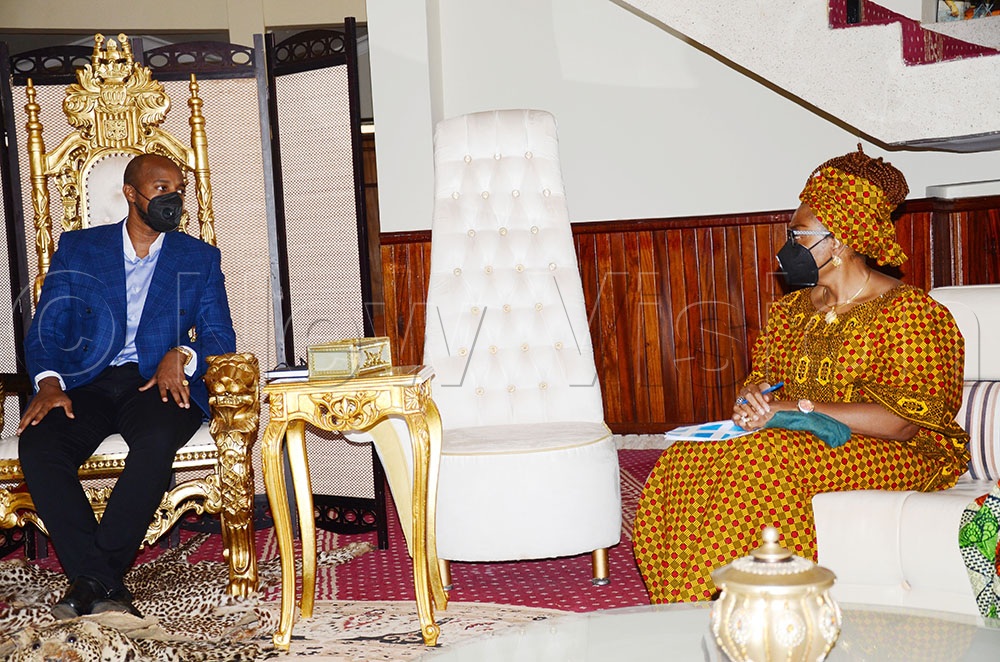
King Oyo in conversation with the UN WOMEN deputy director Adekemi Ndieli, (Credit: Agnes Kyotalengerire)
Catherine Ateenyi Kemigabi, the District Health Educator in Kabarole, said the late King worked closely with cultural leaders to promote health education and disease prevention across the Tooro Kingdom.
According to Kemigabi, His Majesty King Oyo was a key advocate for HIV prevention, sexual and reproductive health, malaria, and maternal and child health.
“I strongly believe this will be sustained. I will miss you, my highest King, Oyo Gutusingire Agutamba,” Kemigabi said.
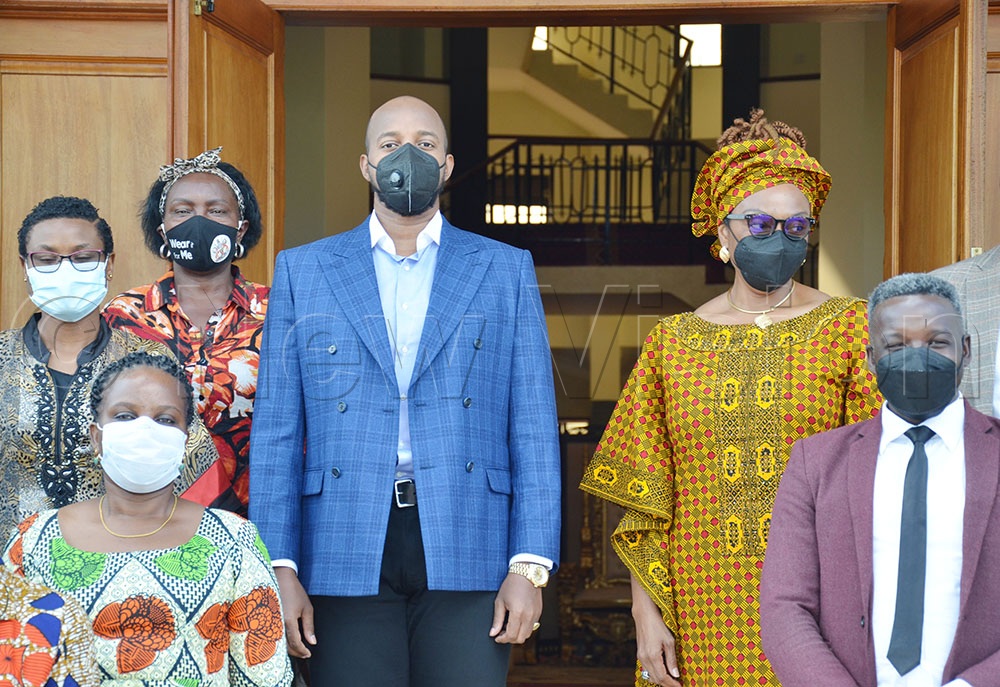
King Oyo with AIDS Development Partners. (Credit: Agnes Kyotalengerire)
Goodwill Ambassador
The late King Oyo served as a prominent UNAIDS Goodwill Ambassador, championing campaigns aimed at ending HIV/AIDS among young people.
He was appointed to champion the global and regional efforts to end AIDS as a public health threat by 2030, with a particular focus on young people in Tooro Kingdom, Uganda, and across Eastern and Southern Africa.
In this capacity, the late King signed local declarations at the Mucwa headquarters and partnered with organisations such as the Uganda AIDS Commission (UAC) to mobilise communities and local leaders in the fight against HIV/AIDS.
As part of efforts to address the HIV burden in the Kingdom, King Oyo spearheaded and led a male HIV testing campaign, encouraging men to know their HIV status and take preventive measures.
His messages largely focused on keeping girls in school, eliminating mother-to-child transmission of HIV, and expanding access to accurate HIV prevention information.
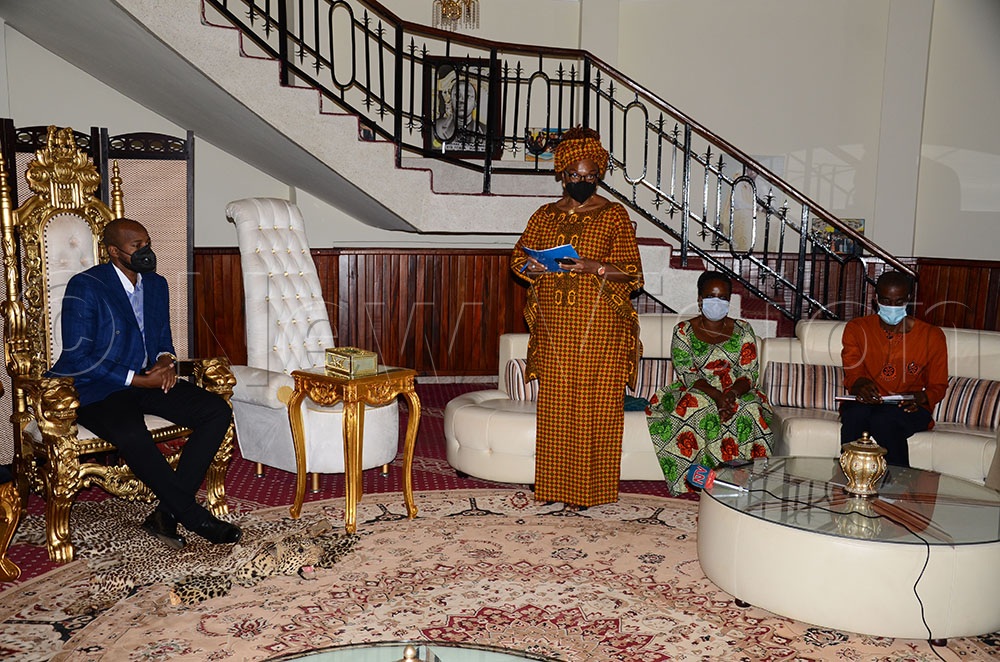
HIV Burden
The 2025 national HIV estimates report has found that Fort Portal City is leading with a prevalence of 14.3%, followed by Soroti City with 11.6% and Mbarara City with 9.9%.
The national HIV prevalence stands at 4.9%, which is a slight reduction from 5.1%. In 2024, Uganda recorded a total of 37,000 new HIV infections.
This simply means that a total of 711 people get infected every week and about five people every hour in Uganda, according to the 2025 national HIV estimates.
Of those, the new HIV infections are alarmingly high among young people aged 15 to 24, accounting for 14,000 (45%). Breaking it down, of those, adolescent girls contributed 11,000 (78%) compared to their male counterparts, who registered 3,000 (20%) of the infections.
Last year alone, the country recorded a total of 20,000 HIV-related deaths, with a total of 54 people dying daily.
Notably, 1.5 million people are living with HIV in Uganda, and of those, only 1.3 million are on treatment.