
Mulago performs 21 kidney transplants in Uganda's biggest-ever camp
Uganda performed its first kidney transplant at Mulago in December 2023, involving a 24-year-old man, Mark Maurice Kiyemba, who received a kidney donated by his brother, Steven Mpagi.
Dr Frank Asiimwe, lead surgeon of the Ugandan team, speaks to one of the diplomats during the visit. (Courtesy)
_________________ British Deputy High Commissioner to Uganda Tiffany Kirlew (in red) speaks to one of the beneficiaries of the free kidney transplant during the visit. (Courtesy)
Mulago National Referral Hospital has performed 21 successful kidney transplants during its seventh kidney transplant camp, potentially bringing to 40 the number of patients who have benefited from the programme since it started in 2023.
The latest camp, which is the largest, to have many beneficiaries started on Monday, November 23, ending November 27th marking another milestone in Uganda's efforts to expand access to specialised treatment for patients with kidney failure, many of whom depend on regular dialysis to stay alive.
Mulago announced the achievement on Thursday, November 26, following a visit by British Deputy High Commissioner to Uganda Tiffany Kirlew to its Organ Transplant Unit.
During the visit, Kirlew interacted with some of the patients recovering from recent operations and witnessed the collaboration between Mulago, the Ministry of Health and KidCare4All in advancing kidney transplant services.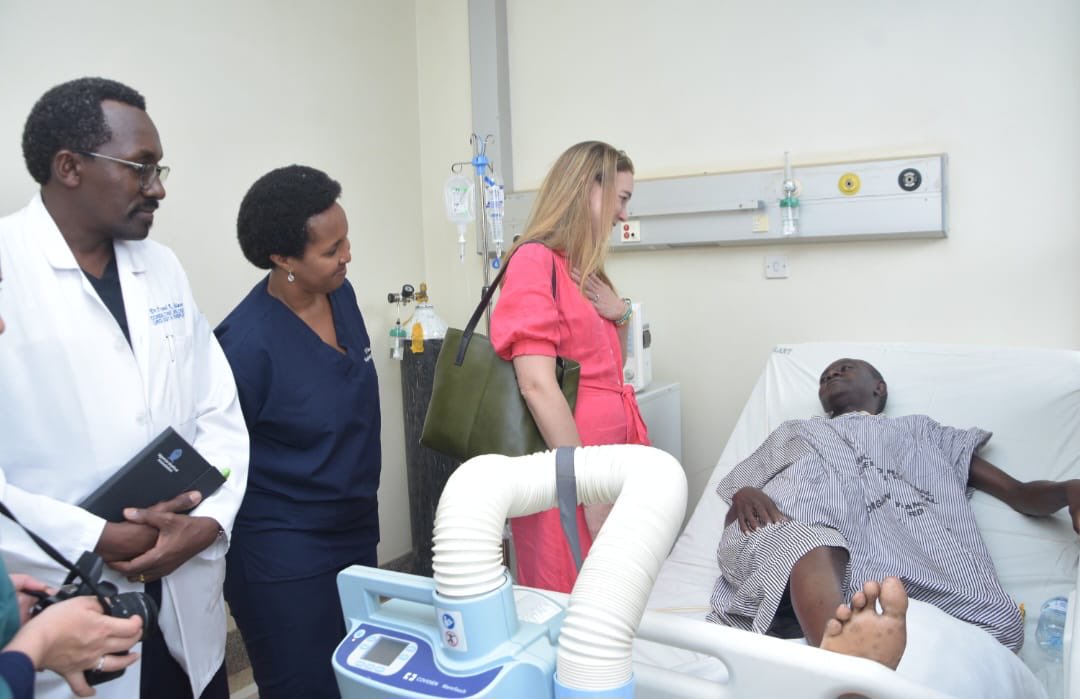
The hospital said it plans to move away from conducting transplants through periodic camps towards offering the procedures regularly. It also plans to establish a specialised training programme in 2027 to equip more doctors across the country with the skills required to perform kidney transplants.
The proposed transition is expected to increase the number of patients accessing the service while reducing reliance on visiting specialists.
Uganda performed its first kidney transplant at Mulago in December 2023, involving a 24-year-old man, Mark Maurice Kiyemba, who received a kidney donated by his brother, Steven Mpagi.
The operation was conducted by a team of Ugandan doctors working alongside specialists from Yashoda Hospitals in India. It marked a major step towards building local capacity for kidney transplantation, which had previously forced many Ugandans to seek treatment abroad.
The programme subsequently expanded through partnerships with international specialists. In July 2025, Mulago conducted four additional transplants with support from doctors from Kidney Care in the United Kingdom, bringing the number of beneficiaries to nine at the time.
The hospital continued conducting transplant camps, with the sixth camp in September 2026 bringing the cumulative number to 19, after four additional patients received new kidneys.
The latest 21 operations would therefore bring the programme's total to 40 patients, provided all the procedures are additional to those previously reported.
During the September camp, kidney specialist Dr Peace Bagasha said Mulago was working towards making transplantation a regular service, initially targeting at least one camp every quarter before eventually progressing to one transplant every week.
Building local expertise
During the September camp, Bagasha revealed that approximately 40 of the 50 specialists involved were Ugandan, while the remaining 10 were foreign experts.
Potential recipients undergo medical assessments to establish their suitability for surgery, while donors are also screened to ensure they can safely donate a kidney.
The planned 2027 training programme is expected to strengthen this local expertise by equipping more doctors with specialised transplant skills, potentially allowing the service to expand beyond Mulago.
The cost of kidney failure
Despite the progress, affordability remains a major challenge for Ugandans living with kidney failure.
According to the Ministry of Health's 2025/26 health sector performance report, Mulago conducted 12,403 dialysis sessions during the financial year and performed 10 kidney transplants, highlighting the continuing demand for specialised kidney care.
Dialysis requires patients to visit health facilities several times a week to have their blood filtered when their kidneys can no longer perform the function.
A session at government facilities costs approximately sh150,000, while private facilities can charge between sh350,000 and sh450,000, according to previous estimates by Mulago kidney specialists.
Although the government-supported transplant programme provides the operation at Mulago, patients must continue taking immunosuppressive medicines to prevent their bodies from rejecting the donated kidneys.
These medicines can cost approximately sh1.5m to sh2m monthly, according to previous estimates by the hospital's specialists.