
Malaria infections in Uganda rising again — survey
“Malaria transmission is high throughout the year in most parts of the country, contributing to the development of partial immunity within the first two years of life,” the report states.
The latest findings show that malaria prevalence among children aged six months to five years increased from 10 percent in 2018/2019 to 13 percent in 2024/2025, reversing gains recorded over the past decade.
KAMPALA - Malaria infections in Uganda are rising again after several years of steady decline, according to a new national survey, raising concern among health experts.
The latest findings show that malaria prevalence among children aged six months to five years increased from 10 percent in 2018/2019 to 13 percent in 2024/2025, reversing gains recorded over the past decade.
The findings are contained in the Uganda Malaria Indicator Survey (UMIS) 2024/2025, released Thursday by the Uganda Bureau of Statistics during a dissemination workshop in Kampala.
The event was presided over by planning state minister Amos Lugolobi and attended by health sector stakeholders and development partners.
(L-R) Albert Byamugisha Board Chairperson UBOS, Allen Kabagenyi board member, Amos Lugolobi State Minister for Finance and Planning, Chris Mukiza Executive Director UBOS and Kasonde Mwinga WHO Country representative during the launch of the Uganda malaria indicator survey dissemination at Uganda Bureau of Statistics (UBOS) in Kampala on March 12, 2026. (Credit: Nancy Nanyonga)
Malaria prevalence among children aged six months to five years had previously dropped sharply—from 45 percent in 2009 to 20 percent in 2014/2015, before falling further to a record low of 10 percent in 2018/2019. However, the new findings indicate that infections are once again rising.
By sub-region, Lango recorded the highest malaria prevalence among children at 32 percent, followed by Karamoja at 26 percent.
In contrast, Kampala registered the lowest prevalence at less than one percent, followed by Kigezi at one percent.
The survey also found a strong relationship between maternal education and malaria prevalence. Among children whose mothers had no formal education, prevalence stood at 17 percent, compared with just one percent among children whose mothers had education beyond secondary level.
Hidden infections
According to the report, malaria prevalence was lowest among children aged six to eight months and highest among those aged 48–59 months, highlighting the need for sustained prevention efforts.
“Malaria transmission is high throughout the year in most parts of the country, contributing to the development of partial immunity within the first two years of life,” the report states.
The report also notes that many people, including children, can carry malaria parasites in their blood without showing symptoms.
“Such asymptomatic infections contribute to further transmission and increase the risk of anaemia and other health complications.”
The survey used three diagnostic methods to detect malaria infections: Rapid Diagnostic Tests (RDTs), blood smear microscopy, and real-time Polymerase Chain Reaction (PCR).
Using multiple diagnostic methods improved the accuracy of the findings.

Chris Mukiza, the Executive Director UBOS addressing participants during the launch of the Uganda malaria indicator survey dissemination at Uganda Bureau of Statistics (UBOS) in Kampala on March 12, 2026. (Credit: Nancy Nanyonga)
Mosquito nets
The survey also assessed ownership and use of insecticide-treated mosquito nets across households.
It found that 84 percent of households owned at least one mosquito net, while 56 percent had at least one net for every two household members who slept in the home the night before the survey.
Most nets (89 percent) were obtained through mass distribution campaigns, while four percent were acquired during antenatal care visits.
About 71 percent of the population had access to an insecticide-treated mosquito net, meaning they could sleep under a net if each net was used by up to two people.
Net usage was highest in Lango at 77 percent, followed by Teso and Ankole at 72 percent.
The lowest usage rates were recorded in Toro and Karamoja at 55 percent, and Acholi at 58 percent.
According to the report, ownership of insecticide-treated nets was lowest in refugee settlements, where only 52 percent of households reported having a net.
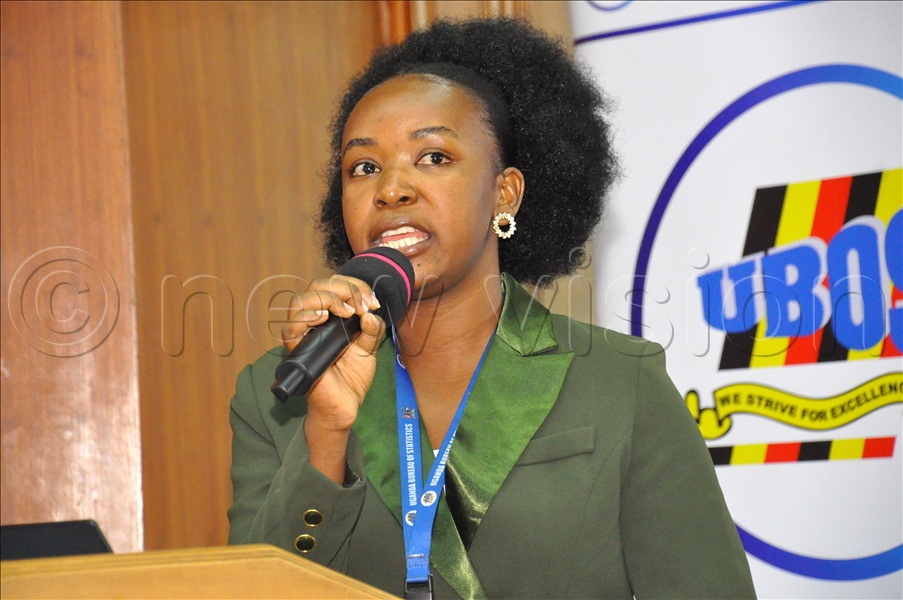
Lillian Akinyi, a Statistician addressing participants during the launch of the Uganda malaria indicator survey dissemination at Uganda Bureau of Statistics (UBOS) in Kampala on March 12, 2026. (Credit: Nancy Nanyonga)
Pregnancy
Malaria infection during pregnancy remains a major public health challenge in Uganda, posing serious risks to mothers and newborns.
The survey found improvements in the uptake of intermittent preventive treatment in pregnancy (IPTp) using sulphadoxine-pyrimethamine (SP/Fansidar).
The proportion of women who received at least one dose increased from 89 percent in 2018/2019 to 95 percent in 2024/2025.
Those receiving two or more doses rose from 72 percent to 87 percent, while women receiving the recommended three or more doses increased significantly from 41 percent to 73 percent.
However, some women reported missing recommended doses due to lack of awareness about the treatment schedule and long distances to health facilities.