
Integration expansion improves health service delivery in diabetes, hypertension fight
At Maziba Health Centre IV in Kabale district, NCD focal person Comfort Muhwezi says the facility treats about 200 patients with diabetes and hypertension each month.
Elijah Agaba, a clinical officer measuring a patient's blood pressure at Kamukiira Health Centre IV. (Credit: Violet Nabatanzi)
Charles Byamukama, 72, recalls the moment he was diagnosed with both diabetes and hypertension as deeply unsettling.
“I felt unhappy because I thought I was the only one facing such illnesses,” he said.
The double diagnosis has affected his ability to work and sustain his income. Once active in his daily activities, Byamukama now struggles to maintain the same level of productivity.
“These diseases have reduced my capacity to work. I cannot do as much as I used to,” he explained.
Despite the challenges, Byamukama has embraced lifestyle changes to manage his condition. He follows medical advice by maintaining a healthy diet and adhering strictly to his medication.
A resident of Kabale district, Byamukama says consistent adherence to treatment has helped stabilise his condition.
However, he appealed to the Government to ensure a steady supply of medicines in health facilities so patients can continue treatment without interruption.
Byamukama is among many Ugandans living with diabetes and hypertension.
Similarly, 73-year-old Karyarugokwe, a mother of eight, is battling both conditions. She says her health has affected her livelihood.
“I used to dig for a living, but I can no longer manage that kind of work,” she said.
Karyarugokwe, a resident of Kiniogo ward in Katuna town council, says she has since resorted to running a small kiosk business, though the income is minimal.
“The little money I get is sometimes used to buy medicine when Kamuganguzi Health Centre III has no stock,” she added.
Statistics
The prevalence of diabetes stands at 2.7%, up from 1.4% less than a decade ago, nearly doubling within that period.
According to Dr Gerald Mutungi, the assistant commissioner non-communicable diseases (NCDs) at the health ministry, hypertension has also increased from 23.4% to 26%, showing the growing burden of these diseases.
At Maziba Health Centre IV in Kabale district, NCD focal person Comfort Muhwezi says the facility treats about 200 patients with diabetes and hypertension each month.
“Out of these, about 160 have hypertension while 40 have diabetes,” he said.
At Kamukira Health Centre IV, approximately 400 patients are treated for diabetes and hypertension, while Kamuganguzi Health Centre III handles about 130 such patients.
Globally, about 74% of deaths are caused by NCDs, with 85% of premature mortality, deaths between 30 and 70% are in low- and middle-income countries like Uganda.
The leading causes of NCD-related deaths include cardiovascular diseases, cancers, chronic respiratory diseases, and diabetes. High blood pressure remains the leading risk factor for heart attacks and strokes.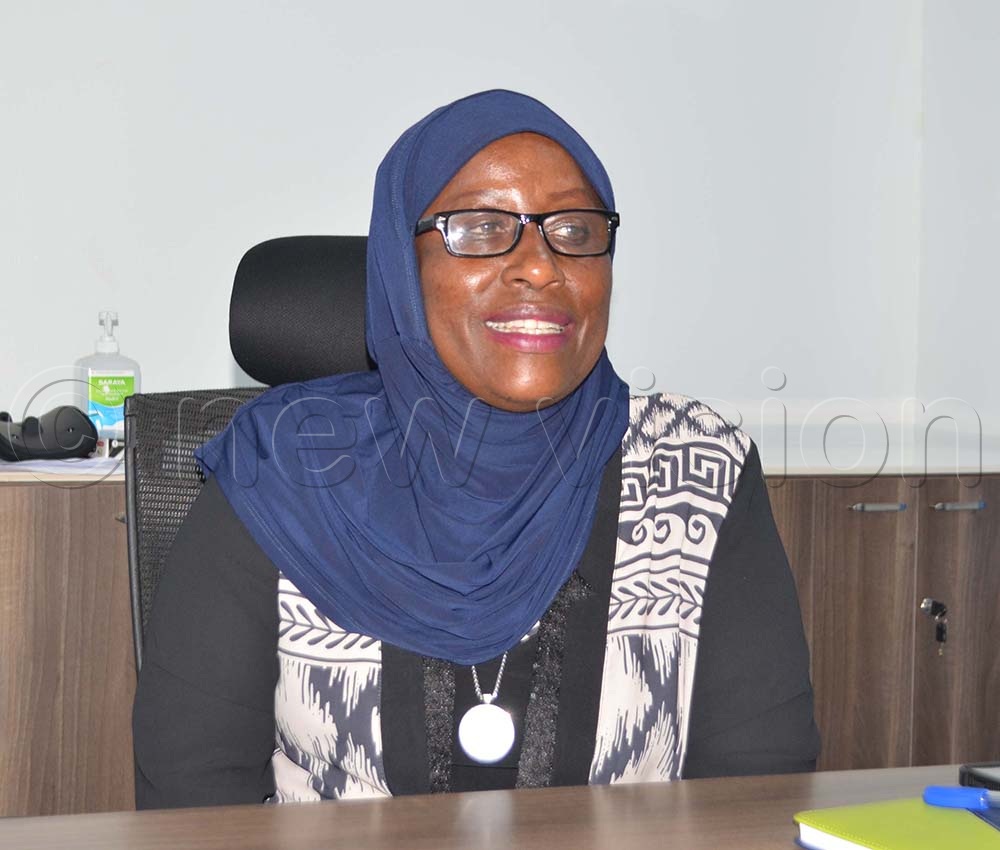
Dr. Hafisa Kasule, Technical Advisor for NCDs at WHO speaking during an interview. (Credit: Violet Nabatanzi)
Integration of services
Muhwezi says the integration of health services at the facility has improved service delivery.
“Patients now receive all services from one place, which reduces movement and allows health workers to provide faster and more coordinated care,” he explained.
Dr Peter Mbabazi, the in-charge of Kamukira Health Centre IV, says health services were previously offered separately.
“In the past, services such as HIV care were provided in isolation. Similarly, chronic conditions like diabetes and hypertension had their own clinic days,” he says.
He noted that facilities have now integrated services to improve efficiency and patient care.
“We combined HIV, diabetes, and hypertension services in one unit. Health workers are rotated to ensure they are skilled in both general and chronic care,” he said.
Under the new system, health workers alternate between general outpatient services and chronic care clinics, ensuring continuity and improved quality of care.
Mutungi says all primary healthcare facilities have been directed to integrate services.
“Previously, facilities focused mainly on malaria and HIV. Now, a patient who comes to a facility must be screened for NCDs and started on treatment if diagnosed with the condition,” he said.
Project intervention
To address the growing burden, the World Diabetes Foundation (WDF), through the World Health Organisation (WHO), allocated euros 1.28 million for a four-year project dubbed D-CARD.
The pilot project, launched in November 2023, is being implemented by WHO in collaboration with the health ministry. The selected districts include Kabale, Sembabule, Koboko, and Lira.
Dr Hafisa Kasule, the technical advisor for NCDs at WHO, says 10 Health Centre IIIs and IVs were selected in each district.
“The goal is to bring services closer to communities, improve screening, treatment, and follow-up, and ultimately reduce deaths from diabetes and hypertension,” she said.
Kasule noted that one major challenge has been limited capacity among health workers.
“Health workers were more familiar with communicable diseases like malaria and HIV. Some even misdiagnosed diabetes cases as malaria, which could be dangerous,” she explained.
To address this, over 200 health workers have been trained to improve diagnosis and management of NCDs.
Improved equipment and capacity
Kasule said the project also equipped health facilities with essential tools.
“We provided blood pressure machines, glucometers, test strips, HbA1c machines, ECG machines, and pulse oximeters,” she said.
Facilities were also given registers to improve data collection and patient tracking.
Oswald Atuhaire, the NCD focal person at Kamuganguzi Health Centre III, said the facility now has adequate equipment.
“We have glucometers and blood pressure machines at every service point. All patients aged 18 and above are routinely screened,” he said.
Mbabazi noted that increased awareness has also contributed to the rising number of patients seeking care.
“As people become aware that they can be screened and treated at health facilities, more of them are coming forward,” he said.