
High prevalence triggers anti-HIV fight drive in Ankole
“We want to assess the coordination between local governments, civil society, and development partners and engage communities and beneficiaries to understand successes and challenges. As well as identify policy and resource gaps that require national-level attention,” Dr Senyonyi noted.
Uganda AIDS Commission (UAC) officials and a team from Mbarara City leadership after the meeting.
In an effort to curb high HIV infection rates, particularly in Mbarara city, officials from the Uganda AIDS Commission (UAC) have embarked on a five-day oversight visit to the Ankole sub-region to assess the implementation of HIV prevention, treatment, and care services.
The UAC team is led by the board chairperson, Canon Dr Ruth Senyonyi, accompanied by the director general of UAC, Dr Nelson Musoba. Also in attendance are UAC commissioner Dr Stephen Watiti, Deborah Kyazike, and Dr Sr. Mary Grace Akiror, who are board members, alongside other UAC management and staff.
The UAC board chairperson, Canon Dr Ruth Senyonyi, said the oversight mission is aimed at reviewing the implementation of HIV prevention, treatment, and care services in the districts.
“We want to assess the coordination between local governments, civil society, and development partners and engage communities and beneficiaries to understand successes and challenges. As well as identify policy and resource gaps that require national-level attention,” Dr Senyonyi noted.
The UAC director general, Dr Nelson Musoba, said the board oversight visit follows the recently concluded National HIV Symposium, where reports indicated high HIV prevalence in the Ankole sub-region. Kiruhura district tops the list with 11.2%, followed by Mbarara City at 9.9%, Bushenyi at 8%, Mbarara district at 7.5%, and Rwampara district at 6.9%, compared with the national average of 4.9%.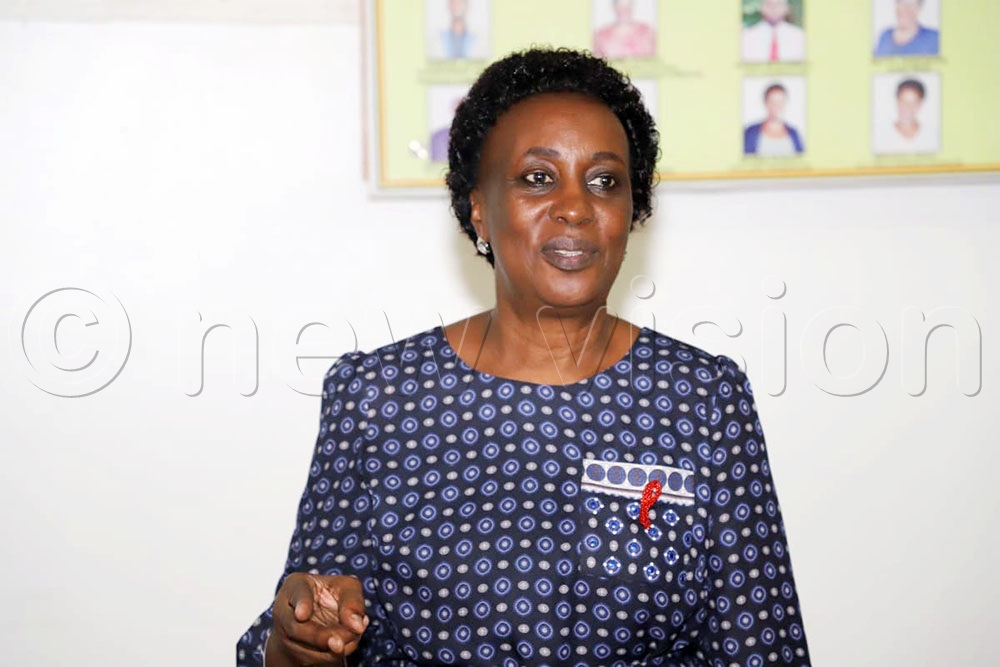
Dr Ruth Senyonyi
The tour kicked off at Mbarara City Hall on March 10, where UAC officials met Mbarara city mayor Mugabe Robert Kakyebezi to discuss the progress of the national HIV and AIDS response at the decentralised level.
As part of the oversight visit, the team also toured Mbarara Regional Referral Hospital, where the head of the Immune Suppressive Syndrome (ISS) clinic, Dr Winnie Muyindike, briefed them on ongoing HIV prevention, treatment, and care services, as well as the challenges faced by the facility.
The same UAC delegation later engaged with district health officials, the resident district commissioner, and the district HIV focal person to discuss the HIV situation in the district and the interventions in place to curb the spread of the disease.
The district HIV focal person in Mbarara, Rogers Arinaitwe, blamed the persistently high HIV prevalence on the district’s status as a transit area, which links several surrounding districts, including Sheema, Ibanda, Kiruhura, and Rwampara.
“People from other districts come to Mbarara to get HIV services. Once found to be HIV positive, their HIV-positive results add to the HIV prevalence of the district,” Arinaitwe noted.
He said many commercial sex workers are based in Mbarara city and seek HIV treatment and care services from health facilities in the district.
Discussions also revealed that HIV infection rates are high among adolescents and young people. Meanwhile, men in Mbarara district are severely affected by HIV but often avoid seeking HIV services.
Mbarara district is also grappling with inadequate HIV supplies. For example, HIV testing kits are insufficient, and transporting samples remains a challenge.
The UAC team also visited the Joint Clinical Research Centre, TASO offices, and Bwizibwera Health Centre IV.
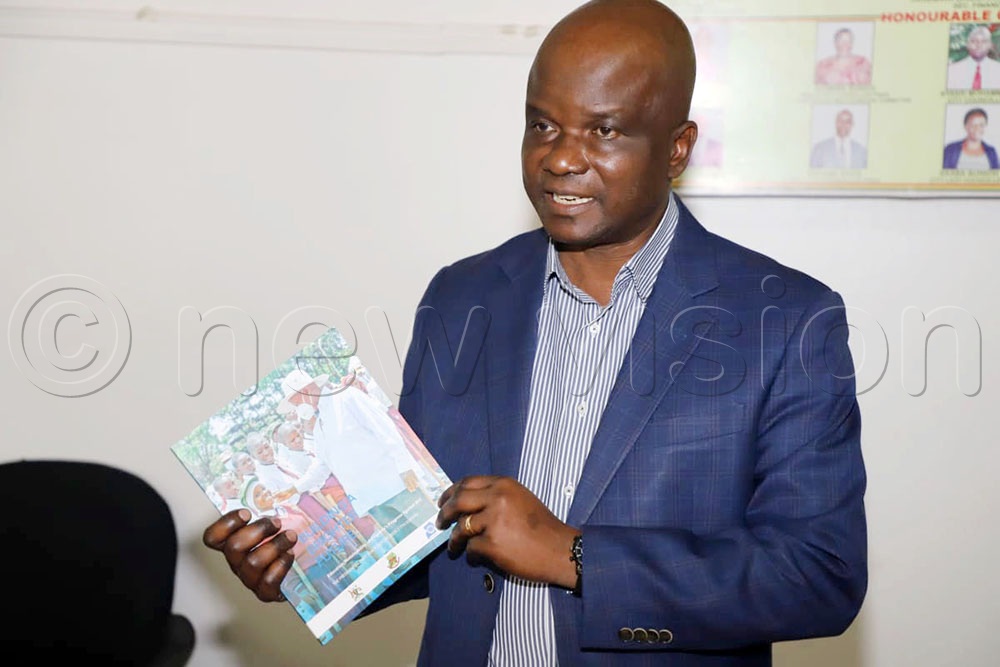
Uganda AIDS Commission (UAC) Director General Dr Nelson Musoba displaying the Presidential Fast Track Initiative during the meeting at Mbarara City Hall.
Today, Wednesday (March 11), UAC officials led by the board chairperson, Dr Ruth Senyonyi, will travel to Kiruhura district to meet the Bishop of North Ankole, Rev. Alfred Muhoozi. Later, the team will visit Rushere Hospital and Sanga Health Centre IV, as well as the Nakivale refugee settlement in Isingiro district.
At 8:00 pm, the team will appear on Radio and TV West to discuss the Presidential Fast Track Initiative pillars.
HIV burden
Uganda continues to grapple with high rates of new HIV infections. In 2024 alone, 37,000 new infections were recorded nationwide.
Young women aged 15-24 remain disproportionately affected, accounting for 78% of infections among adolescents. Four out of every five young people newly infected are girls and young women.
However, the overall HIV prevalence has slightly declined from 5.1% in 2023 to 4.9% last year. Annual AIDS-related deaths have also dropped significantly, from 54,000 in 2010 to 20,000 in 2024.
Approximately 1.5 million Ugandans are living with HIV, with about 1.3 million currently on antiretroviral therapy.