
Health workers trained to leverage skills, AI to start businesses
By leveraging their professional skills, experience and Artificial Intelligence (AI), Aliga adds that health workers, including those in remote areas, can start social enterprises that will benefit them, the organisations they work for and the communities they serve.
Some of the health workers who were given entrepreneurship skills. (Credit: Ritah Mukasa)
“Nurses and midwives can beat unemployment and low salaries by using their unique skills to create their own enterprises,” says Prof. Asher Aliga from Aga Khan University.
By leveraging their professional skills, experience and Artificial Intelligence (AI), Aliga adds that health workers, including those in remote areas, can start social enterprises that will benefit them, the organisations they work for and the communities they serve.
“Identify a problem or need and the service you can offer,” he says. Look at your skill and passion. Then brand it in a way that attracts revenue for you and others.
Aliga shared these tips during an Entrepreneurship in Health training attended by over 50 health workers at the Pan African Holistic Endometriosis wellness centre in Garuga, Wakiso district, recently
The participants included intensive care nurses, midwives, fertility specialists, and theatre nurses from Kampala, Kayunga, Luweero, Mbale, Arua and Buvuma districts.
“I keep reminding my students that there are few jobs. It’s the bitter truth,” he says. “Nowadays, you find 80 nurses competing for one position.”
Instead, he encourages them to put the ideas and skills they acquire into practice and start businesses. The curriculum has also changed to prepare nurses to be job creators, not seekers.
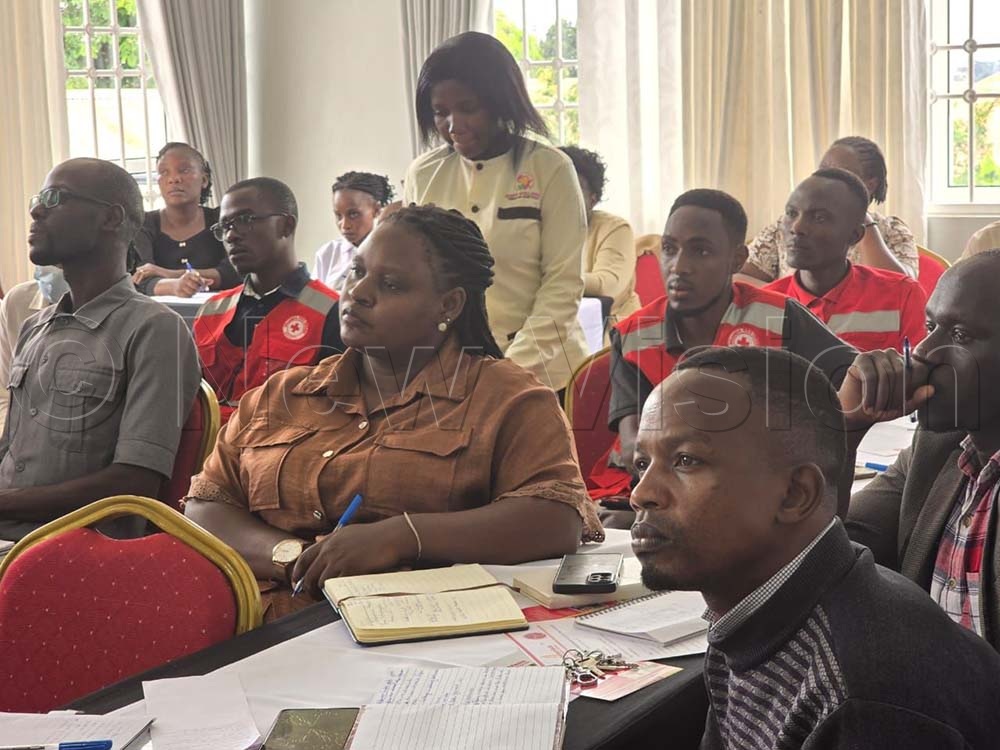
Some of the health workers during the training. (Credit: Ritah Mukasa)
To Aliga, a professional course like nursing is advantageous because the opportunities are unlimited.” In Uganda, he says, over 60% of the population receives health care from private facilities. He wonders why health workers continue to look for jobs when the clients are readily available. “You can also turn ideas into projects that can attract funding.”
He cites an example of his former student Grace Nagawa, who turned her battle with endometriosis into an organisation that is helping over 500 women. Endometriosis is a chronic disease where tissue similar to the lining of the uterus (endometrium) grows outside the uterus. It can cause severe pain, bleeding and infertility.
Nagawa started the Endometriosis Foundation of Uganda (EFU) in 2022 and later partnered with Professor Peter Williams from Australia to establish the Pan Africa Holistic Endometriosis wellness centre, which employs health workers and other professionals.
“The experience you have is gold. You can turn it into several businesses,” he says, adding that he is a book author and highly paid public speaker. He also became an expert on continence issues. He currently charges 600 dollars for each assessment, which takes him only five minutes to complete.
Continence is the ability of an individual to voluntarily control their bladder and bowel functions, allowing them to retain and excrete urine and stool at socially appropriate times and places
“I use skills I already have, and I ensure I update my social media platforms to get more clients.
Meanwhile, during the training, Yangama grouped the health workers and tasked them to come up with business ideas they were passionate about. These ideas included: hospice and pain management, art therapy, a first aid App, a medical law and ethics platform and nursing for first-time mothers. Others looked at setting up women and child protection centres.
David Wamoto, a registered nurse at Kiruddu National Referral Hospital, said that for the past 12 years, he has been carrying out awareness campaigns about non-communicable diseases in hospitals, churches and funerals for free. But now, “I am going to organise and tailor this information for different clients for a fee.”
Rose Kalaala, a midwife at Mulago Specialised Women’s Hospital, also felt empowered to start businesses using the skills she has and also mobilise resources for humanitarian causes.