
Govt turns to postpartum family planning to cut maternal risks and unwanted pregnancies
The intervention integrates family planning counselling and services into maternity and postpartum care. It allows women to access contraceptive methods before leaving hospital after giving birth.
The Ministry of Health Director General launches and receives the beds. (Courtesy photo)
_____________________
Uganda's Ministry of Health has turned to postpartum family planning as part of efforts to reduce unintended pregnancies and maternal health risks, with a programme at Kawempe National Referral Hospital increasing the number of new mothers taking up contraceptive services from about 2% to 19%.
The intervention integrates family planning counselling and services into maternity and postpartum care. It allows women to access contraceptive methods before leaving hospital after giving birth.
Since the Pilot Postpartum Family Planning Programme was introduced at Kawempe in 2024, at least 5,837 women have accessed different family planning methods, including copper IUDs, implants, injectables, oral contraceptive pills and bilateral tubal ligation.
The health ministry said the approach could help women and families plan when to have their next child while reducing missed opportunities for contraception after delivery.
Speaking during the handover of 12 hospital beds worth sh75m to Kawempe National Referral Hospital by Marie Stopes Uganda on Friday (August 14) with support from DAK International Network, Dr Charles Olaro, the director general of health services said postpartum family planning was already showing measurable results.
“This is real impact ensuring women and their families can plan when to have their next birth, and there is no delay in service access, as when they choose to, they can go with a family planning method before discharge from the hospital,” he said.
Uganda expects between 1.7 and two million babies to be born every year, which increases pressure on maternity services and strengthening the case for integrating reproductive health services into routine care for mothers.
Kawempe referral hospital, one of the country's busiest maternity referral hospitals, handles more than 2,400 deliveries every month, including some of the most complex and high-risk pregnancies, according to the ministry of health data.
At Kawempe, the rising uptake of postpartum family planning is being viewed as evidence that integrating the service into routine maternity care can overcome some of the barriers that prevent women from accessing contraception.
Olaro said the growing number of deliveries means that maternity facilities must do more than help women deliver safely, arguing that pregnancy, childbirth and the period immediately after birth provide an important opportunity to offer women information and services that can protect their health in future.
He said the government is working to improve maternal and newborn health as Uganda seeks to reduce maternal mortality from 189 deaths per 100,000 live births to below 140 by 2030.
“Women and families should be able to make informed decisions about when to have their next birth, without facing unnecessary delays in accessing services."
The postpartum programme is designed to provide family planning counselling during pregnancy, labour and after delivery, allowing women who choose a method to receive it before leaving the health facility or at another service point within the hospital.
Health experts said this is particularly important because some women who leave hospital without accessing contraception may face difficulties returning due to transport costs, childcare responsibilities or limited access to services near their homes.
The approach also seeks to prevent closely spaced pregnancies, which can place additional health and financial pressure on families.
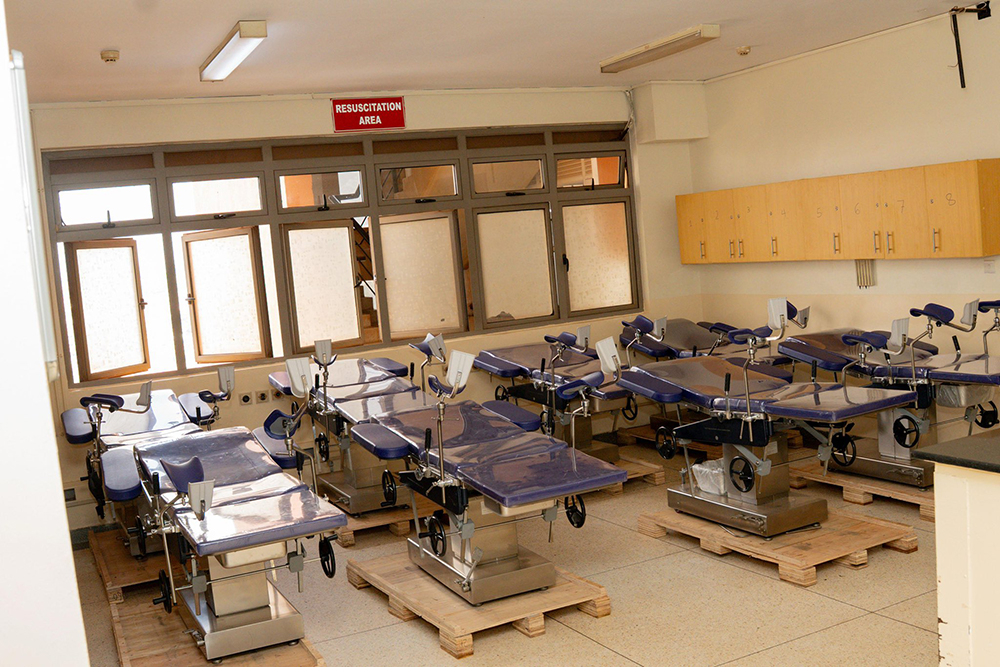
Some of the 12 beds donated by Marie Stopes. (Courtesy)
Dr Richard Mugahi, the commissioner for reproductive, maternal, newborn, child and adolescent health, said strengthening services for mothers must go hand in hand with improving the wider referral system.
Mugahi said that 42% of all national annual births (1.7 million) in the country are unwanted or unintended, which means that the parents were not ready to have the child.
“When 42% of pregnancies are unintended, we cannot afford to wait for women to come back to the health facility after delivery. That’s what we want to cut off with family planning use. We must use every opportunity, including the postpartum period, to provide information and family planning services so women can decide when and whether they want their next pregnancy,” he said.
“Equipping lower-level facilities to manage cases within their capacity can reduce unnecessary referrals, ease congestion at specialised hospitals and bring quality maternal care closer to communities."
The new beds donated to Kawempe are expected to support the hospital's maternity, reproductive health and postpartum services at a time when demand continues to rise.
The 12 beds were handed over by Marie Stopes Uganda under the Pilot Postpartum Family Planning Programme.
Dr Peter Ddungu, the country director of Marie Stopes Uganda, said improving maternal healthcare requires more than medicines and skilled health workers.
“Women and their families deserve to receive services in facilities that are adequately equipped, safe and conducive to quality care,” he said.
Ddungu said the programme had demonstrated how partnerships between the government, health facilities and development partners could expand access to reproductive health services by bringing family planning closer to women at a critical stage of care.
The government is also increasingly looking at decentralising maternal and reproductive health services so that more women can receive appropriate care closer to their communities.
Mugahi said a stronger network of lower-level health facilities would not only reduce congestion at major referral hospitals but also help ensure that women receive the right care at the right facility and at the right time.
Olaro said the government wants to build on such interventions as part of wider efforts to strengthen maternal, newborn and reproductive healthcare.
He urged health workers to provide family planning counselling throughout the continuum of care, starting during antenatal visits and continuing through labour, delivery and the postpartum period.