
Research institutions urged to go beyond academic reports
Dr Mulumba also challenged institutions represented at the forum to identify at least one practical contribution towards implementing the strategy, including financing research, providing technical expertise, supporting capacity development or participating in policy engagement.
Timothy Opobo, Executive Director of Africhild. (Credit: Rhyman Agaba)
__________________ Mondo Kyateka, Assistant Commissioner for Youth and Children's Affairs at the Ministry of Gender, Labour and Social Development (2nd left) and AfriChild Executive Director Timothy Opobo (2nd right) during the launch of the Centre’s five-year Strategic Plan (2026–2031) at Speke Resort Munyonyo in Kampala on November 12, 2026. (Credit: Rhyman Agaba)
Research institutions have been urged to move beyond producing academic reports and ensure their findings translate into practical interventions that improve the welfare and protection of children.
Dr Fazil Mulumba, the head of research at the Office of the President, says research on children’s wellbeing should directly influence government policies, national planning, resource allocation and implementation of programmes instead of remaining confined to academic publications.
He says addressing challenges affecting children required coordinated efforts involving government agencies, universities, research institutions, civil society organisations and development partners, warning that government alone could not overcome the growing concerns surrounding child protection, education and family welfare.
“The child of today is the young person of tomorrow, and tomorrow’s young people will become our policymakers and leaders. How we nurture and support children today will shape the society we become tomorrow,” Dr Mulumba said.
Mulumba, who was the chief guest, was speaking during the launch of AfriChild Centre’s five-year Strategic Plan (2026–2031) at Speke Resort Munyonyo in Kampala on November 12, 2026.
The launch, held during the Partnership and Innovation Forum under the theme, “Evidence. Innovation. Partnership. – Transforming Child Wellbeing Across Africa,” brought together government officials, researchers, development partners, universities, civil society organisations and child welfare practitioners.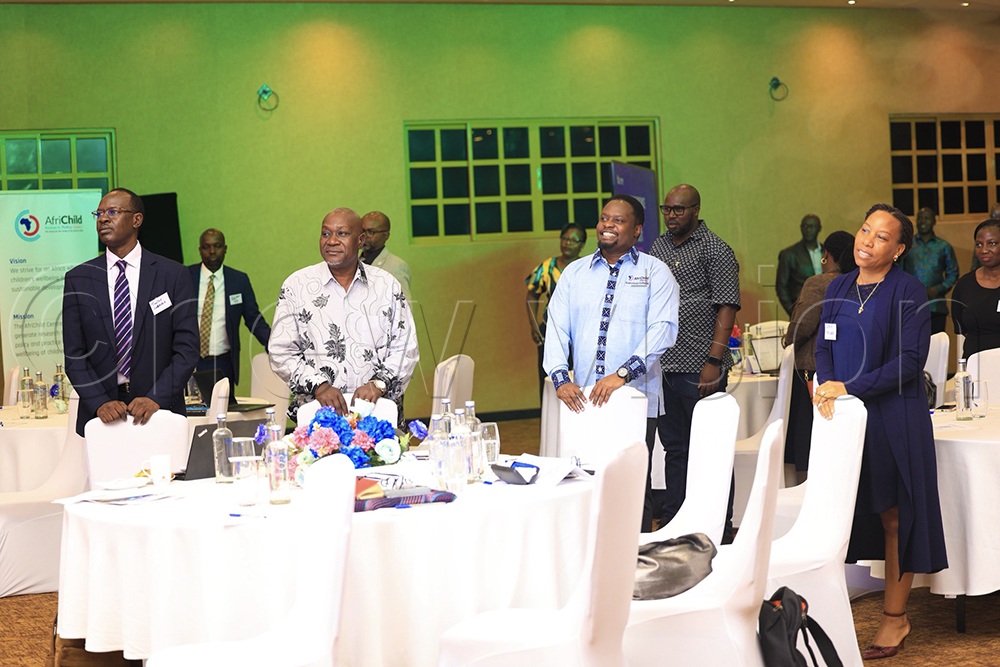
Fazil acknowledged that Uganda had made progress in developing policies, legislation and institutional frameworks to safeguard children's rights but said significant gaps remained in addressing violence, neglect, exploitation, poverty and unequal access to education.
He said the interconnected nature of these challenges demanded stronger partnerships and better coordination among institutions working to improve children's welfare.
The presidential representative particularly challenged research institutions to ensure their findings informed national development priorities and government interventions, arguing that evidence-based decision-making was essential in determining how limited resources were allocated and measuring the effectiveness of programmes.
He called for stronger collaboration between AfriChild and government institutions, including through the Office of the President's apex platform, to create opportunities for research findings to inform policy discussions and programme implementation.
However, he cautioned that launching a strategic plan should not be mistaken for achieving its intended objectives, saying its success would ultimately depend on measurable improvements in the lives of children.
He urged AfriChild to translate its five-year objectives into annual work plans, measurable targets and accountability mechanisms, supported by regular reviews to assess progress and identify implementation gaps.
He further called for comprehensive research into violence, arguing that studies examining violence against children and women should also consider emerging concerns about violence against men to provide a broader understanding of the problem.
Margaret Kakande, Chairperson of the AfriChild Centre Board, said the Board would provide the necessary oversight and accountability to ensure the strategic plan delivers tangible results.
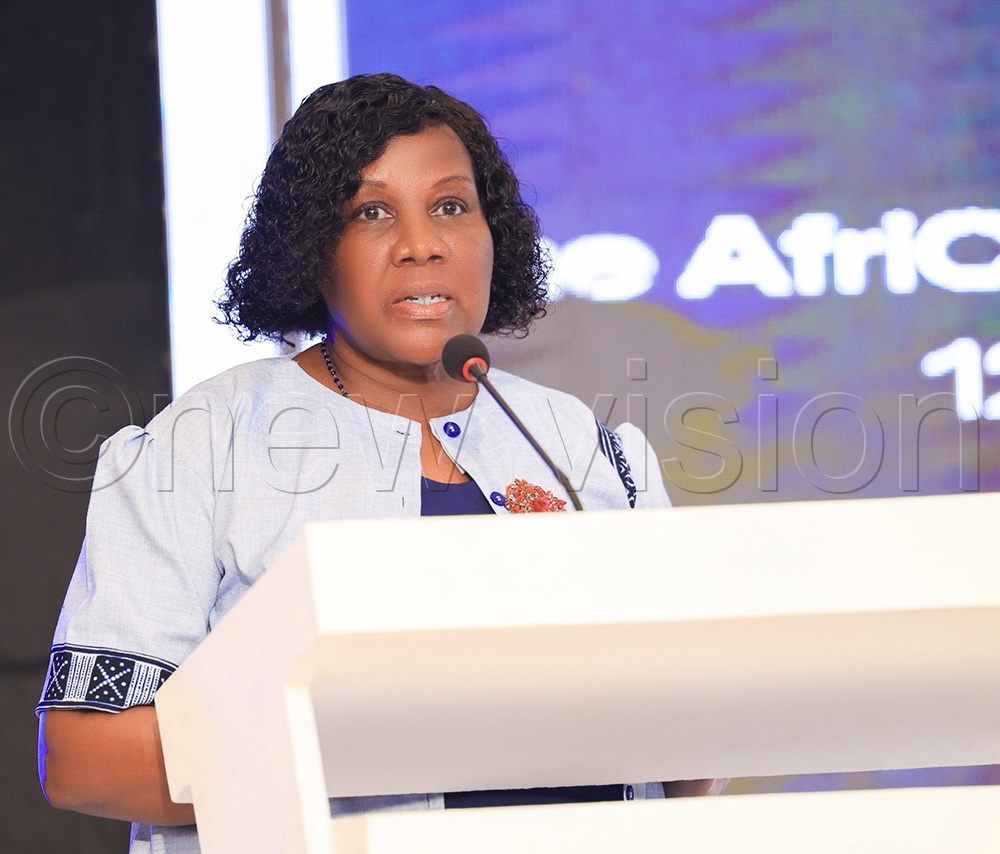
AfriChild Centre Board Chairperson Margaret Kakande speaks during the launch of the Centre’s five-year Strategic Plan (2026–2031) at Speke Resort Munyonyo in Kampala on November 12, 2026. (Credit: Rhyman Agaba)
She said the Centre's ambition went beyond implementing another five-year programme, emphasising the need to build a strong and resilient institution capable of sustaining its contribution to children's welfare across generations.
Kakande said the Board recognised the importance of providing strategic leadership and ensuring that the institution remained focused on its mandate while responding to emerging challenges affecting children and families.
She noted that achieving the objectives of the new strategy would require commitment from the institution's leadership, staff, partners and other stakeholders, particularly in ensuring that the planned interventions produce lasting results.
The strategic plan seeks to strengthen AfriChild's contribution to child wellbeing by improving the generation and application of research evidence, building research capacity and strengthening the institution's sustainability.
AfriChild Executive Director Timothy Opobo said the new strategy marked a deliberate shift from research that largely remains in academic publications to evidence that ordinary people can understand and apply in their daily lives.
He said the Centre had recognised during the implementation of its previous strategic plan that although substantial research was being generated, much of it was not reaching the communities where it was most needed.
Under the new approach, AfriChild intends to adopt bottom-up research that involves ordinary people in identifying challenges affecting children and developing evidence that responds to their experiences.
Opobo said the Centre would engage mothers, boda boda riders and other community members to understand the challenges affecting households rather than relying exclusively on conventional academic research approaches.
“One of our priorities is to continue generating high-quality research, but the difference is that we are going to generate research that is not merely academic, but research that can relate to the common man,” he said.
“We are going to use a bottom-up approach where we are actually going to be researching with the common people on the ground. We are going to go to mothers in the market, hear from them. We are going to talk to boda boda riders.”
Opobo said the ultimate objective was to ensure that research influenced parenting practices, community responses to child protection concerns and government interventions.
He identified poverty, family breakdown, inadequate parental involvement and weak enforcement of child protection laws among the major challenges undermining children's welfare in Uganda.
He said poverty continued to expose children, particularly girls, to harmful practices such as child marriage, with some families reportedly marrying off their daughters in exchange for dowry to address household financial difficulties.
Opobo also blamed inadequate enforcement of existing child protection laws for allowing perpetrators to escape prosecution.
“We have laws in this country, but we have had the challenge that there is no prosecution, and so the people who abuse children get away with it. And so it’s a continuous pattern,” he said.
He further raised concern about declining parental involvement, citing AfriChild's study on the state of fathers, which found that only 40% of fathers provided for their children, while approximately 5% were actively involved in their children's lives.
He said the findings highlighted a parenting crisis in which many children lacked meaningful interaction with their fathers, adding that parental responsibility should extend beyond financial provision to include emotional support, guidance and participation in children's upbringing.
Opobo also highlighted challenges in education, saying approximately 70% of children who enrol in primary school do not make it to secondary education.
He added that among the approximately 30% who complete Primary Seven, only about 25% transition to secondary school, underscoring the need for interventions to address school dropout.
On early childhood education, he said only 9% of Ugandan children had access to preschool education, partly because nursery education remained largely in the hands of private providers, limiting access for children from low-income households.
AfriChild's five-year strategy is anchored on four priorities: generating high-quality research; promoting the use of research findings in policy and practice; strengthening Africa's child-focused research ecosystem; and improving the Centre's institutional sustainability.
The research ecosystem component will focus on mentorship, collaboration and networks involving African research institutions, while institutional sustainability will address governance, leadership, financial resilience, resource mobilisation and strategic partnerships.
Established in 2013, AfriChild Centre is a multidisciplinary research institution focusing on children's wellbeing through research, knowledge development and engagement with policymakers and other stakeholders.
Its work covers early childhood development, violence against children, child protection, education, and child and adolescent mental health.
The new strategy seeks to bridge the gap between research and action, with its impact expected to be reflected in improved child protection, stronger families, better educational opportunities and safer communities.