
When Uganda’s returning celebrities face different industry realities
Back then, Kid Fox was no mere musical footnote. Kapere featuring Bebe Cool, Nimechoka, Zinunula and Luganda Nemikwano were certified club bangers, competing for airplay with Jose Chameleone’s breakout Bageya, featuring Kenya’s Red San and Ogopa DJs. Kid Fox had the hits, the swagger and the spotlight. Then, just like that, he disappeared.Decades later, his comeback from Japan was anything but discreet. Eager to reclaim his place and reconnect with Uganda’s music scene, Kid Fox hit the media circuit. But one seemingly innocent question—"Who is Bobi Wine?" I don’t know him”—turned his comeback into a social-media bonfire.
Singer Kid Fox chose to court controversy to be accepted after his recent return
When Kid Fox (real name Steven Kiggundu) was ruling Uganda’s music scene in the late 1990s and early 2000s, King Saha was barely 10, probably still learning the fine art of paddling a canoe on Lake Victoria.
Weasel? He hadn’t even entered Jose Chameleone’s orbit, let alone contemplated lacing his shoes. And Bobi Wine? He was still putting the finishing touches on Kagoma, his breakthrough song.
Back then, Kid Fox was no mere musical footnote. Kapere featuring Bebe Cool, Nimechoka, Zinunula and Luganda Nemikwano were certified club bangers, competing for airplay with Jose Chameleone’s breakout Bageya, featuring Kenya’s Red San and Ogopa DJs. Kid Fox had the hits, the swagger and the spotlight. Then, just like that, he disappeared.
Decades later, his comeback from Japan was anything but discreet. Eager to reclaim his place and reconnect with Uganda’s music scene, Kid Fox hit the media circuit. But one seemingly innocent question—"Who is Bobi Wine?" I don’t know him”—turned his comeback into a social-media bonfire.
Chameleone, Weasel, King Saha and an army of “Bobi Tasobya” devotees descended on him, effectively telling the returning star that Uganda’s music scene had moved on and that he might want to read the room before claiming his old seat.
Kid Fox later explained that he was only pretending not to know Bobi Wine to generate publicity. Mission accomplished. He went viral. Unfortunately, the internet came with a bill: a torrent of insults so fierce that the singer, now in his late 40s, reportedly contemplated catching the next flight back to Nagoya.
His bruising homecoming is more than a celebrity spat. It is a cautionary tale for a generation of Ugandan stars who left at the height of their fame, only to return and discover that the music and entertainment industry did not freeze in their absence. Like Jose Chameleone, another veteran pointed out, nostalgia may remind you of your hits, but the new generation wants to know what you have got now.
There is a particular silence that follows a Ugandan celebrity home from the diaspora. Luckily, Kid Fox believes in his craft and has already hit the performance circuit, performing at Kevin Lyttle’s Serendipity Splash party at Guvnor, Lydia Jazmine’s concert and making guest performances at top hangouts in town.
Kid Fox says, “There is always room at the top for talent. I may have doubters today, but my talent, consistency and determination will soon turn those doubters into my loudest cheerleaders.”
He, however, acknowledges how difficult it has become to keep up with Uganda's rapidly changing music scene after years away. He says he has tried using TikTok to follow newer musicians but remains unfamiliar with many of the names dominating today's industry.
From Deportation to Redemption
Unlike Kid Fox, Maddox Sematimba, arguably one of Uganda’s reggae greats, returned quietly after his deportation from Sweden in 2009, where he lived for 18 years. He had become a recognisable reggae voice with songs like Namagembe, Tukolagane, and Eddembe, among others.
At the time of deportation, he struggled with alcohol and substance abuse and went completely under radar. When he landed here, he battled ‘personal demons’ and bingeing replaced music. He suddenly stopped singing and had several brushes with the law. In 2013, he was nabbed alongside other idlers smoking weed and served time in jail.
For someone with such talent, there were several efforts to resuscitate his career here in Uganda. Joseph Batte, a veteran music judge and critic, recalls that several individuals stepped in to ensure Maddox Sematimba’s talent never went to waste; it initially never worked.
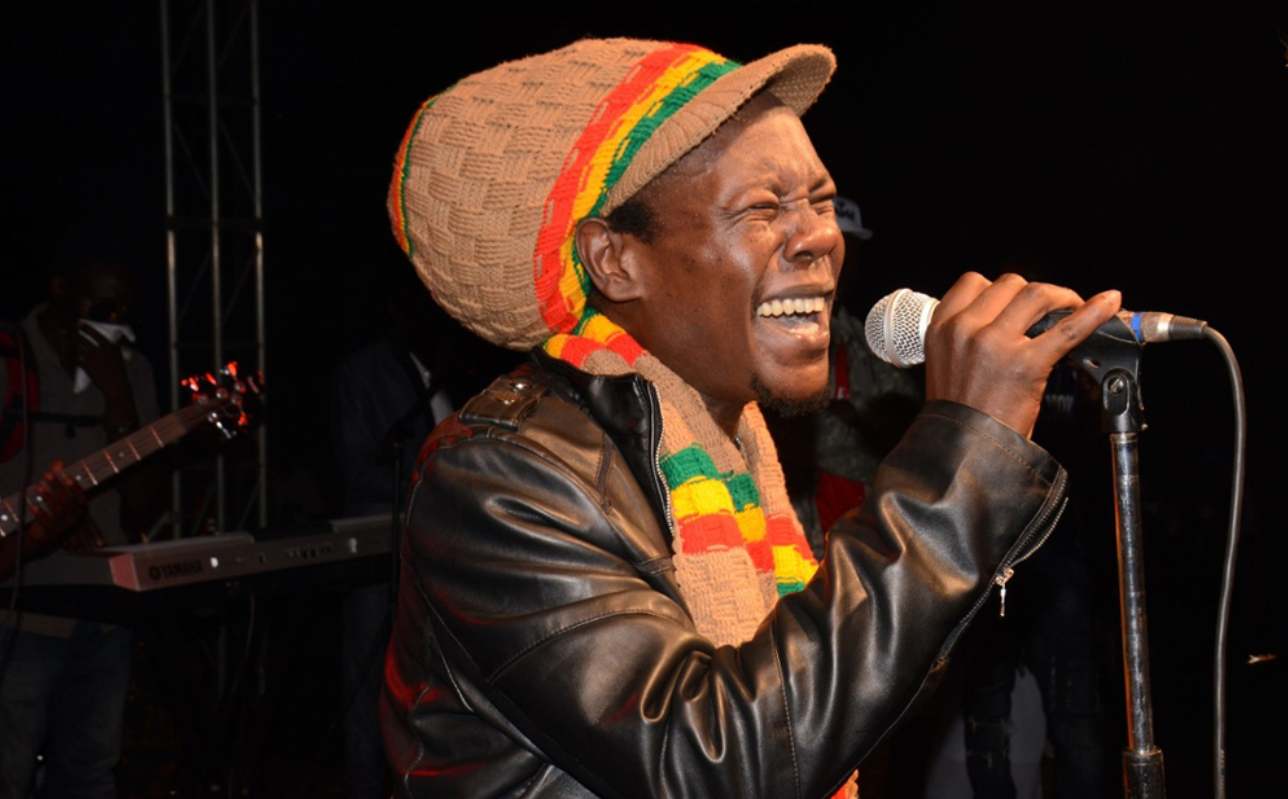
Maddox Sematimba came back to a different reality after 18 years away in Sweden. File Photo
“I remember singer Ragga Dee held a fundraiser to bail out Maddox, but it failed. It was lawyer Kavuma Kabenge whose intervention saw him bailed from Luzira after he was locked up following a sh14m unpaid hotel bill," Batte recalls.
Maddox’s pride was legendary. He appeared unapologetic. Before the cops, he once swore that he would never quit marijuana, because it helped with his creativity.
Rather than disappearing completely, however, he began reconnecting with audiences through live performances. Swangz Avenue’s Benon Mugumbya, who got Maddox some of his come-back gigs, attributed it to the singer’s easy approach attitude.
"There were a lot of vibes that he was complicated, but that was not entirely true. Many people asked me how I managed to get him to perform at Roast and Rhyme. The answer is I tasked him to get a manager, and the rest fell in place,” he recalls.
Today, he has rebuilt a loyal audience that valued his music for its depth, has resumed travelling abroad for performances with a Ugandan passport and is a major fixture on the music calendar.
What happens when a celebrity migrant has to start again?
Before social media influencers and celebrity podcasts, there were Uganda's pioneering FM personalities. DJ Rasta Rob (Robert Ogwal) was one of them. 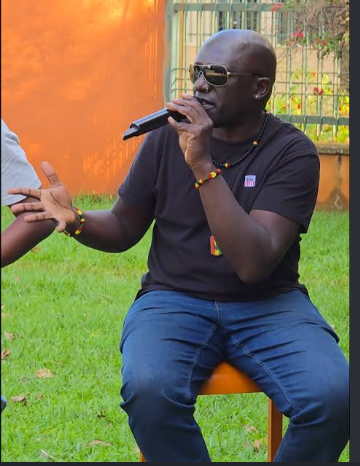
Rasta Rob ( Robert Ogwal) reveals it took him a while to reconnect with the Ugandan audience after a stint in the UK. File Photo
He was among the early generation of celebrated Ugandan FM radio personalities in the 90s. He later moved to the United Kingdom, ostensibly to do odd jobs, mainly as a night watchman (he insists he was deejaying and working in radio while studying broadcast journalism).
His return wasn’t on a mountain of hype and swagger. It was a quiet return. He appeared a shadow of the celebrity he used to be – just a polished Cockney accent and nose pin. The entertainment landscape had changed considerably. His fallback position? A job at a less contemporary FM station. His job description: engaging in Luganda idioms with the ‘Mama Afuswa' and 'Mama Fabregas' from Nateete, who were regular callers. He left for deejaying. For a man who could attract crowds simply by parking his car on Kampala Road, not many really care about him as he jogs past (he is a fitness enthusiast). Lately, he is into podcasting and playing oldies music.
Rasta Rob’s fate is not different from Shanks Vivi D (Robert Baguma). Shanks was part of LSST, a pioneering Ugandan music quartet that played a significant role in the early days of Uganda’s urban music scene. It comprised Luther Martin Kintu, Steve Jean, Shanks Vivi D and Terry Divos. Shanks left for London, UK. His long stay in the UK sparked rumours regarding his whereabouts and well-being. After decades, he returned, rebranded to Amashanka, and promised to mentor young artistes, but that dream, to date, remains on paper.
America isn’t better than Uganda.
Before becoming a familiar face in Ugandan comedy and entertainment, Bashir Kawuki (Mc Kapale) lived a remarkably difficult life. He worked as a casual labourer, builder, video-hall attendant and shop attendant before finding his way into entertainment.
He also tried his luck abroad. He is full of regrets. In a recent interview, he spoke about his experience in the United States.
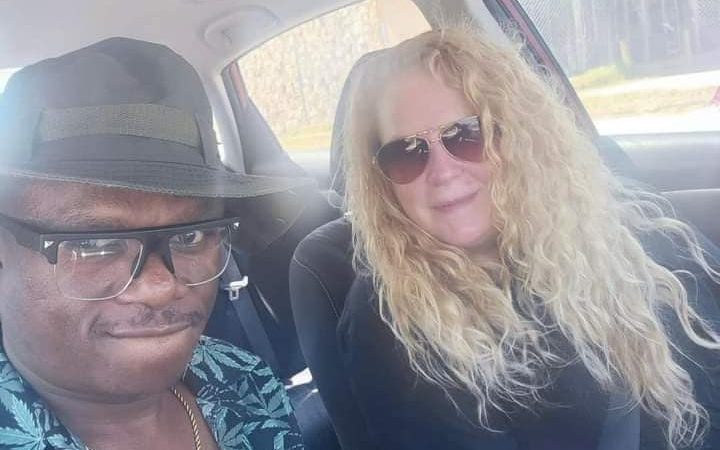
Comedian MC Kapale complains he has failed to get a single gig since his return from the USA
“It was far more difficult than I expected. I regret the decision to move abroad,” he said.
Upon return, Kapale anticipated that he would be the most booked comedian for gigs, as he was bristling with fresh content. He was wrong. No bookings came. “Ugandans are bad people. Instead of embracing me, they have chosen to alienate me,” he said, insisting that if anyone were to book him for a gig, they must pay in dollars.
That is the invisible cost of leaving.
Steven Malwadde, a music promoter with Kilimanjaro Media, says that an artiste can return physically to Uganda to discover that culturally, commercially and technologically, the country has moved on.
He reveals that artists who dominated radio in the 1990s and 2000s now compete in an environment driven by TikTok, streaming platforms, short-form videos and constantly changing audience tastes.
“These artistes left at a time when a hit song would dominate radio for months and television appearances were major events. Today, the audience has changed and the music business has changed. Social media has created a new generation of stars who can become famous from a bedroom, TikTok video or viral moment,” Malwadde says.
Malwadde, however, rates Kid Fox’s chances of hitting it off from where he left off. He predicts that if current patterns are anything to go by, a Kid Fox concert is on the cards. Why?
“When Kid Fox returned, he went straight to social media and attacked Bobi Wine and Bebe Cool. This tickled many who rushed to do research on him. Remember, there was once a rumour that he had died in Japan. He has followed it up by lining up a collaboration with Alien Skin. This will not only revive Alien Skin but also elevate Kid Fox. Before you know it, he will have a successful concert and become mainstream once again,” he explains.
He says that these veterans possess something the new generation cannot manufacture overnight, which is history. Their main challenge is not to recreate the 90s but to translate the legacy into 2026 through collaborations with younger artists, mentorship, live performances, re-recordings and carefully curated comeback projects.