
University deans equipped to strengthen student support systems
“We are targeting scaling up orientation programs for new students is crucial for facilitating a smooth transition into university life. It provides them with essential information about academic expectations and the campus environment,” Chimulwa said.
Chimulwa explained that the five-year programme is co-implemented by the Ministry of Education and Sports, the Ministry of Health, and the Ministry of Gender, Labour and Social Development, targeting Higher and Tertiary Education Institutions and universities. (Credit: Wilfred Sanya)
KAMPALA - The Ministry of Education, in collaboration with the United Nations Educational, Scientific and Cultural Organization (UNESCO), has trained over 60 deans of students to address the evolving challenges faced by students in higher education.
Teddy Nabwire Chimulwa, UNESCO national project officer for education for health and wellbeing, said the training programme attracted deans of students from higher learning institutions, including public and private universities, at their offices in Kampala on April 2, 2026.
The dean of students serves as the primary advocate for learners, ensuring students' voices are heard and providing a "first port of call" for any challenges in adjusting to the university environment.
Chimulwa revealed that UNESCO has a total budget of $750,000 (about sh2.8b) for five years to support the programme.
“We are targeting scaling up orientation programs for new students is crucial for facilitating a smooth transition into university life. It provides them with essential information about academic expectations and the campus environment,” Chimulwa said.
“Effective orientation programs, which are a key focus for Higher and Tertiary Education Institutions (HTEIs), help new students build confidence and familiarise themselves with campus resources, including libraries and student support services,” Chimulwa noted.
She added that programmes also promote social integration and peer support by encouraging students to build networks through orientation workshops, meetings with university leadership, and the appointment of student representatives.
Students assume life ends at campus, but if they are informed earlier, they would not get into problems such as pregnancies, depression and HIV/AIDS, and expect to have a smooth transition even after campus, Chimulwa said.
She added, “Comprehensive Induction: Ensuring all first-year students participate in programs that introduce them to the university environment, social life, and campus resources. UNESCO had an orientation meeting with deans of students from various universities with a programme dubbed UNESCO O3 Plus program targeting Higher and Tertiary Education Institutions (HTEIs) in East and Southern Africa."
Chimulwa explained that the five-year programme is co-implemented by the Ministry of Education and Sports, the Ministry of Health, and the Ministry of Gender, Labour and Social Development, targeting Higher and Tertiary Education Institutions and universities.
Several youths have benefited from this programme and have graduated from various universities with first-class or upper second-class degrees, while others have been retained as junior lecturers at universities.
Chimulwa noted that many university students face a knowledge gap that exposes them to significant risks, including sexual and reproductive health challenges such as early or unwanted pregnancies, sexual and gender-based violence, and unsafe abortions on campus.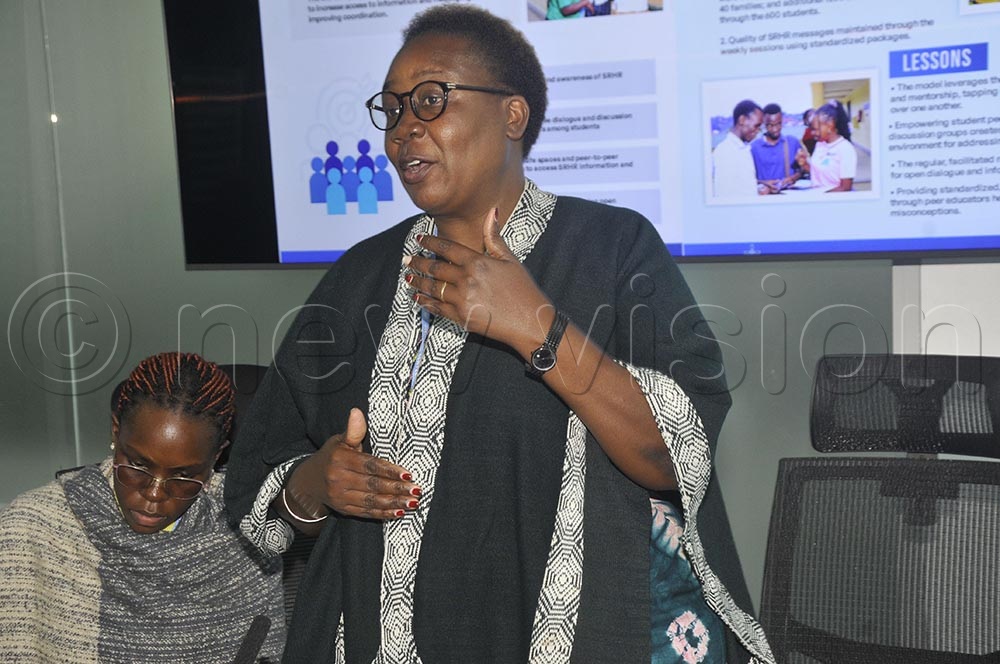
Teddy Nabwire Chimulwa, UNESCO national project officer for education for health and wellbeing, said the training programme attracted deans of students from higher learning institutions, including public and private universities, at their offices in Kampala on April 2, 2026. (Credit: Wilfred Sanya)
How MUK has solved the issues
Many youths enter higher learning institutions with limited knowledge about their sexual and reproductive health rights, making them vulnerable to sexual violence and exploitation.
UNESCO applauded Makerere University Vice Chancellor Prof. Barnabas Nawangwe for enforcing a strict zero-tolerance policy against sexual harassment to protect students and staff.
He has established investigation committees, enforced policies against gender-based violence, and promoted awareness to ensure a safe and conducive learning environment, Nabwire observed.
Ministry experts weigh in
John Ochira Pakony, assistant commissioner in charge of university education and training at the Ministry of Education, said, “A section of the parents left the responsibility of grooming their children to the dean of students, because they are busy making money with no time to talk to their children".
“The youths at university can't make informed decisions with poverty everywhere that parents can't provide enough pocket money, these compel students to engage with men or sugar mummies in exchange for money and sex, which interferes with their academic performance.
“Since campus brings freedom to a lot of people, they tend to engage in behaviours that they were shielded from by their parents, and lecturers also abuse female students at the university, they demand sex for marks,” he alluded.
Henry Ssemakula, principal education officer for university education and training at the Ministry of Education, said that besides counselling students, deans of students should also consult non-teaching staff, such as security guards who monitor access points.
Dr Rebecca Kukundakwe, a diversity, equity, inclusion and gender expert recently awarded a medal by President Museveni for promoting gender equality, said, “We are living in a changing world that requires solutions.
Dr Kukundakwe welcomed the initiative, saying it encourages young people to move away from non-constructive activities and towards productive and sustainable development ventures.
She emphasised that with a large youth population in universities, such participation is critical, quoting a development slogan, “Anything for us without us is not for us."
She added that while deans of students may not completely resolve students’ challenges, they play a crucial role in listening to them.