Surviving job market squeeze: Makerere graduates urged to embrace entrepreneurship
Nawangwe urged the graduands to remain alert to opportunities within their communities rather than focusing solely on formal jobs.
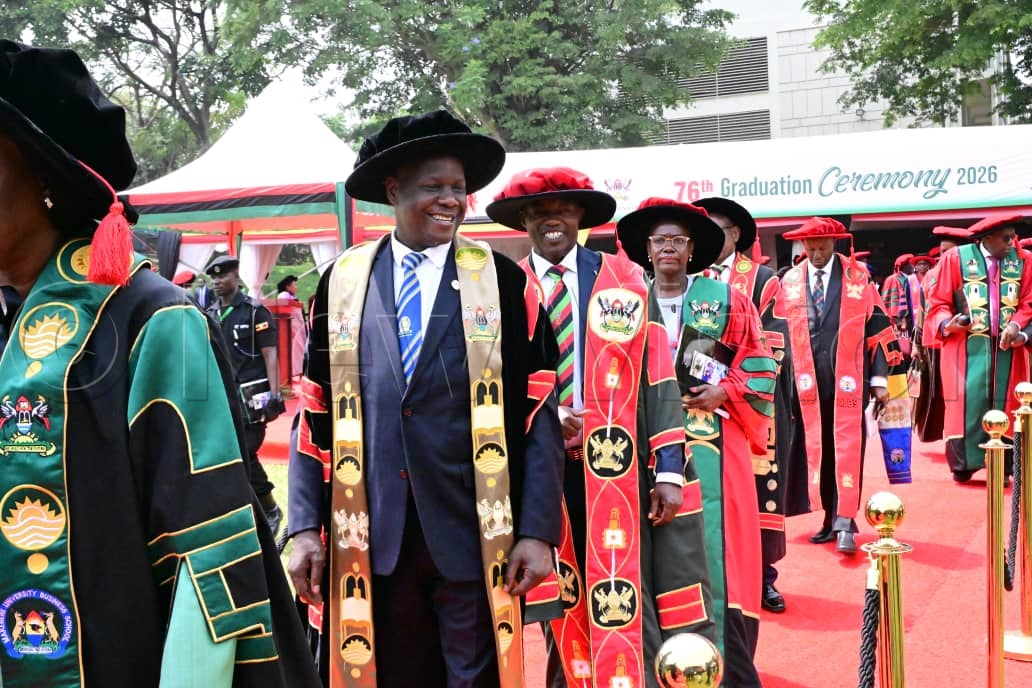
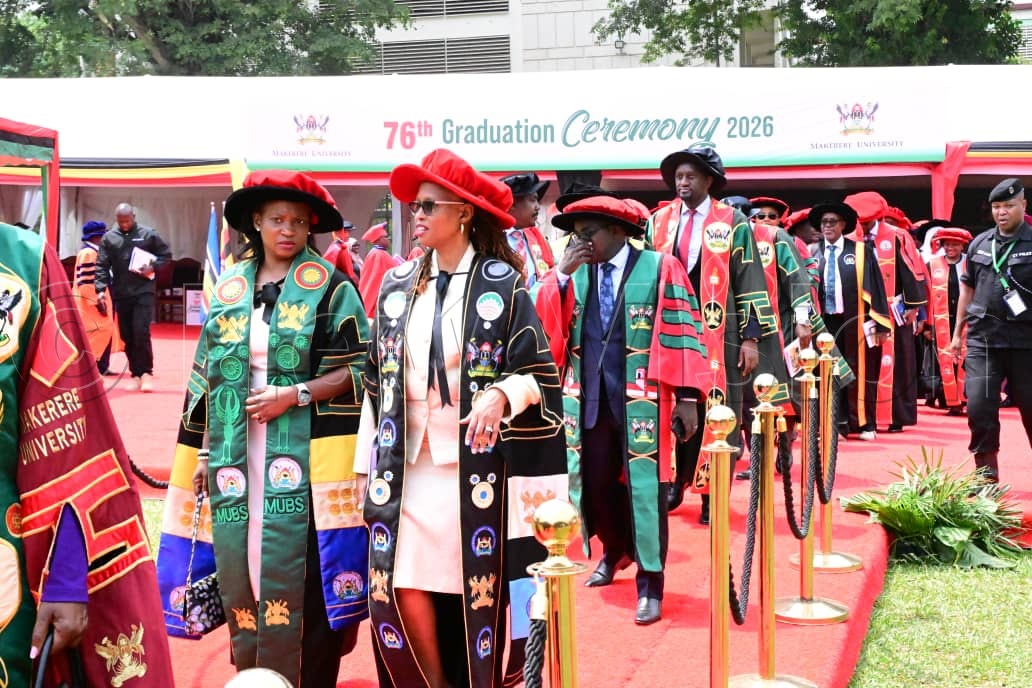
Graduands in celebration mood at the 76th graduation ceremony of Makerere University. (Credit: Mpalanyi Ssentongo)
________________
Graduates at the third session of Makerere University’s 76th graduation ceremony have been urged to rethink their future beyond traditional employment and embrace entrepreneurship as a pathway to national transformation.
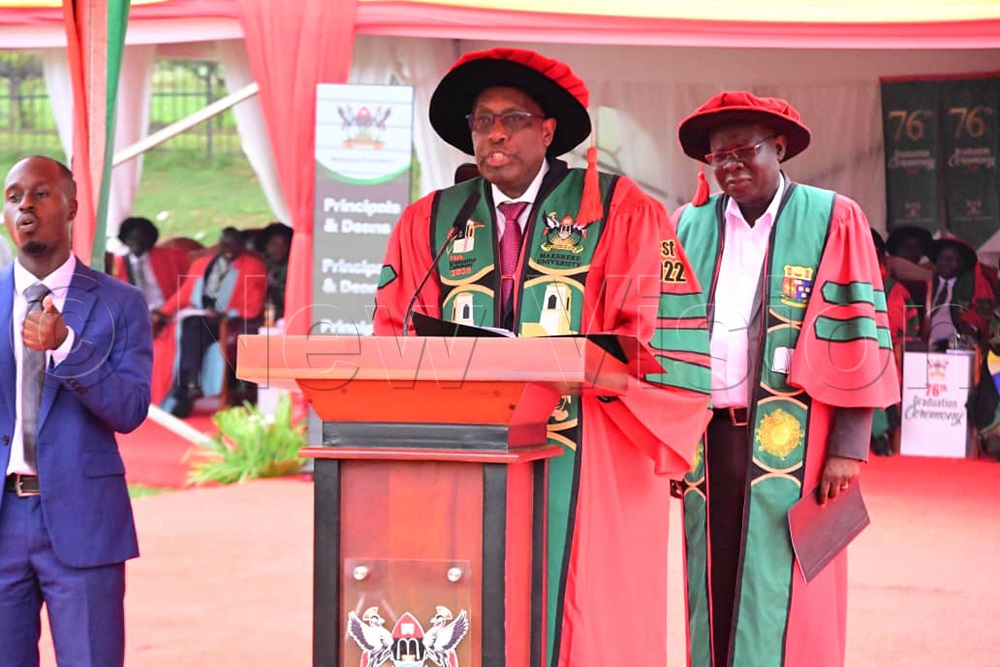
Speaking at the ceremony today, February 26, 2026, vice-chancellor Prof. Barnabas Nawangwe and commencement speaker Patricia Ojangole delivered a message centred on mindset change, innovation and self-driven opportunity.
The graduation ceremony, which started on February 24 and is expected to end tomorrow (February 27), will see a total of 9,295 graduands awarded degrees and diplomas.
Reflect on Opportunities Around You
Nawangwe urged the graduands to remain alert to opportunities within their communities rather than focusing solely on formal jobs.


“You have been equipped with the knowledge and skills that will make you employable or create your own businesses and employ others,” he said, encouraging those who may not immediately secure employment not to despair but instead to reflect on the opportunities around them and rise to the occasion as entrepreneurs.
Will you be part of the unemployment statistic?
His message was reinforced by Uganda Development Bank managing director Dr Patricia Ojangole, who reminded the graduates that anxiety about the future is natural but should not be paralysing.
“Today is filled with pride and happiness, but alongside the celebration, there also comes some anxiety. What comes next? Will you find your dream job, or will you become part of the unemployment statistic that we have in the country?” she said.
Drawing from her own experience graduating over two decades ago, Ojangole said while there may have been fewer competitors in the past, there were also far fewer opportunities and tools.
“Your generation is different. You grew up with modern tools. You have unprecedented access to information and knowledge. You are far better equipped to face the world than we were,” she said.


She emphasised that Uganda has evolved from a country focused primarily on survival and basic needs to one increasingly driven by innovation, digital connectivity and global participation.
“My cohort entered the job market in a Uganda rebuilding itself, focused on basic needs like food, livelihood and survival; you are entering a Uganda that has since moved far on, focused on innovation, digital connectivity and global participation,” she said.
Ojangole challenged the graduates to adopt what she described as a new mindset, warning against all of them competing for limited vacancies.
“Instead of all of you competing for limited jobs and waiting months or years for the right position, I encourage you to also think about entrepreneurship, because you are the innovators. You have the most brilliant ideas,” she said.
She argued that Uganda’s entrepreneurial landscape is dynamic and rewarding for those with courage and discipline, adding that self-employment should be regarded as just as respectable as formal employment.
“As a society, we must make entrepreneurship and self-employment as respectable and attractive as formal employment. There is significant value, both financial and social, in building your own enterprise,” Ojangole said.
She also urged the graduands to remain ethical, disciplined and forward-looking in a rapidly changing global economy shaped by digital technologies and artificial intelligence.
No guarantee for employment
Makerere University chancellor Crispus Kiyonga also cautioned graduates against assuming that academic success automatically guarantees employment.
“Many students today dream of securing jobs in the government and private sectors. While some will succeed, many will not, because the number of available jobs is far smaller than the number of graduates,” he noted.
He urged graduands to think beyond traditional employment pathways and tap into opportunities within their communities.
“Besides completing your courses, I urge you to take advantage of the opportunities available at the University and within the communities you come from. Keep an eye on opportunities in there so that you can leverage them to earn a living,” he advised.
Unemployment challenge
Data from the Uganda Bureau of Statistics and NDP IV shows that the Ugandan economy generates only around 80,000–90,000 formal jobs annually against 600,000–700,000 new labour market entrants, which contributes to high graduate unemployment estimates.
“I, therefore, urge you as graduates to apply skills independently or in teams to address local demands, turning challenges into opportunities. Initiatives like Makerere University's Innovation Hub as well as the Innovation and Incubation Centre, have a number of programmes aimed at supporting student startups with seed funding and related training. It is never too late to take advantage of these,” he said.