
Busoga king leads call to digitise indigenous languages
At the February 20 event organised by the School of Languages, Literature and Communication at Makerere University in collaboration with the Ministry of Gender, Labour and Social Development, different guests reechoed the need to digitise indigenous languages to prevent them from being pushed to the margins of the modern technological world.
Kyabazinga Gabula Nadiope IV (Centre) in a group photo as Uganda marked the 2026 International Mother Language Day with a strong call to digitise indigenous languages. (Photo by Sharon Nabasirye)
______________
Local languages are the heartbeat of our expression, pride and identity, says William Wilberforce Gabula Nadiope IV, the Kyabazinga of Busoga.
He made the statement at Makerere University as Uganda marked the 2026 International Mother Language Day. The event was held under the theme 'Languages matter: Harnessing technology to document and develop Uganda’s indigenous languages'.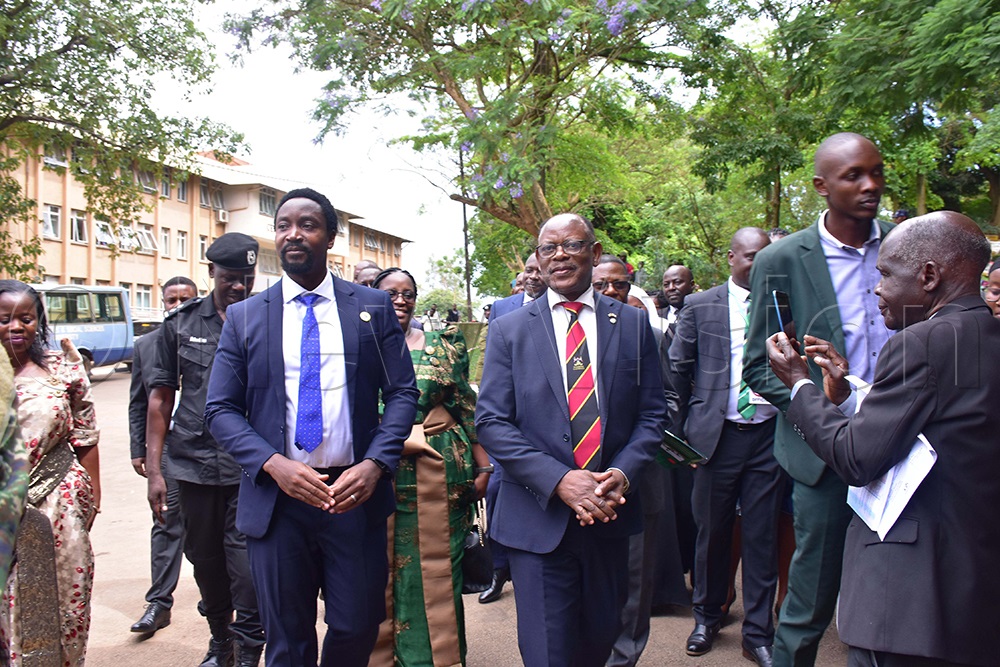
The Kyabazinga of Busoga, William Wilberforce Gabula Nadiope IV welcomed by Prof. Barnabas Nawangwe at Makerere University. (Photo by Sharon Nabasirye)
At the February 20 event organised by the School of Languages, Literature and Communication at Makerere University in collaboration with the Ministry of Gender, Labour and Social Development, different guests reechoed the need to digitise indigenous languages to prevent them from being pushed to the margins of the modern technological world.
Chief Guest Kyabazinga Gabula Nadiope IV described the day as both symbolic and urgent.
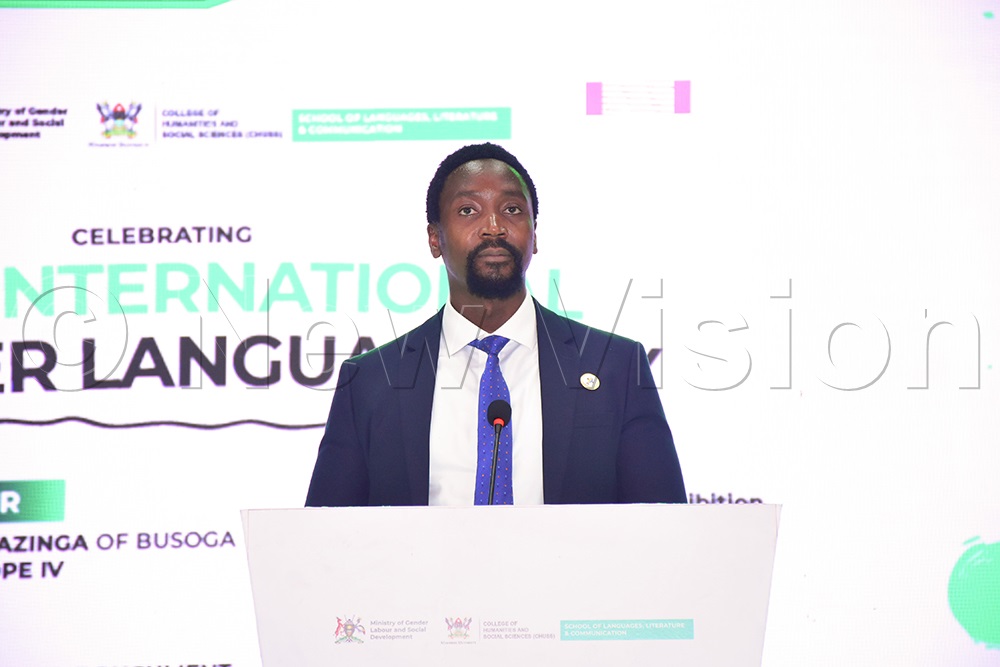
Presiding over the celebrations, His Royal Highness William Wilberforce Gabula Nadiope IV, the Kyabazinga of Busoga, described the day as both symbolic and urgent. (Photo by Sharon Nabasirye)
“International Mother Language Day celebration is a call to action,” he said. “Our languages are far more than tools of communication. They carry our history, knowledge, identity and aspirations.”
Warning that while Uganda is blessed with over 50 languages, many remain excluded from technological spaces, Kyabazinga cautioned that the digital divide threatens smaller languages with extinction if deliberate steps are not taken.
“We must embrace technology as a tool to document, teach and promote our mother languages through digital archives, online dictionaries, literature, mobile applications and e-learning platforms. Every language lost is a piece of humanity lost. Every language preserved is a gift to the future,” he said.
Makerere University Vice Chancellor, Prof. Barnabas Nawangwe, said the institution has consistently championed indigenous languages, recalling that Luganda was introduced as a subject in 1976, followed by Runyakitara and Luo in the 1990s, and most recently Lusoga.
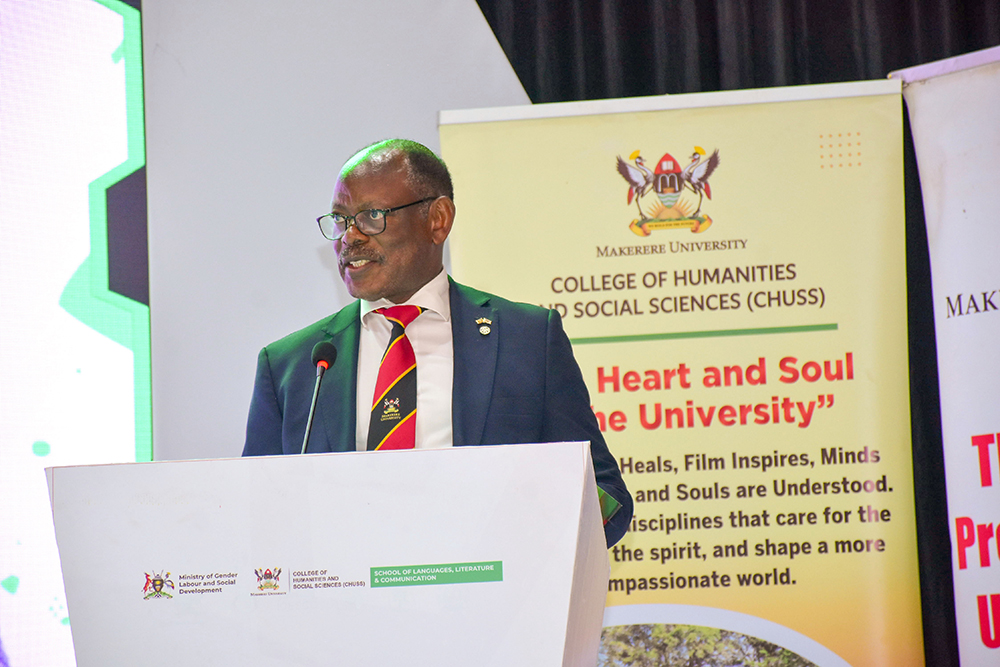
Makerere University Vice Chancellor, Prof. Barnabas Nawangwe,. (Courtesy)
He noted that the university currently offers several Ugandan languages at undergraduate, master’s and PhD levels, supported by more than 20 PhD holders and three professors dedicated to indigenous language teaching and research.
“Uganda is endowed with 41 living indigenous languages, making her one of the most culturally diverse countries on earth,” Nawangwe said, adding that globally, a language disappears approximately every two weeks.
He highlighted Makerere’s integration of artificial intelligence and digital platforms in language documentation, including innovations capable of transcribing English speech into local languages, a development he said could revolutionise science education and broaden access to knowledge.
“We pledge to ensure our mother languages not only survive but flourish as vibrant academic disciplines contributing richly to our collective future,” he said.
Representing the Minister of State for Gender and Cultural Affairs, Peace Mutuuzo, the Permanent Secretary, Aggrey David Kibenge, reaffirmed the government's commitment to strengthening traditional cultural institutions and promoting multilingual education.
“When a language declines, we do not merely lose words; we lose identity, history and generations of accumulated knowledge,” Kibenge said.
He called on stakeholders to digitise dictionaries, folklore and oral histories, develop language learning applications, promote translation technologies and integrate indigenous languages into artificial intelligence systems.
“If our indigenous languages are absent from digital platforms, they risk marginalisation in the modern knowledge economy,” he said, urging families, schools, media houses and young people to take pride in speaking their mother tongues.
Delivering the keynote address, Shirley Cathy Byakutaaga, a writer and academic, warned that undocumented languages risk disappearing without notice.
“If something is not written, if something is not recorded, then it didn’t happen,” she said, recounting the decline of a Canadian indigenous language that dwindled to only a handful of elderly speakers due to a lack of documentation.
She urged universities to extend research beyond campus gates and work closely with communities where languages are actively spoken.
“Languages may survive on the lips of elders, but they may not survive in the digital world where so much of modern life is unfolding,” she cautioned.
Observed globally every February 21, International Mother Language Day promotes linguistic and cultural diversity and multilingualism. In Uganda, the 2026 commemoration began with an exhibition, which the Kyabazinga inspected, focusing on practical steps to align indigenous languages with technological innovation.
The event brought together cultural leaders, scholars, policymakers, researchers and students to examine how digital innovation can be used to preserve, teach and promote Uganda’s more than 40 indigenous languages.