
Rising threat of online child exploitation worries experts
The findings point to a growing challenge for a country where digital technology is becoming an increasingly important part of children's education, communication and social lives.
Students pose for a group photo with partners. (Courtesy)
___________________ Angela Nansubuga from the Gender Technical Division at the Ministry of Education and Sports. (Courtesy)
More than 700 students gathered at Onwards and Upwards Secondary School in Buloba on November 23, not simply to discuss the promise of the digital age, but to confront its dangers.
The students, drawn from 10 schools across the Kampala Metropolitan region, had come for the 2026 Digital Safety Festival, an initiative aimed at helping children navigate an increasingly connected world in which the boundaries between opportunity and danger are often difficult to distinguish.
Hosted by High Sound for Children Uganda under the theme “A Clean Digital Footprint,” the festival brought together child protection advocates, government officials, communications regulators and educators. Their message was clear: As children spend more time online, protecting them from exploitation, abuse and other digital threats can no longer be left to parents and schools alone.
The concerns are supported by troubling research.
A UNICEF Innocenti report, Through Children's Eyes: How Digital Technologies Enable Child Sexual Abuse, estimates that 38.54 per cent of internet-using children aged 12 to 17 surveyed in Uganda experienced at least one form of technology-facilitated sexual exploitation or abuse in the year preceding the survey. The underlying Ugandan data was collected primarily in 2020–2021.
The findings point to a growing challenge for a country where digital technology is becoming an increasingly important part of children's education, communication and social lives.
The question confronting policymakers and child protection advocates is no longer whether children should have access to the internet, but how they can use it without becoming vulnerable to those who seek to exploit them.
A responsibility beyond the classroom
For the Ministry of Education and Sports, online child protection is an extension of the responsibility to ensure that schools and other learning environments are safe.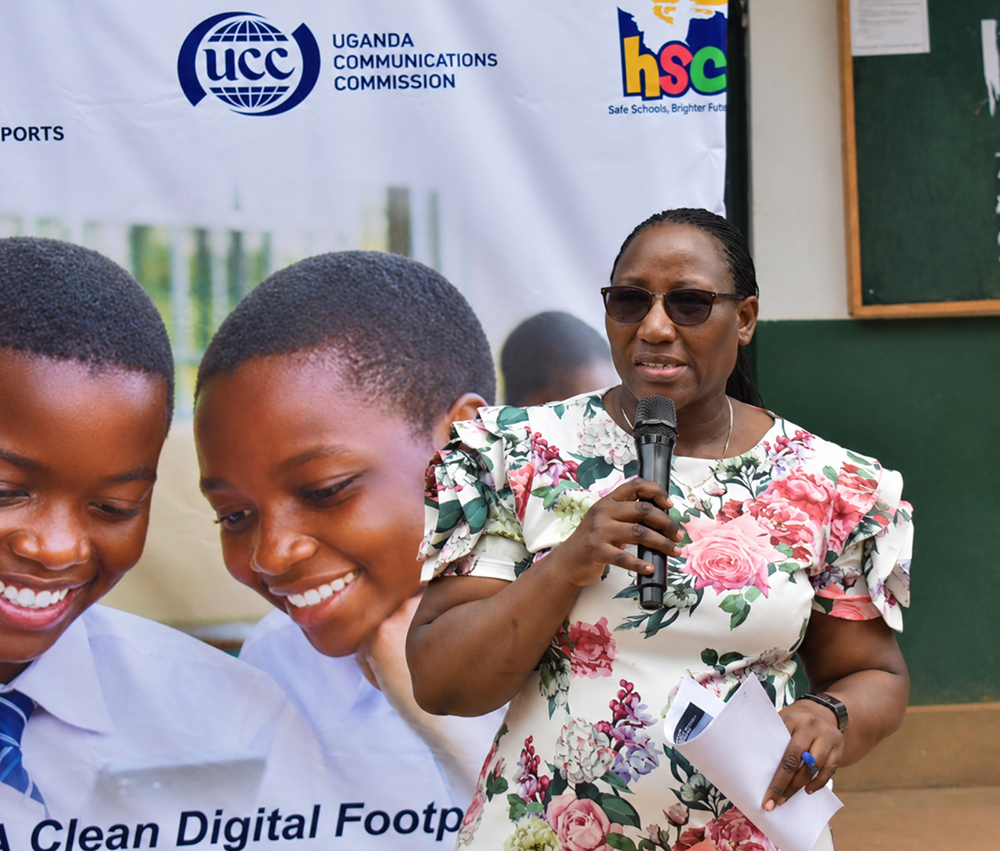
Angella Nansubuga, from the Ministry's Gender Technical Unit, acknowledged that the internet had opened up opportunities for children to access educational resources and information far beyond what traditional classrooms could offer.
But the same platforms that expand learning opportunities can also expose children to cyberbullying, sexual exploitation, harmful content and other forms of abuse.
Nansubuga pointed to the Ministry's Reporting, Tracking, Referral and Response Guidelines on Violence against Children in Schools, saying the framework also addresses abuse committed through digital platforms.
“The Ministry has put in place the Reporting, Tracking, Referral and Response Guidelines on Violence against Children in Schools and these apply to violence that happens online just as they apply to violence in the classroom or dormitory,” she said.
Yet the existence of laws and guidelines does not necessarily mean children understand how to protect themselves or where to turn when abuse occurs.
That gap between policy and everyday experience was central to the concerns raised at the festival.
The case for investing in digital safety
Hadijah Mwanje, executive director of High Sound for Children Uganda, argued that protecting children in digital spaces requires more than warnings about the dangers of the internet. Young people, she said, need practical knowledge and the confidence to make informed decisions about their online lives.
“The need is enormous and targeted investment is needed now more than ever towards empowering the young people in Uganda, to enable them utilize digital spaces while safely navigating the dangers faced,” Mwanje said.
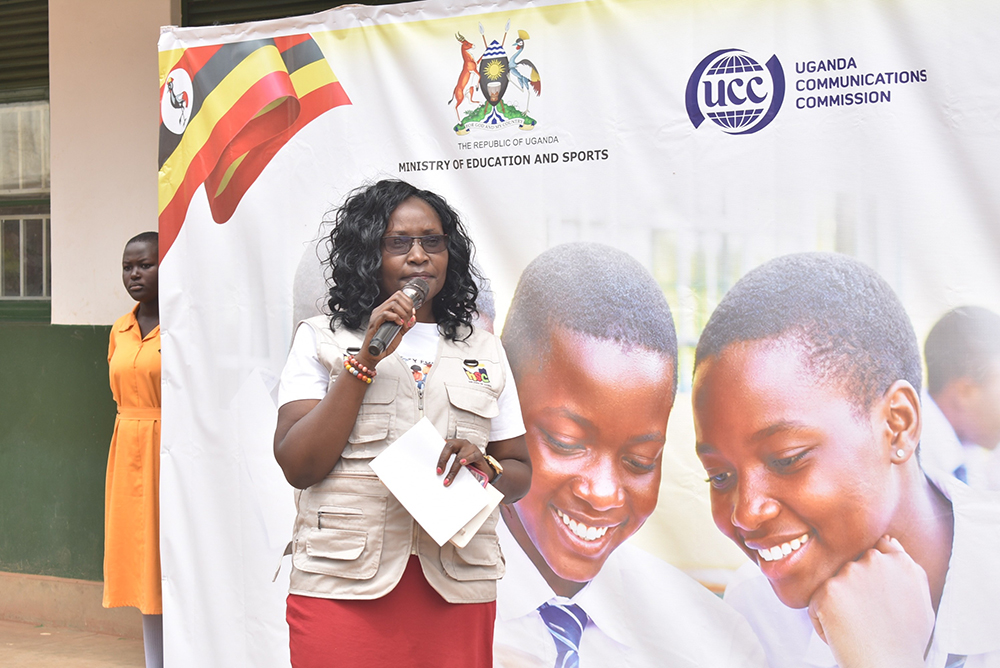
High Sound for Children Uganda Executive Director Hadijah Mwanje addresses students during the 2026 Digital Safety Festival. (Courtesy)
She acknowledged the support of government institutions and civil society organisations in advancing child online safety initiatives but said considerably more needed to be done to reach children across the country.
“We appeal for increased investment and closer partnership to reach more children, for a digitally empowered generation,” she added.
Her appeal reflected a broader concern among child protection advocates: Digital literacy cannot be limited to teaching children how to use technology. It must also equip them to recognise manipulation, protect personal information, respond to inappropriate contact and seek help when their safety is threatened.
Technology companies under scrutiny
The responsibility, however, does not end with children, parents or government.
The Uganda Communications Commission (UCC) called on technology companies, telecommunications operators, internet service providers and digital platforms to take a more active role in preventing online abuse.
Kenneth Tweheyo, the Commission's Manager of Consumer Affairs, said the regulator was working with industry players to make child safety a priority in the design and operation of digital services.
“They must provide safer digital environments, accessible reporting mechanisms, timely responses to harmful content and appropriate safeguards against online abuse and exploitation,” Tweheyo said.
Accessible reporting systems, effective responses to harmful content and safeguards built into digital platforms are increasingly important elements of child protection.
Teaching children to think before they post
Inside the festival, the discussion moved beyond policy and regulation to the everyday decisions children make online.
Through practical sessions, students explored issues including online sexual exploitation of children, content creation and artificial intelligence, digital safety and mental health.
They were encouraged to consider the information, photographs and personal details they share on digital platforms, and how seemingly harmless online activities can have consequences long after they are posted.
The theme, “A Clean Digital Footprint,” placed particular emphasis on the permanence of online activity and the importance of responsible digital behaviour.
For many young people, social media and other digital platforms are already part of everyday life. The challenge, therefore, is not simply to discourage their use, but to help children understand the risks, recognise unsafe situations and make decisions that protect their present and future.
The festival was organised in partnership with the Ministry of Education and Sports, Uganda Communications Commission, Peas Uganda, Raising Voices, Anthill Foundation Uganda, Raising Teenagers Uganda, Dwelling Places and the Centre for Media Literacy and Community Development.
High Sound for Children Uganda works to protect children from inappropriate content by promoting safe online and offline environments. The organisation also seeks to empower media practitioners, children, caregivers and communities through education and advocacy for responsible content policies and practices.
A digital future that protects children
The gathering in Buloba reflected a wider challenge facing Uganda as technology becomes increasingly embedded in education, communication and everyday life.
The internet offers children access to knowledge, opportunities for creativity and new ways of connecting with the world. But without adequate safeguards, those same opportunities can expose them to exploitation, harassment and abuse.
The UNICEF findings suggest that the risks are not remote or hypothetical. They are already part of the digital experiences of a significant proportion of Ugandan children.
For the officials, advocates and educators who gathered at the festival, the task ahead involves more than teaching children to be careful online. It requires sustained investment in digital literacy, stronger enforcement of existing protections, greater accountability from technology companies and closer cooperation among government, civil society, families and schools.
Ultimately, the measure of a digitally empowered generation will not be how many children can access the internet or how confidently they use it.
It will be whether they can do so safely.