
Kaliro teachers share latrines with residents as sanitation crisis hits school
The embarrassing situation has raised concerns about the dignity and welfare of teachers, while the 720 pupils also endure inadequate sanitation facilities as they share only eight latrine stances.
Kaliro District Chairperson Elijah Kagoda decried the lack of pit latrines at Kaliro Demonstration Primary School, describing the absence of the facilities as criminal. (Credit: Doreen Musingo)
____________________ The only pit latrine serving more than 700 learners at Kaliro Demonstration Primary School. (Credit: Doreen Musingo)
KALIRO — Teachers at Kaliro Demonstration School in Kaliro district have been forced to use latrines in neighbouring homesteads because the institution lacks sanitation facilities for staff, exposing the dire state of infrastructure at the government school.
The embarrassing situation has raised concerns about the dignity and welfare of teachers, while the 720 pupils also endure inadequate sanitation facilities as they share only eight latrine stances.
This translates into a ratio of 90 pupils per stance, far above the recommended national standard of one toilet stance for every 40 pupils, which raises concerns about hygiene, congestion and the risk of learners contracting sanitation-related diseases.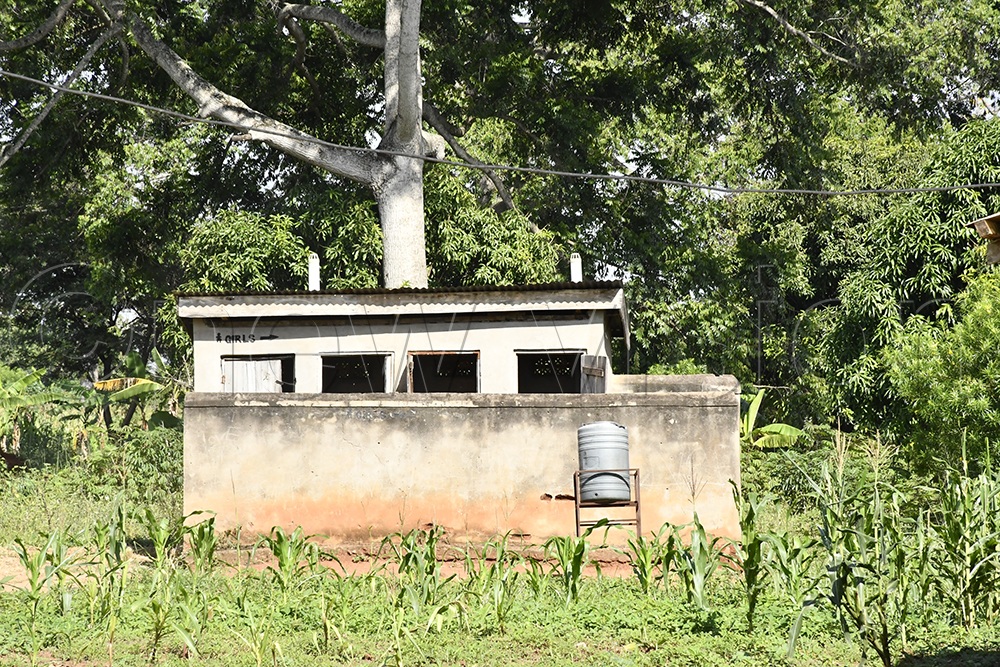
The challenges were highlighted in a report presented by the school headteacher, David Bwire, at the Uganda National Institute for Teacher Education (UNITE) stakeholders’ engagement forum on November 17, 2026.
“Our teachers don’t have pit latrines; a lot of time is wasted as they keep loitering around in various homesteads surrounding the school seeking toilet facilities. This is so embarrassing, and we need intervention from the district authorities,” he said.
Besides the sanitation crisis, Bwire identified leaking asbestos roofs as another major concern, warning that they could expose pupils and teachers to health risks.
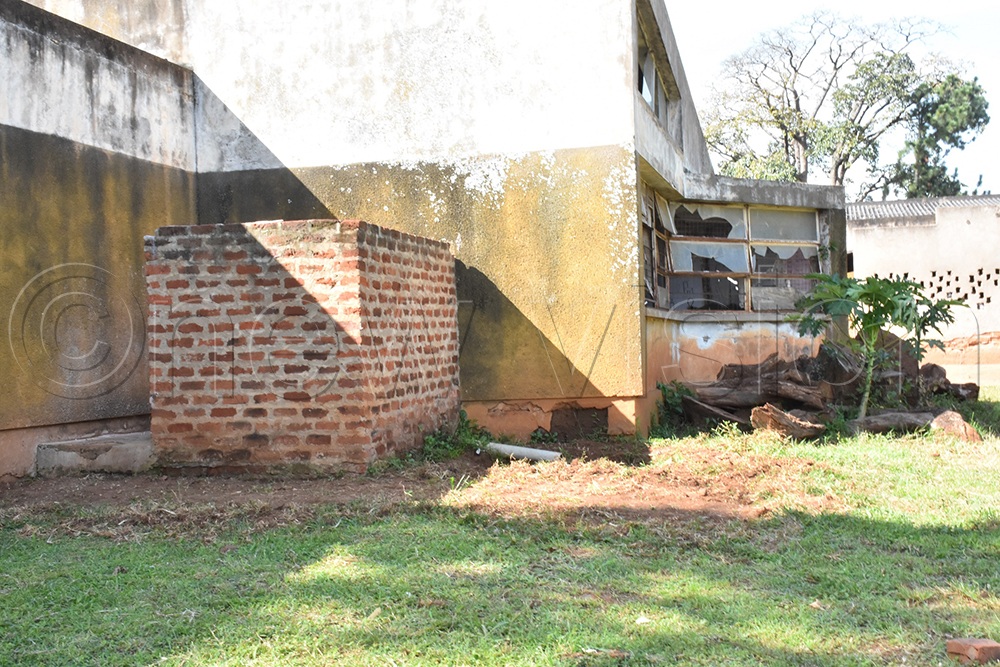
A dilapidated structure at Kaliro Demonstration Primary School, with a small bathroom facility constructed nearby. (Credit: Doreen Musingo)
He revealed that the school had received iron sheets from the Office of the Prime Minister, but appealed for additional support to replace the asbestos roofing and rehabilitate the school's ageing structures.
“The school still has asbestos roofs that are considered a health hazard to human life. We managed to secure 969 28-gauge iron sheets from the prime minister’s office, but we need support to install the iron sheets because they are currently kept in the school stores,” he said.
The headteacher added that the school is also struggling with inadequate furniture, having only 47 desks for its learners. Other challenges include broken windowpanes, damaged ventilators and door shutters, as well as the poor condition of bathrooms and the kitchen.
Bwire said the school also suffers from a shortage of staff accommodation, as it has only one three-room teachers' house.
Despite the challenges, the headteacher reported some improvements, including access to electricity and water within the school compound, improved academic performance and continued government support through capitation grants and timely payment of teachers' salaries.
The school also requested support for the establishment of a demonstration garden where pupils could acquire practical agricultural skills and produce food to supplement what their parents provide.
Elijah Kagoda, the Kaliro district chairperson, described the sanitation situation at the school as unfortunate and unacceptable, and urged the district administration to urgently intervene.
"How do you expect children and teachers to concentrate in class when they are also busy thinking about where to ease themselves? This is criminal and so unfortunate. It is an embarrassment to the school and the entire community," he said.
He called upon the Kaliro Chief Administrative Officer (CAO) and other responsible authorities to prioritise the construction of adequate sanitation facilities at the school.
Margaret Sekisoka, the Kaliro deputy CAO, said they would call a council meeting and forge a way forward to improve the school's latrine facilities.
She explained that teachers had a critical role in changing people's mindsets and preparing learners to become better citizens.
Sekisoka said the district leadership was committed to working with the school management to address challenges, including infrastructure and other learning conditions.