
Nwoya school discovers secret in using newspapers to teach special needs kids
Every week, this school, founded in 1937 by Church of Uganda, receives 25 copies of Weekend Vision and Toto Magazine under the Newspapers in Education (NiE) programme implemented by Save the Children an organisation that saves and cares for children around the world.
Teacher Betty Omona Atim distributing copies of Toto Magazine to Primary One learners at Nwoya P7 School. (Photo by Ritah Mukasa)
_________________
Teaching children who have special needs and bringing the best out of them can be challenging. Especially if the school lacks instructional materials and yet teachers did not get special needs training.
However, at Nwoya P7 School located in Lungulu sub-county in Nwoya district in Northern Uganda, teachers discovered a secret in using newspapers to teach such children.
Every week, this school, founded in 1937 by the Church of Uganda, receives 25 copies of Weekend Vision and Toto Magazine under the Newspapers in Education (NiE) programme implemented by Save the Children, an organisation that saves and cares for children around the world.
Catherine Akot, a qualified special needs teacher, says that, being one of the few inclusive schools in the district, they receive learners with cases that need special attention such as low vision and hard of hearing. But in the course of teaching, they also discover those with intellectual disabilities, such as the slow learners, who cannot grasp things at the same pace as others.
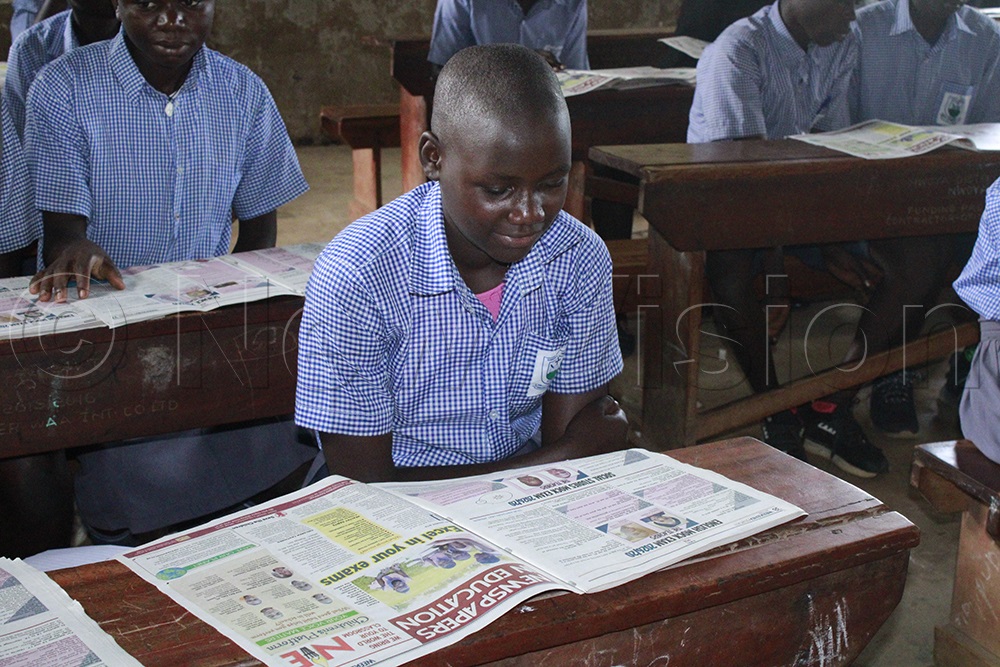
Candidates counting on PASS PLE to boost their performance and help them excel in the Primary Leaving Examinations. (Photo by Ritah Muksasa)
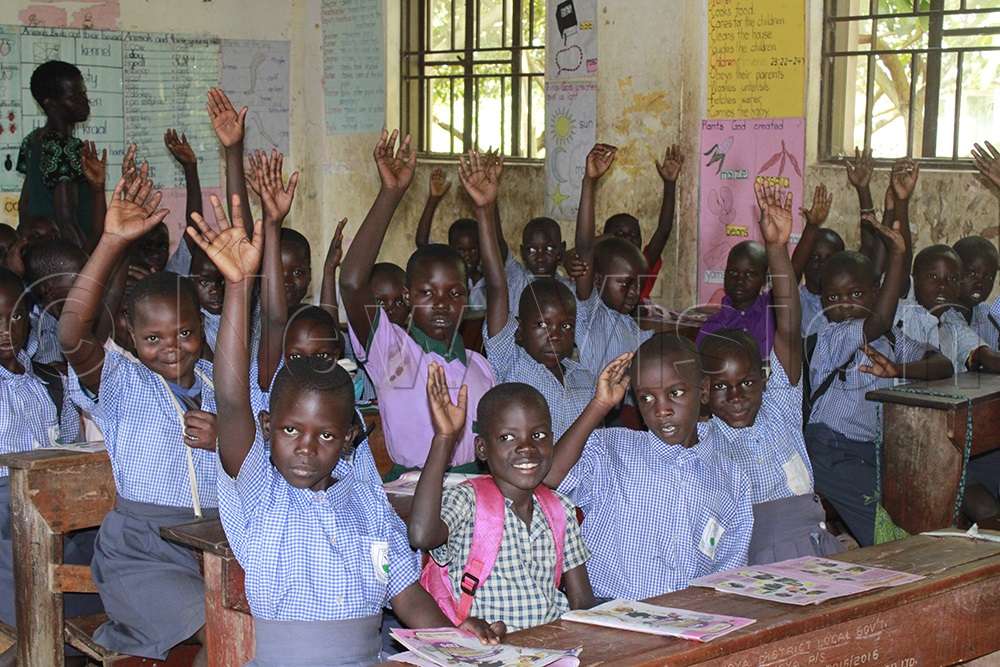
Primary One pupils at Nwoya P7 School excitedly read through Toto Magazine. (Photo by Ritah Mukasa)
On how the newspapers help these learners, Akot says, those in the lower classes enjoy seeing pictures in Toto Magazine partly because the pictures are big, colourful and engaging. Even a slow learner or one with low vision can see and identify pictures of fellow children, animals and objects.
In that process, they learn to read, count and draw. Others attempt the activities in the magazine, such as joining dots to form pictures, word search, finding the missing letters, filling in puzzles and matching pictures to pictures and pictures to words or letters.
Betty Omona Atim, the deputy head teacher, agrees, adding that once newspapers are put to good use, they make teaching easy, especially in rural and hard-to-reach schools. The content in the papers, such as PASS PLE, puts learners on the same footing with their counterparts in urban schools.
“Those questions confirm that we teach the same topics as other schools around the country,” she says. The learners also improve their reading, writing and comprehension skills.
Most importantly, Atim says, Save the Children always invites teachers for training on how to use the newspapers and make teaching child-centred. For example, they are encouraged to group the learners and help them with discussions as well.
About the NiE program
Every week, Nwoya P7 School receives 25 copies of Weekend Vision and Toto Magazine under the Newspapers in Education (NiE) programme, which is being funded by the Norwegian Agency for Development Cooperation (NORAD) through Save the Children in partnership with New Vision. NORAD is implementing a five-year programme from 2024 to 2028 called “Transforming the Future-For and with Children” in Acholi and Karamoja regions. The program aims to ensure that all children enjoy their rights to survival, protection, development and participation in a safe, inclusive, accountable and resilient environment.