
New model aims to transform care for young mothers
Nakkazi advises prospective doctoral students to begin with a clear reason for pursuing a PhD and to prepare for sacrifices involving finances, social life and personal commitments.“Have a clear reason for pursuing a PhD,” she says.
The model will help enhance young mothers' health and well-being. (Credit: Ritah Mukasa)
After overcoming orphanhood, illness and financial hardship, Ugandan public health professional Joan Nakkazi has developed a model intended to improve access to maternal healthcare and the well-being of young mothers.
Nakkazi's research focused on Sexual and Reproductive Health and Rights, particularly among young people, and resulted in the Sustainable Young Motherhood Awareness, Initiatives, Support and Safety model (SYMAISS).
Linking communities to health facilities
The SYMAISS model is an evidence-based, youth-responsive framework that combines community and health-facility interventions to improve the use of maternal healthcare services and the well-being of young mothers.
“Young mothers face many challenges in accessing maternal healthcare, and these experiences affect their health and quality of life,” Nakkazi says.
She says the model provides a practical framework for addressing barriers to care while strengthening links between communities and health facilities.
“Health facilities and community structures should collaborate to improve awareness, psychosocial support, referrals and follow-up,” she says.
Nakkazi believes integrating the model into Uganda’s maternal and adolescent health programmes would strengthen youth-friendly and continuous care during pregnancy, childbirth and the postnatal period.
She says further evaluation and implementation of the model could inform policy and programming, advance youth-responsive healthcare and contribute to Uganda’s maternal health priorities and Sustainable Development Goal 3 on good health and well-being.
She also recommends incorporating health-related quality of life into monitoring and evaluation systems and undertaking further research to establish the model’s effectiveness and potential for expansion.
Her motivation, she says, was to translate research evidence into practical interventions, policies and health-system improvements that could enhance the lives of young mothers.
What the research found
During her research, Nakkazi established that using maternal healthcare services was significantly associated with better physical, psychological, social and environmental quality of life among mothers aged 10 to 24.
The relationship was also influenced by mothers’ knowledge of maternal healthcare, their health-seeking behaviour, previous pregnancy experience and perceptions of the quality of care they received.
Nakkazi hopes the findings will contribute to interventions that address not only young mothers’ immediate medical needs, but also their wider social and psychological well-being.
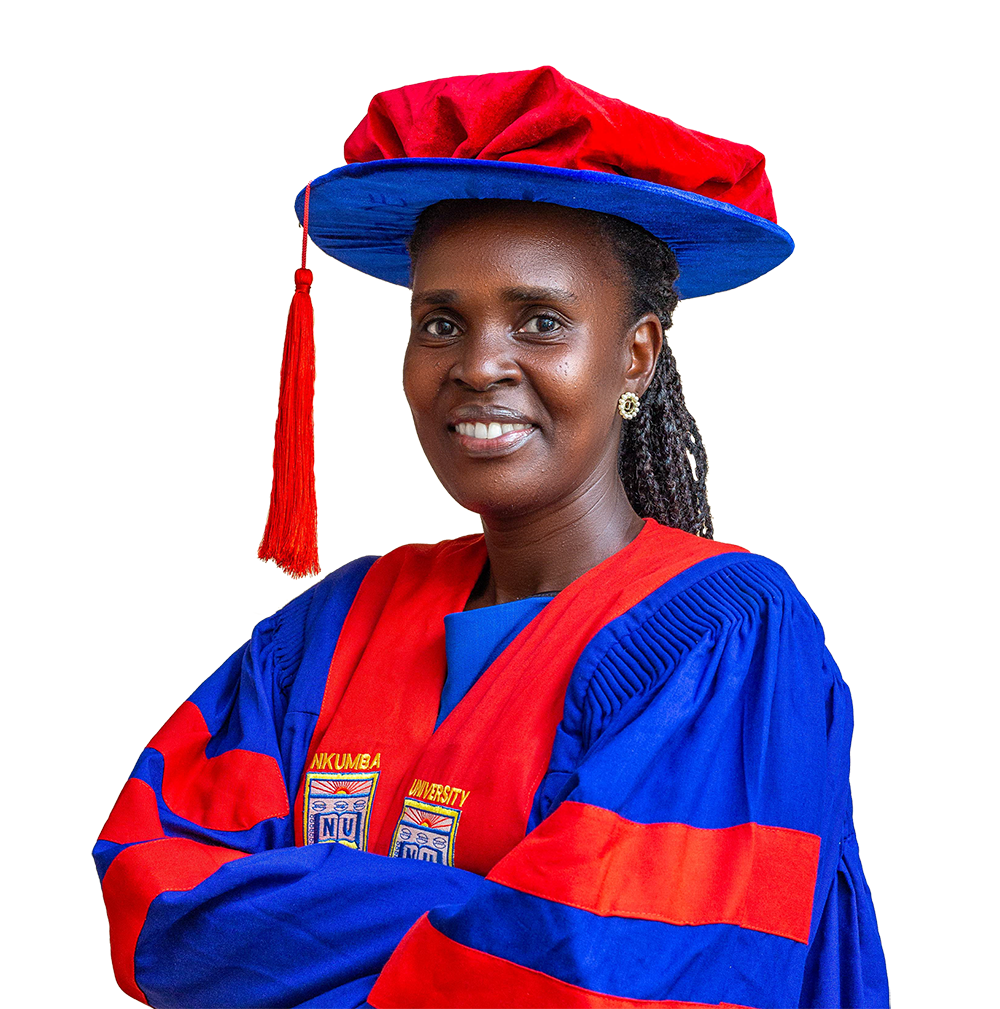
Joan Nakkazi
Completing a PhD ahead of schedule
Nakkazi had expected to complete the doctoral programme in three years. Instead, she finished it in two years and 10 months despite professional, health and financial challenges.
During the first two years of her studies, she worked on demanding projects in the Teso region and later across three regions, including an island. The assignments sometimes disrupted her supervision schedule.
She credits flexible supervisors and guidance from experienced academics with helping her remain on course.
Work, illness and financial strain
Her studies were interrupted further when health problems forced her to suspend academic and professional activities for about three months.
“I am grateful to my family and then employer, Amref Health Africa in Uganda, for supporting my recovery,” she says.
As a self-sponsored student, Nakkazi also faced financial pressure. Her employment contract ended during her final year, leaving her without a regular income as she worked to complete the programme.
She exhausted her savings but resisted the option of taking a dead year.
Through faith, resilience, careful planning and support from acquaintances, she eventually completed the PhD earlier than she had anticipated.
Nakkazi lost both parents at an early age and was raised by her late grandmother, relatives and guardians.
An opportunity obtained through a church fellowship enabled her to pursue her childhood dream of becoming a nurse. With government sponsorship, she enrolled at Arua School of Nursing and Midwifery, where she attained a Diploma in Comprehensive Nursing.
She later earned a Bachelor of Science in Public Health, a Master of Public Health in Population and Reproductive Health and a Postgraduate Diploma in Project Planning and Management, among other qualifications.
Her academic and professional journey eventually led her to specialise in Sexual and Reproductive Health and Rights, with particular attention to young people.
Looking to the future
Over the next decade, Nakkazi hopes to establish herself as a public health leader, researcher and academic contributing to advances in Sexual and Reproductive Health and Rights at national, regional and global levels.
She aspires to influence policy and programming, lead impactful research, mentor emerging public health professionals and work with governments, academic institutions and development partners to strengthen health systems.
“I also hope to see the SYMAISS model further validated, implemented and scaled up to improve maternal healthcare utilisation and the quality of life of young mothers,” she says.
Advice to aspiring PhD candidates
Nakkazi advises prospective doctoral students to begin with a clear reason for pursuing a PhD and to prepare for sacrifices involving finances, social life and personal commitments.
“Have a clear reason for pursuing a PhD,” she says.
Doctoral studies, she adds, require discipline, resilience and independent learning, while the journey can sometimes feel lonely.
She advises students to read extensively, respond constructively to feedback and seek guidance from supervisors, peers and experienced academics.
“Above all, remain focused, humble, adaptable and persistent. Plan your resources carefully, seek help when needed, respect academic timelines and keep trusting God even when challenges arise,” she says.
“With a clear purpose, disciplined effort and the right support, completing a PhD is achievable.”
Nakkazi completed her PHD (Doctor of Philosophy) in Public Health, specialising in Sexual and Reproductive Health and Rights (SRHR), with a particular focus on young people. She is expected to graduate on October 24, 2026, during Nkumba University’s 28th graduation ceremony.