
Education model is a ticking time bomb, religious leaders warn
Kasakya emphasised that collaboration among the council, assessment bodies, and training providers is necessary to produce a skilled workforce capable of meeting industry needs.
The executive director of the TVET Council, Moses Kasakya (right), and Rev Daniel Token Wejuli programme specialist at IRCU, addressing participants during the secretaries of religious institutions meeting at the Uganda Vocational and Technical Assessment Board headquarters in Kampala on Thursday, October 29, 2026. (Photos by Francis Emorut)
________________
The Inter-Religious Council of Uganda (IRCU) has urged Ugandans to embrace technical and vocational education as a viable pathway to employment and entrepreneurship, warning that the current education model is a ticking "time bomb."
Daniel Token Wejuli, the Programme Specialist for Spirituality and Mindset Change at the IRCU Secretariat, blamed the current system on a deliberate colonial legacy designed to create job seekers rather than value creators.
"I think our colonial masters, deliberately hid the real economy from us and gave us something that is not very relevant. They wanted to maintain a market for us to get ready-made things from them.

The executive secretary of UVTAB Onesmus Oyesigye (left) interacts with Sarah Namuli the inspector of religious institutions Church of Uganda during the secretaries of religious institutions meeting at Uganda Vocational and Technical Assessment Board headquarters in Kampala on Thursday October 29, 2026.
They gave us a curriculum where everyone is trained to become a job seeker, not to do value addition. They even dictated that a school dropout should go for tailoring. We need to overturn this message and look at the other side of the coin. Short of this, we are sitting on a time bomb, " Wejuli said.
He emphasised that investment in Technical and Vocational Education and Training (TVET) is not a waste of resources, but a crucial step toward national stability amid rising youth unemployment.
"We are sitting on a time bomb. Can you imagine having someone with an agriculture degree joining protestors demanding for looking for a formal employment?" he lamented
He was speaking on Thursday, October 29, during an engagement workshop between heads of faith-based education institutions and the Uganda Vocational and Technical Assessment Board (UVTAB) at the board’s headquarters on Kyambogo Hill.
Wejuli urged faith-based organisations to join the government in "undoing" this colonial legacy by promoting TVET uptake, which he said holds the key to the country's development.
Wejuli highlighted that religious institutions are uniquely positioned to change this mindset due to their extensive networks, schools, and vocational training centres nationwide.
He cited the IRCU’s successful skilling initiatives targeting youths involved in the 2021 election unrest in Kampala.
The council identified about 2,700 young people, linking them to skills training, mindset-change sessions, and seed capital ranging from sh 250,000 to sh500,000.
Another 250 youths received training in brick-making, salon work, and poultry farming, with many successfully establishing their own businesses.
He called on the government to work more closely with religious institutions to expand skills training and mobilise communities.
The IRCU brings together major religious bodies, including the Church of Uganda, the Uganda Episcopal Conference, the Uganda Muslim Supreme Council, the Seventh-day Adventist Church, the Uganda Orthodox Church, the Born Again Faith, and the Alliance of Pentecostals and Evangelicals.
Policy Reforms
UVTAB Executive Secretary Onesmus Oyesigye echoed the need for partnership, noting that faith-based institutions own or operate many of the country's schools and training centres.
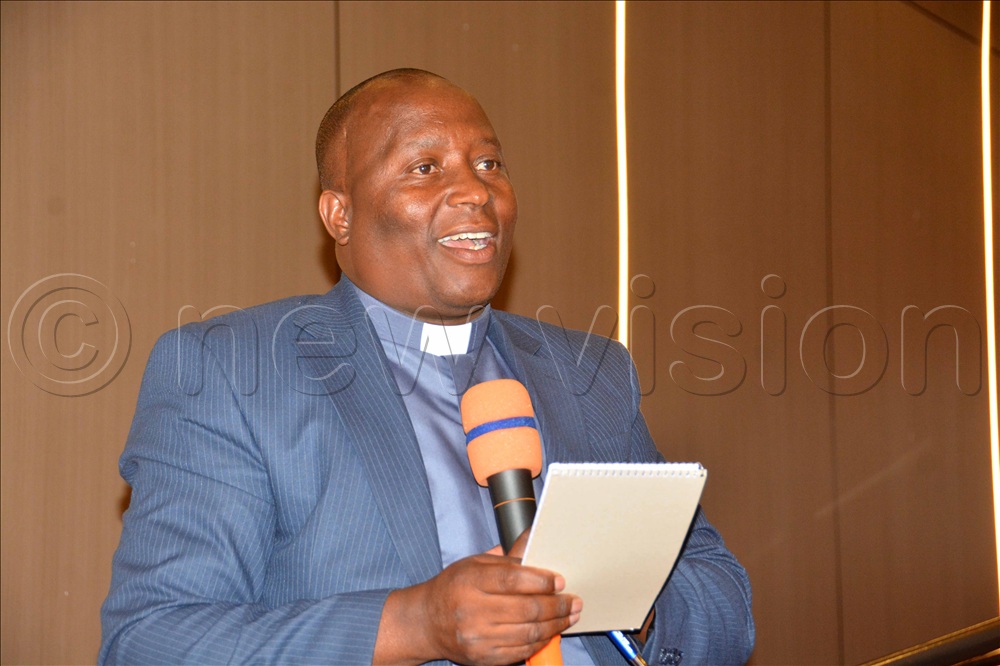
Rev Canon Agasha Muhwezi addressing participants during the secretaries of religious institutions meeting at Uganda Vocational and Technical Assessment Board headquarters in Kampala on Thursday October 29, 2026.
He proposed that the government consider making lower-level vocational training, particularly Levels 1 and 2, free to enable more people to acquire practical skills. He added that short courses lasting three to six months could quickly help young people enter the labour market, depending on the trade.
Oyesigye also called for greater recognition of individuals who acquire skills through informal apprenticeships and on-the-job experience, such as in bread production.
He argued that these workers should have opportunities to undergo assessment and obtain certification, which would help them demonstrate competence to employers and access wider opportunities.
He urged all training providers to comply with regulatory requirements to ensure quality training and recognised assessments.
Moses Kasakya, Executive Director of the TVET Council, noted that many job seekers remain unemployed despite available opportunities because they lack the practical competencies employers need.
He explained that TVET reforms are intended to improve the quality and relevance of training, support industrialisation, and ensure graduates can secure employment or start enterprises.
Established under legislation that took effect on March 15, 2025, the TVET Council is mandated to regulate the sector, oversee training standards, and ensure institutional compliance.
Kasakya emphasised that collaboration among the council, assessment bodies, and training providers is necessary to produce a skilled workforce capable of meeting industry needs.
This, he added, will ultimately reduce Uganda's dependence on foreign workers as the manufacturing and industrial sectors expand.