
Break period stigma to keep girls in school, Ugandans urged
Advocates say the silence, shame and misconceptions surrounding menstruation leave many girls and women without the knowledge, support and resources they need to manage their menstrual health with dignity.
Mothers trained by AVSI foundation demonstrate how to use reusable sanitary pads during International Menstrual Hygiene Da celebrations in Gulu. (Credit: Jackson Kitara)
Ugandans have been urged to normalise conversations about menstruation and break the stigma surrounding menstrual hygiene, which continues to contribute to school absenteeism, poor academic performance and early dropout among girls.
Advocates say the silence, shame and misconceptions surrounding menstruation leave many girls and women without the knowledge, support and resources they need to manage their menstrual health with dignity.
Speaking during the International Menstrual Hygiene Day celebrations held on May 28, 2026, at Gulu Primary School playground in Gulu city, Caroline Rose Adong, a city councillor representing persons with disabilities, said menstruation is a natural part of life and should never be a barrier to education or personal dignity.
She encouraged open discussions about menstruation, noting that it has long been treated as a taboo subject, leaving many girls and women uninformed about how to manage their menstrual health.
“Period leaks can happen even when a girl prepares well, but how we respond can either shame or help her feel safe, because menstruation is not a disease, but a sign of good health for girls. Once a girl reaches adolescent age, she has to start experiencing it”, Adong said.
Adong said men need to understand and support their female counterparts because many still believe menstruation is an illness and that girls and women should stop participating in other activities until their menstrual cycle is over.
She said schools should introduce peer-to-peer approaches where learners can openly discuss menstrual hygiene, debunk harmful myths and learn how to support one another, creating safe spaces for girls in schools.
Adong said that for women with disabilities, menstruation is often perceived as a sickness because access to sanitary pads remains difficult. She added that due to the lack of sanitary products, some women dig holes inside their homes during menstruation and sit over them until their menstrual cycle ends.
“Equipping young people with accurate knowledge will break the silence and turn periods from a source of stigma into a symbol of strength. This will build confidence, reduce school absenteeism and create a culture where no girl feels left behind because of her period,” Adong remarked.
The event aimed to emphasise collective action across communities to break taboos, dismantle period stigma, and ensure universal access to menstrual products, clean facilities and educational support.
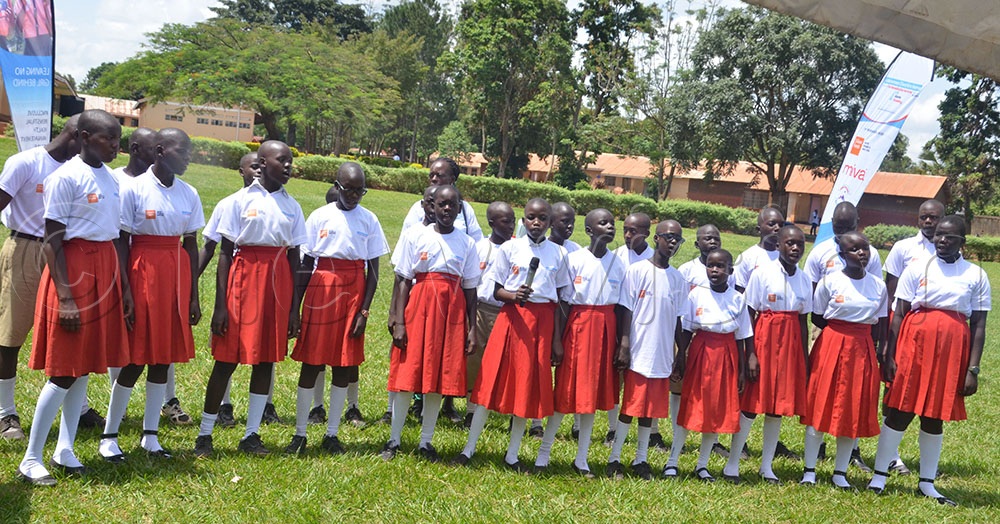
Pupils of Gulu Primary School singing during International Menstrual Hygiene Day celebrations in Gulu city. (Credit: Jackson Kitara)
Awareness and support
Joan Awori, a programme officer at Katalemwa Cheshire Home for Rehabilitation Services, said the purpose of commemorating Menstrual Hygiene Day is to raise awareness and ensure communities understand that menstrual hygiene should not be hidden but openly discussed so that everyone can play a role.
She added that menstruation is a natural part of women's health and that without it, there would be no childbirth. She urged men to support women and ensure they experience menstruation with dignity and have access to the necessities they need.
Agnes Ayaa Lam, a programme assistant at AVSI Foundation, said the organisation is conducting sensitisation programmes in schools and communities on menstrual hygiene.
She said that traditionally, girls and women who are menstruating are often considered unclean and are discouraged from carrying newborn babies or entering groundnut gardens.
However, the organisation is working to build their self-esteem and reinforce the message that menstruation is normal and healthy.
Ayaa said the organisation is also renovating classrooms to create changing rooms, constructing bathrooms and providing spare uniforms for girls during menstruation to help those who experience stains feel more comfortable while at school.
Calls for parental involvement
Sister Jane Mary Candiru, the assistant district health officer for Amuru in charge of maternal and child health, said many girls struggle with menstrual hygiene because their mothers and guardians have not adequately prepared them for it.
She encouraged mothers to educate their daughters about bodily changes so that menstruation does not come as a surprise.
Mary Amron, a senior woman teacher at Awach Central Primary School in Gulu District, said the school purchases sanitary pads using UPE grants to help keep girls in school during menstruation.
Florence Lukwero, a senior teacher at Laroo Adra Primary School in Gulu City, said the school has a changing room and washroom, but lacks a reliable water supply, making it difficult for girls to bathe during menstruation.
She explained that many girls are reluctant to carry water for about 20 metres to the washroom because they fear being teased by boys and male teachers.
Lukwero said this has left her with the responsibility of carrying water to the washroom every day for girls who are menstruating.
She, however, noted that AVSI Foundation has trained girls in menstrual hygiene management, distributed sanitary pads and taught them how to make reusable sanitary pads.