
'Adult education is tough but we made it': Over 4,200 graduate at UMI
“This is a milestone that deepens my commitment to public service and effective governance, even as I continue to serve as an editor at New Vision,” Baguma said.
Arthur Baguma (L), New Vision Editor New Vision with colleagues celebrate after receiving the award of Masters in Public Administration Management at Uganda Management Institute on May 8, 2026. (Credit: Maria Wamala)
KAMPALA - More than 4,200 students graduated from Uganda Management Institute (UMI) on Friday during the institute’s 22nd graduation ceremony held in Kampala.
A total of 4,249 graduates were awarded qualifications in different academic disciplines, including 11 Doctor of Philosophy (PhD) degrees, 801 master’s degrees, 3,428 postgraduate diplomas and nine ordinary diplomas, according to the institute’s administration.
Among the graduates was New Vision Editor Arthur Baguma, who graduated with a master's degree in public administration.
Arthur Baguma, New Vision Editor after receiving the award of Masters in Public Administration Management of Uganda Management Institute on May 8, 2026. (All Photos by Maria Wamala)
Baguma described the achievement as a significant milestone in his professional and academic journey.
“This is a milestone that deepens my commitment to public service and effective governance, even as I continue to serve as an editor at New Vision,” he said.
“Balancing academic growth with newsroom leadership has enriched my perspective on policy, accountability and the vital role of information in shaping national development. I am inspired to apply this knowledge in advancing both journalism and public administration in Uganda.”
Another New Vision editor, Lydia Lakwonyero, graduated with a postgraduate diploma in Project Planning and Management.

New Vision’s Lydia Lakwonyero was awarded a postgraduate in Project planning and management of Uganda Management Institute on May 8, 2026.
“Adult education is tough, but we made it. My studies in project planning and management equipped me with practical skills in budgeting, coordination, risk assessment and strategic implementation. I’m optimistic about applying these skills to solve real-world challenges,” said Lakwonyero.
Kellen Owente, a writer with the Presidential Press Unit (PPU) who graduated with a Master’s degree in Management Studies, specialising in public policy and governance, said;
“I chose this field because I have long been concerned about the gap between Uganda’s well-formulated policies and their implementation on the ground. This challenge inspired me to undertake research in this area, and I believe that, regardless of the scale, my work will contribute to improving policy implementation and strengthening governance in our country.”
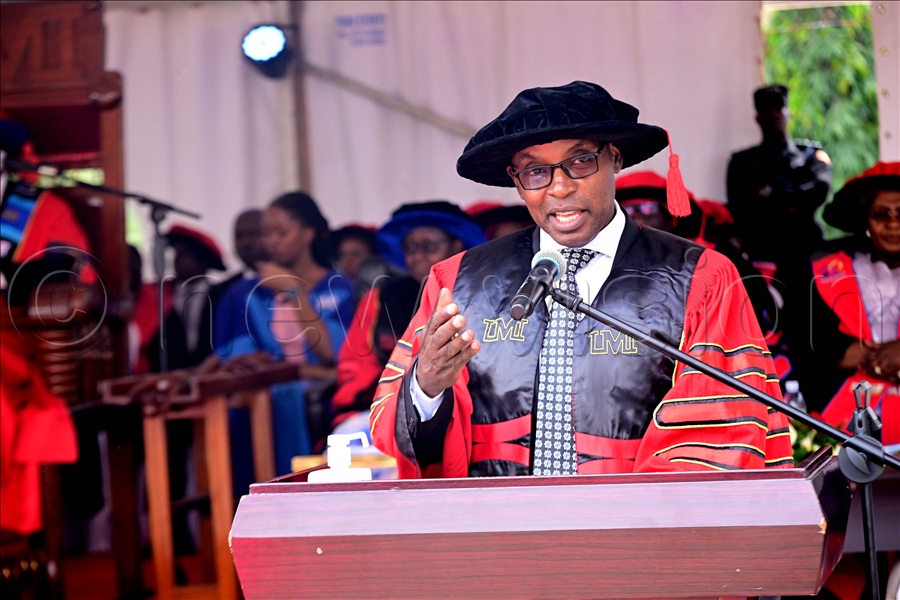
Uganda's Chief Justice Flavian Zeija makes his remarks during the Uganda Management Institute graduation ceremony on May 8, 2026.
The graduation ceremony attracted senior government officials, members of the Judiciary, academics and development partners, with Chief Justice Dr Flavian Zeija presiding as chief guest.
In his keynote address, Zeija congratulated the graduates for their perseverance and hard work, describing their achievements as the result of “years of sacrifice, late nights and unwavering resolve”.
He also commended parents, guardians and the institute’s leadership for investing in higher education and shaping future leaders.
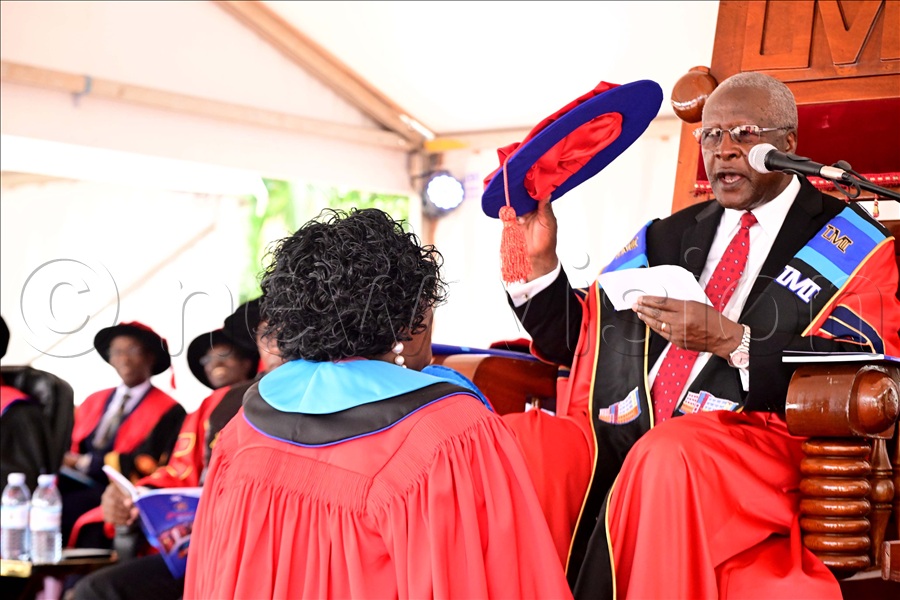
Justice Bart Magunda Katureebe Chancellor Uganda Management Institute remarks during the institute's graduation ceremony on May 8, 2026.
Addressing graduates, the Chief Justice urged them to embrace continuous learning and innovation in an increasingly competitive and technology-driven global economy.
“To get a PhD, you must contribute to knowledge, but to advance further, you must publish. That is what distinguishes you from the rest,” Zeija said, challenging PhD holders and academics to prioritise research and knowledge dissemination.
He warned graduates against remaining static in their careers, noting that digitisation and rapid technological advancement were reshaping workplaces and professional demands.
“You must be dynamic. If you are not, you may not be relevant in 10 years. The days of straitjacket professionals are over,” he said.

Graduands during the Uganda Management Institute graduation ceremony on May 8, 2026.
Citing the 2025 World Economic Forum report, Zeija observed that nearly 59% of the global workforce would require reskilling by 2030 in order to remain competitive.
“The question now is, how can we future-proof our workforces and adapt to these shifts?"

According to the Chief Justice, sectors such as agriculture, software development, project management, education, operational management and nursing are among the professions expected to remain in high demand over the coming years.
However, he noted that automation and technological innovation were steadily reducing opportunities in traditional clerical and administrative jobs such as secretarial work, cashiering and some accounting roles.

Zeija challenged educational institutions to continuously revise their training programmes in order to remain relevant to changing global trends.
“Education institutions like this one should also position themselves to re-skill our citizens with the skills needed for innovations of the future,” he said.
The Chief Justice also called on graduates to uphold integrity and ethical leadership in both public and private institutions, warning that corruption and inefficiency continue to undermine service delivery.
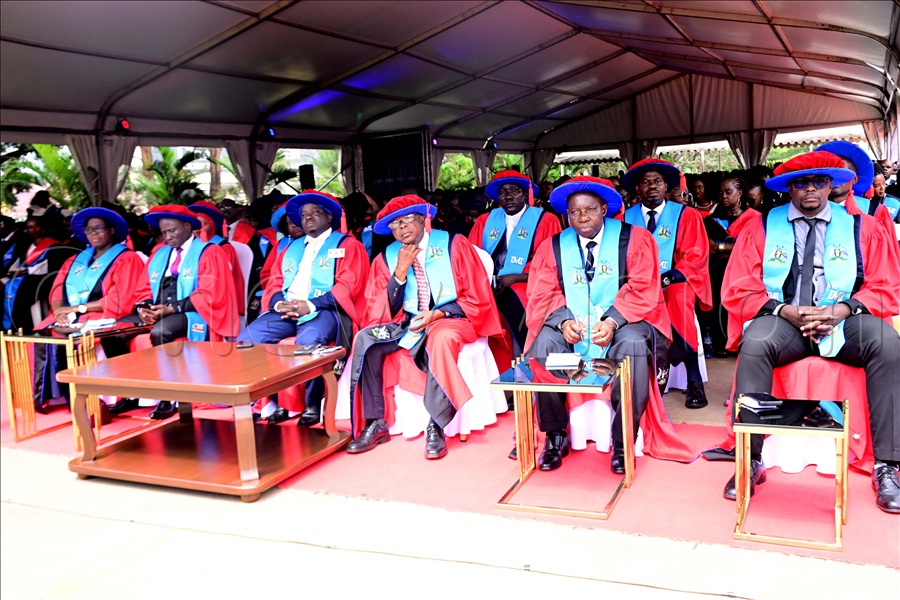
PhD graduands during the Uganda Management Institute graduation ceremony.
“Management is not neutral. It is either a tool for justice or a shield for inefficiency. Choose to be the former,” he said.
He urged graduates to use their skills and knowledge to solve challenges affecting ordinary Ugandans, especially vulnerable and underserved communities.
According to Zeija, policies and innovations must work for “the market vendor, the boda boda rider, the rural teacher,” if they are to create meaningful national transformation.
Meanwhile, UMI director general Dr. James Nkata said the institute was implementing a strategic transformation agenda aimed at strengthening research, innovation and academic excellence.

Nkata praised the presence of the Judiciary leadership at the ceremony, describing it as a symbol of institutional integrity and leadership.
“Your presence here today is both an honour and a lesson in humility and institutional integrity to the graduates,” he said.
He revealed that UMI had recruited 15 new lecturers since the last graduation ceremony, all of whom hold PhDs, bringing the institution’s PhD staffing level to 85%.

“Allow me to report that our faculty staffing levels now stand at 85% PhD holders,” Nkata said.
He also announced major academic promotions, including nine senior lecturers, eight associate professors and five full professors, the first full professors in the institute’s history.
“For the first time in the history of this institute, people have been promoted to full professors,” he said.

According to Nkata, the strengthened academic staff had contributed to UMI’s rising profile nationally and internationally.
“In the recent Webometric ranking of universities, UMI was ranked the fourth-best university in this country."
Nkata challenged graduates to place humanity and social transformation at the center of leadership and development.
“Development that excludes human dignity and wellbeing is not development at all,” he said.
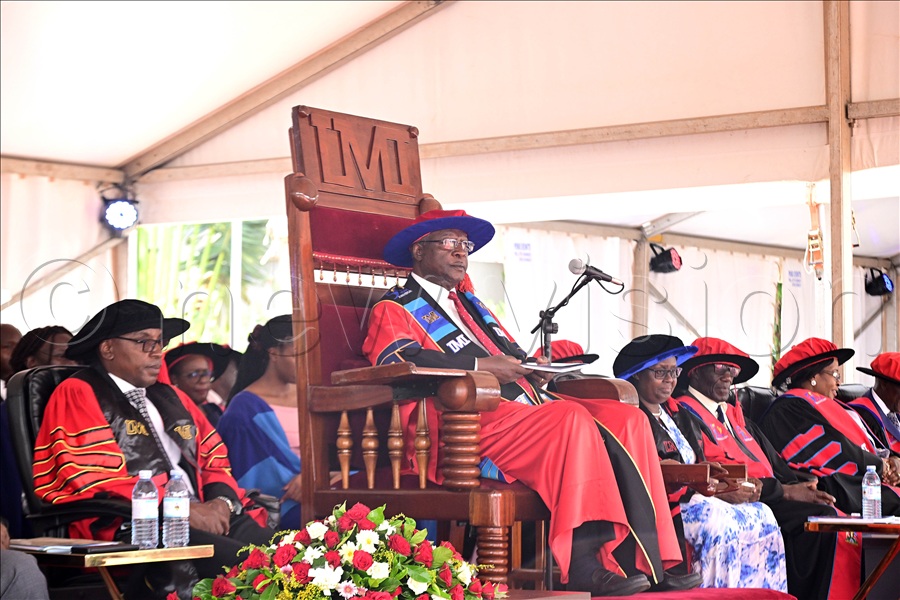
Justice Bart Magunda Katureebe Chancellor Uganda Management Institute during the institute's graduation ceremony.
He further encouraged graduates to embrace lifelong learning and remain adaptable in a changing world.
“A diploma is a beginning, not an endpoint. The educated professional of the 21st century must learn, unlearn and relearn."
UMI chancellor and former Chief Justice, Bart Katureebe also challenged universities to strengthen community engagement, research dissemination and public accountability.
Katureebe congratulated Zeija upon his appointment as Chief Justice and reflected on their transition in judicial leadership.

“I remember just about six years ago, you came to my office as I was handing over and retiring, and I remember your words asking that I should have stayed at least another one year,” Katureebe recalled.
“As I told you, leaders will always emerge and take institutions to higher levels.”
He expressed confidence in Zeija’s leadership, saying he was optimistic that the Judiciary would continue to grow under his stewardship.
Katureebe said universities should not only celebrate academic achievement, but also focus on solving societal problems through research and partnerships.
“Knowledge becomes meaningful only when it informs choices, improves lives and empowers people to shape their future,” he said.
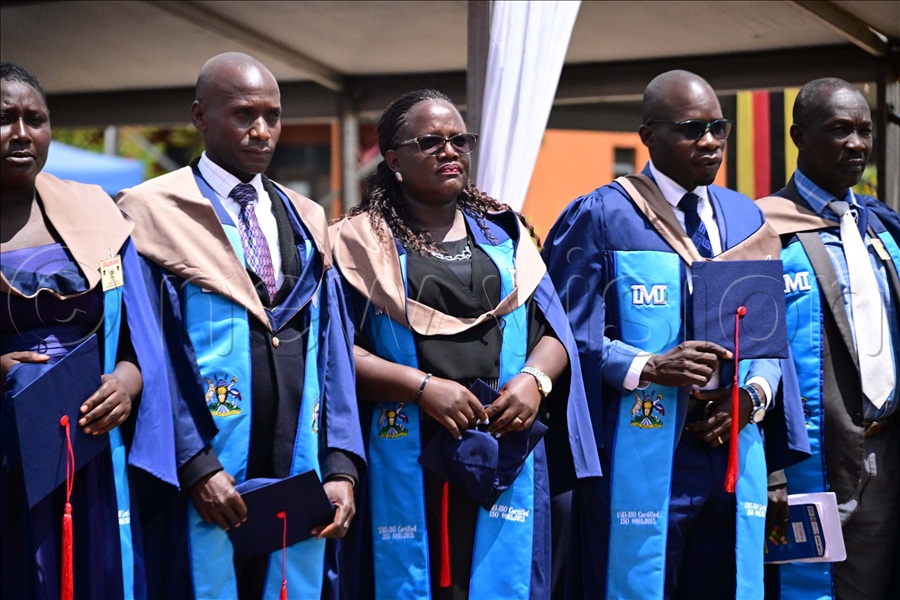
Graduands during the Uganda Management Institute graduation ceremony.
He described community engagement as the bridge between intellectual endeavour and social impact and urged universities to involve communities in shaping research agendas and training programmes.
“True engagement begins with listening to local leaders, public servants, community organisations and beneficiaries,” Katureebe said.
He added that universities must adopt participatory approaches that allow communities to become active partners rather than passive recipients.
“Our faculty and students must co-design research and training with district leaders, civil society, private sector partners and ordinary citizens,” he said.