
Business
UNBS staff seal off a truck carrying impounded substandard products
The inspections are to ensure that products available on the market comply with applicable compulsory Uganda standards and are safe for consumption.
UNBS staff seal off a truck carrying impounded substandard products. (Courtesy)
By: Simon Okitela, Journalist @New Vision
______________
In a move aimed at safeguarding the health and safety of consumers, Uganda National Bureau of Standards (UNBS) has intensified market surveillance inspections across the country.
The operation majorly targets locally manufactured as well as imported products that do not meet quality, safety and performance standards as well as expired products that are distributed and sold by some wholesalers and retailers.
According to Sylvia Kirabo, UNBS Principal Public Relations Officer, the inspections are to ensure that products available on the market comply with applicable compulsory Uganda standards and are safe for consumption.
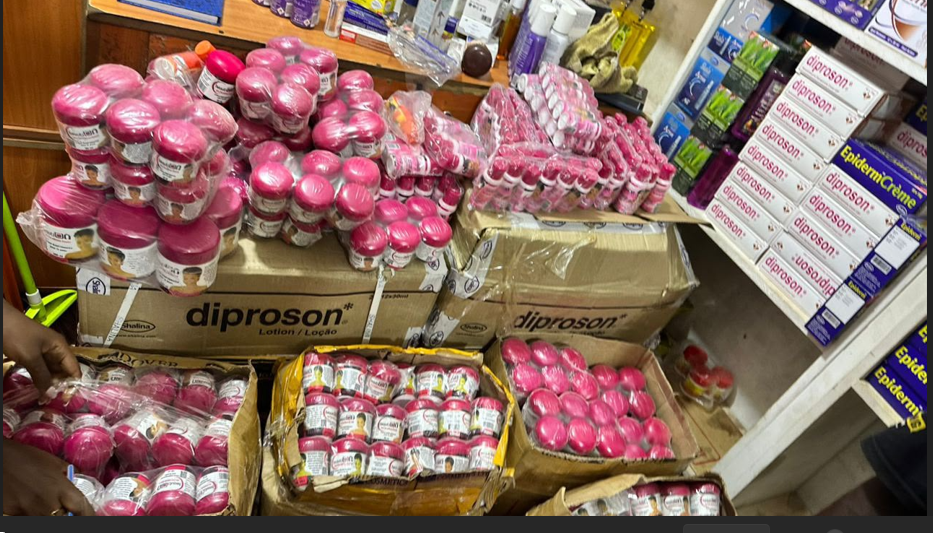
Some of the impounded substandard products during the crackdown. (Courtesy)
Findings indicate that during the last financial year 2025/2026, UNBS seized more than 880 tons of substandard products worth about 3b. These included food products, cosmetics and construction materials, among others.
The seizure of these dangerous substandard products saved the health and safety of thousands of consumers who would have been badly affected or injured if they consumed or used these products.
“UNBS carries out inspections and checks and seizes substandard products found in shops, supermarkets, warehouses and uncertified manufacturers in order to deny them shelf space and thus availability to unsuspecting consumers. This also protects compliant manufacturers and traders from unfair competition,” Kirabo added.
The inspections are in line with the UNBS mandate of enforcing standards in protection of public health and safety, as well as the environment, against dangerous and sub-standard products, as prescribed in the UNBS Act Cap 210 and the UNBS (Market Surveillance and Enforcement of Compulsory Standard Specifications) Regulation 2021.
The Act also prohibits importation, manufacture, sale, distribution or holding for the purpose of selling any product that does not meet compulsory Uganda standards.
During the last financial year, 6,642 inspections were conducted by UNBS all over the country at Points-of-sale, food processing facilities, distribution trucks, chemical and consumer factories, steel and engineering factories, among others.
In terms of regional coverage, the Central region had the highest number of inspections, followed by the Western region, then the Eastern region and the Northern region.
In the process of inspecting, a number of businesses that were found in contravention of compulsory standards, including general goods outlets and shops (both wholesale and retail), stores and supermarkets, hardware shops among others.
“We urge all manufacturers that are not yet certified to seek certification of their products before placing them on the market. UNBS is committed to supporting and guiding manufacturers and all value-addition enterprises that are not yet certified to apply for and obtain certification of their products.,” she explained.
During the last financial year, 6,642 inspections were conducted by UNBS all over the country at Points-of-sale, food processing facilities, distribution trucks, chemical and consumer factories, steel and engineering factories, among others.
In terms of regional coverage, the Central region had the highest number of inspections, followed by the Western region, then the Eastern region and the Northern region.
In the process of inspecting, a number of businesses that were found in contravention of compulsory standards, including general goods outlets and shops (both wholesale and retail), stores and supermarkets, hardware shops among others.
“We urge all manufacturers that are not yet certified to seek certification of their products before placing them on the market. UNBS is committed to supporting and guiding manufacturers and all value-addition enterprises that are not yet certified to apply for and obtain certification of their products.,” she explained.