
Business
Minister Tanna pledges to act on Namanve setbacks
Tanna made the remarks while visiting factories in Namanve Industrial Park and later addressing a stakeholders' engagement at the Uganda Industrial Research Institute (UIRI) on Friday, July 17, 2026.
Minister Tanna pledges to act on Namanve setbacks
By: Nelson Kiva and Laura Nagaba, Journalists @New Vision
________________
Trade, industry and cooperatives minister Sanjay Tanna has pledged swift government action to address persistent infrastructure and regulatory bottlenecks at Namanve Industrial Park in Mukono district.
The minister insisted that close engagement with manufacturers is critical to accelerating Uganda's industrialisation drive and achieving a $500b (sh1,849.4 trillion) economy by 2040.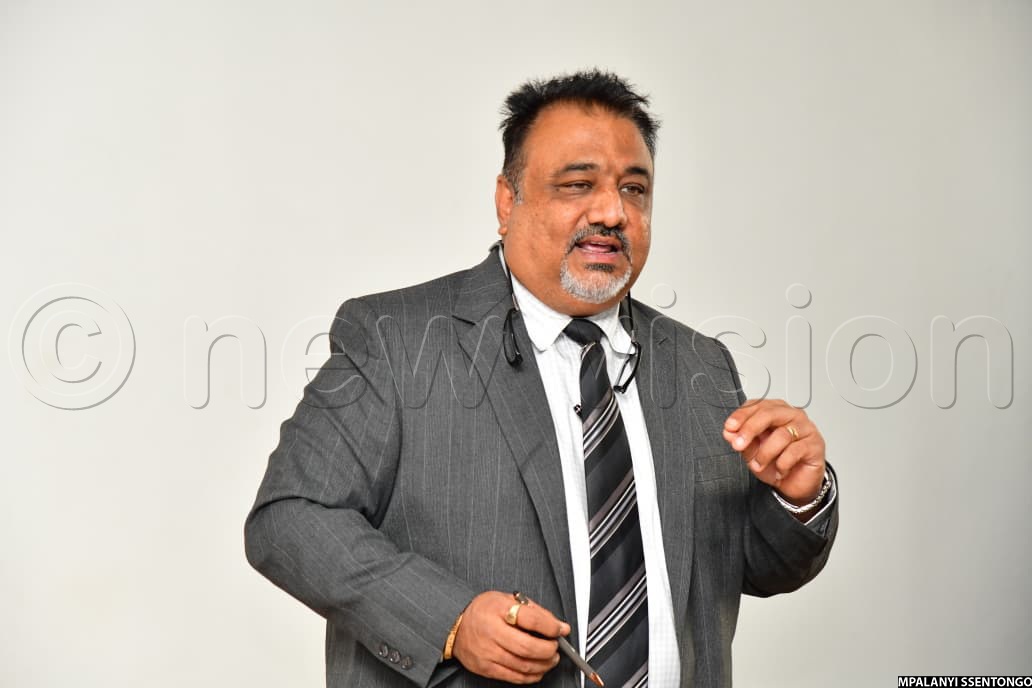
Tanna made the remarks while visiting factories in Namanve Industrial Park and later addressing a stakeholders' engagement at the Uganda Industrial Research Institute (UIRI) on Friday, July 17, 2026.
He was accompanied by the trade, industry and cooperatives state minister David Bahati, Uganda Investment Authority (UIA) board chairman Dr Robert Kyamanywa, executives from the Presidential CEO Forum, officials from the Uganda National Bureau of Standards (UNBS), among others.
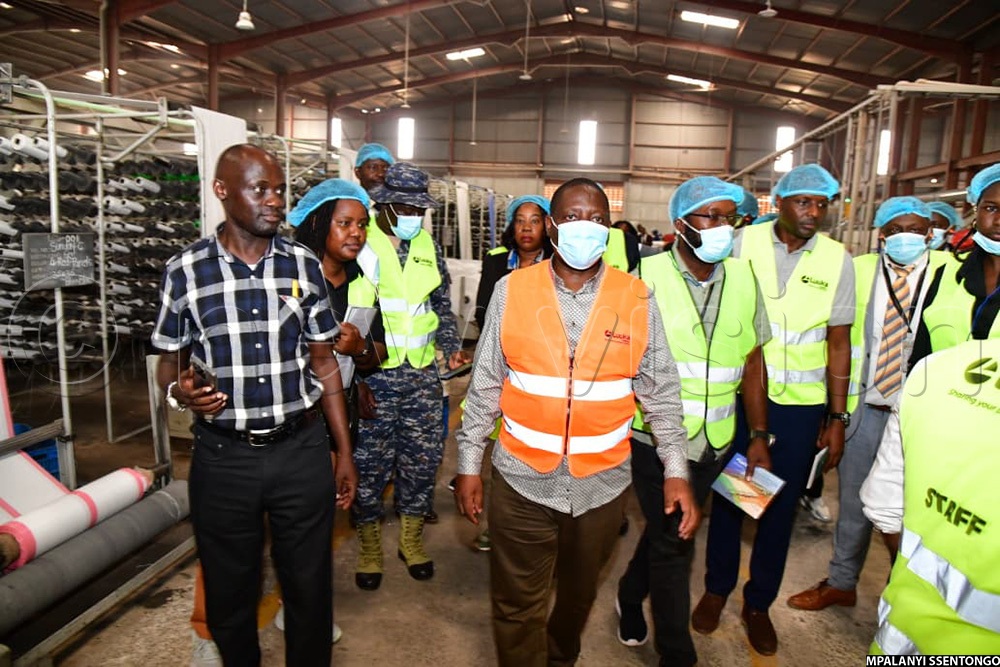
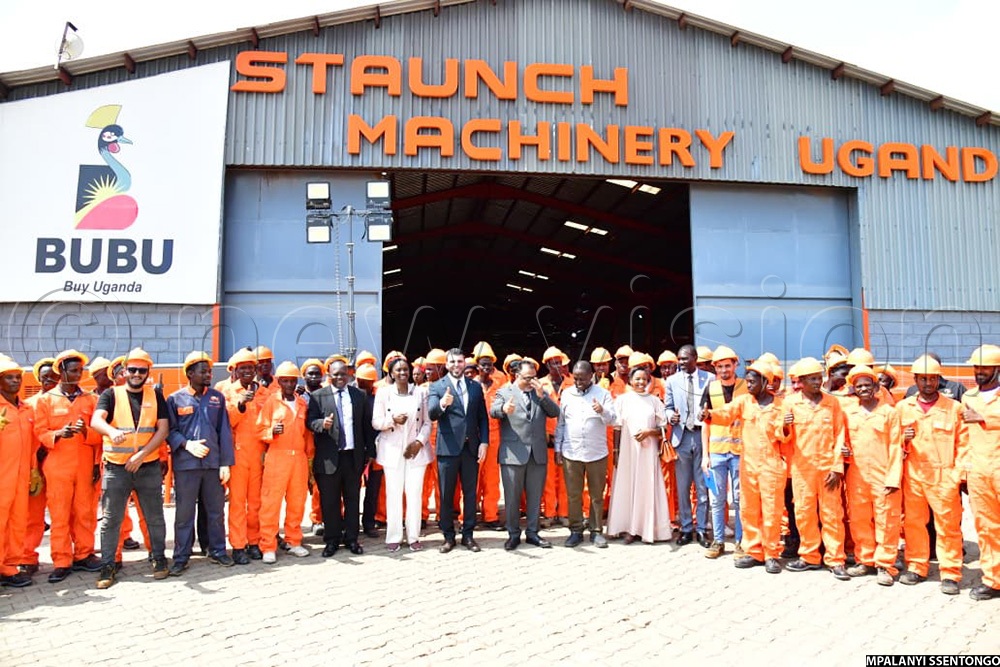
The delegation toured Luuka Plastics, Ntake Group, Staunch Machinery, Steel and Tube, and Uganda Industrial Research Institute (UIRI) to assess the progress of local industries, understand operational challenges and identify areas requiring government intervention.
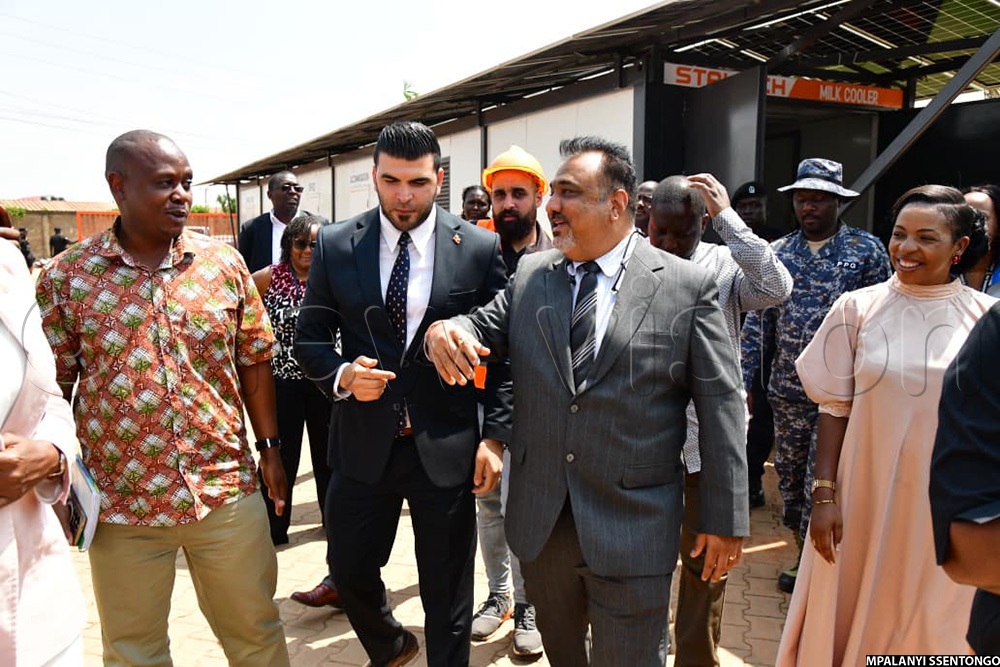
Tanna said he intends to spend more time engaging investors directly instead of relying on office briefings.
"I'm going to come more often. I'm not somebody who enjoys sitting in offices," Tanna said.
He said the government recognises the remarkable transformation of Namanve from what was once regarded as an insecure area into one of Uganda's leading industrial hubs.
"Namanve was a killing field. It was a dreaded area to be in," he said, attributing the area's transformation to deliberate government investments under President Yoweri Museveni's leadership.
Tanna said Uganda's industrialisation agenda is anchored on the National Development Plan IV (NDP IV), which seeks to expand the country's economy to $500b by 2040.
"Our dream is that by 2040, we must achieve $500b. Many people ask how that is possible, and I want to tell all of you that it's possible,” Tanna said.
He said Uganda's peace, expanding road network, electricity generation capacity and other economic fundamentals provide a strong foundation for industrial growth.
"Uganda is peaceful. From corner to corner, we are not at war," he said, adding that the country currently has an electricity surplus of about 2,000 megawatts, with the government investing in expanding transmission infrastructure to industrial areas.
The minister encouraged manufacturers to complement grid electricity with renewable energy investments.
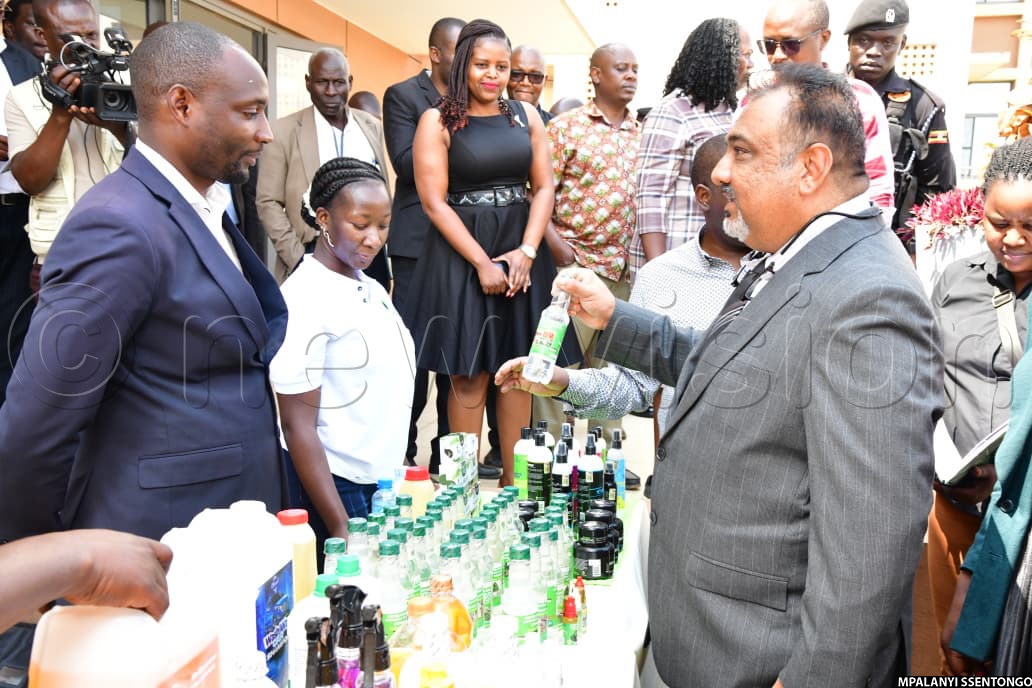
"Please invest in solar," he urged. "If you put solar panels, the extra government will buy it back from you,” Tanna told executives at Steel and Tube.
Tanna said his ministry remains committed to promoting import substitution under the government's ATMS strategy.
"We want to import as little as possible or zero and export as much as possible," he said.
The ATMS growth framework stands for Agro-industrialisation, Tourism, Manufacturing, and Science, Technology and Innovation.
He also pledged closer coordination among ministries and agencies to eliminate bureaucratic delays affecting investors.
During the engagement, investors raised several concerns, including poor road infrastructure within Namanve Industrial Park, delays in completing ongoing road works, bureaucratic approval processes, unreliable utility connections in some areas, the need for faster government coordination, access to serviced industrial land, and increased support for local manufacturers and value-addition initiatives.
Responding to the concerns, Tanna said road infrastructure was the most common issue raised throughout the tour and directed the UIA to provide him with a detailed report within two weeks.
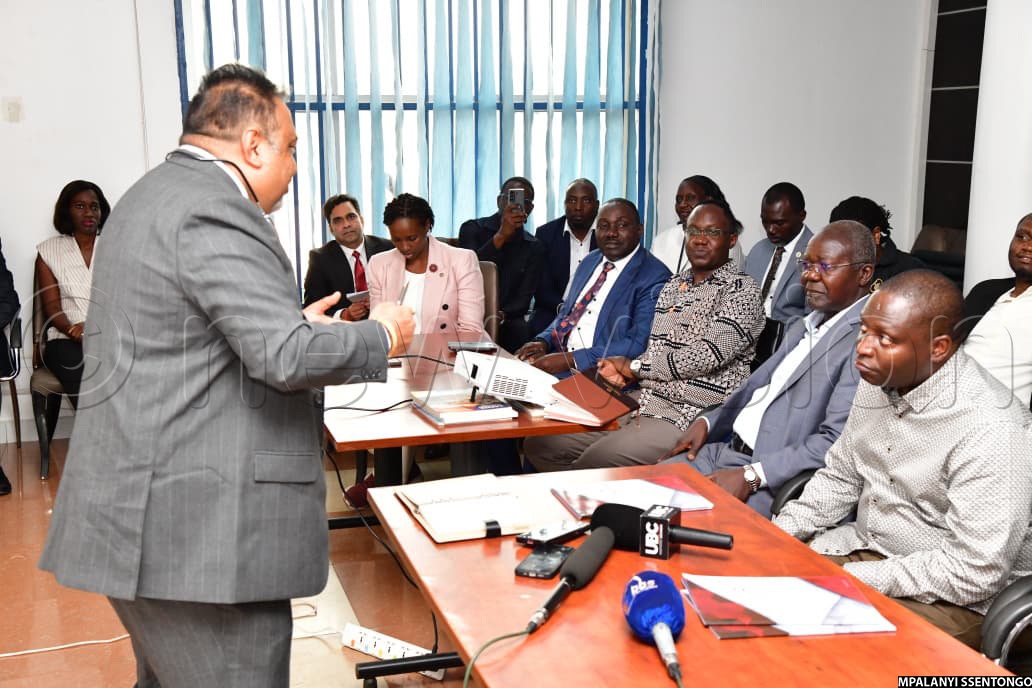
"I have asked the UIA to report to me within two weeks on what is happening. We are also going to investigate internally using our own systems, and we are going to find out why the roads are the way they are,” Tanna said.
He questioned why road projects had taken years to be completed despite funding having been approved and said the government would also seek technical advice on the engineering challenges associated with the area's swampy terrain before engaging contractors on the way forward.
Tanna further revealed that the government is considering expanding industrial parks through the acquisition of additional land while encouraging investors to establish factories outside Kampala in industrial parks such as Mbale, Tororo, Buikwe, Jinja and Kasese.
The minister urged manufacturers to embrace innovation, artificial intelligence and advanced technologies while investing in industries capable of absorbing Uganda's rapidly growing labour force.
"Today Uganda is graduating more than 300,000 students, and most of all those young people are jobless. The onus is upon us to make sure that we create space for those people," he said.
At UIRI, the minister and his delegation were welcomed by its executive director, Prof. Charles Kwesiga.
Kwesiga said UIRI is working to reduce the cost of technology while closing practical skills gaps among graduates to make them more relevant to industry.
"Please invest in solar," he urged. "If you put solar panels, the extra government will buy it back from you,” Tanna told executives at Steel and Tube.
Tanna said his ministry remains committed to promoting import substitution under the government's ATMS strategy.
"We want to import as little as possible or zero and export as much as possible," he said.
The ATMS growth framework stands for Agro-industrialisation, Tourism, Manufacturing, and Science, Technology and Innovation.
He also pledged closer coordination among ministries and agencies to eliminate bureaucratic delays affecting investors.
During the engagement, investors raised several concerns, including poor road infrastructure within Namanve Industrial Park, delays in completing ongoing road works, bureaucratic approval processes, unreliable utility connections in some areas, the need for faster government coordination, access to serviced industrial land, and increased support for local manufacturers and value-addition initiatives.
Responding to the concerns, Tanna said road infrastructure was the most common issue raised throughout the tour and directed the UIA to provide him with a detailed report within two weeks.
"I have asked the UIA to report to me within two weeks on what is happening. We are also going to investigate internally using our own systems, and we are going to find out why the roads are the way they are,” Tanna said.
He questioned why road projects had taken years to be completed despite funding having been approved and said the government would also seek technical advice on the engineering challenges associated with the area's swampy terrain before engaging contractors on the way forward.
Tanna further revealed that the government is considering expanding industrial parks through the acquisition of additional land while encouraging investors to establish factories outside Kampala in industrial parks such as Mbale, Tororo, Buikwe, Jinja and Kasese.
The minister urged manufacturers to embrace innovation, artificial intelligence and advanced technologies while investing in industries capable of absorbing Uganda's rapidly growing labour force.
"Today Uganda is graduating more than 300,000 students, and most of all those young people are jobless. The onus is upon us to make sure that we create space for those people," he said.
At UIRI, the minister and his delegation were welcomed by its executive director, Prof. Charles Kwesiga.
Kwesiga said UIRI is working to reduce the cost of technology while closing practical skills gaps among graduates to make them more relevant to industry.
He noted that although many learners leave academic institutions with theoretical knowledge, they still require hands-on training to apply what they have studied in real-world manufacturing.
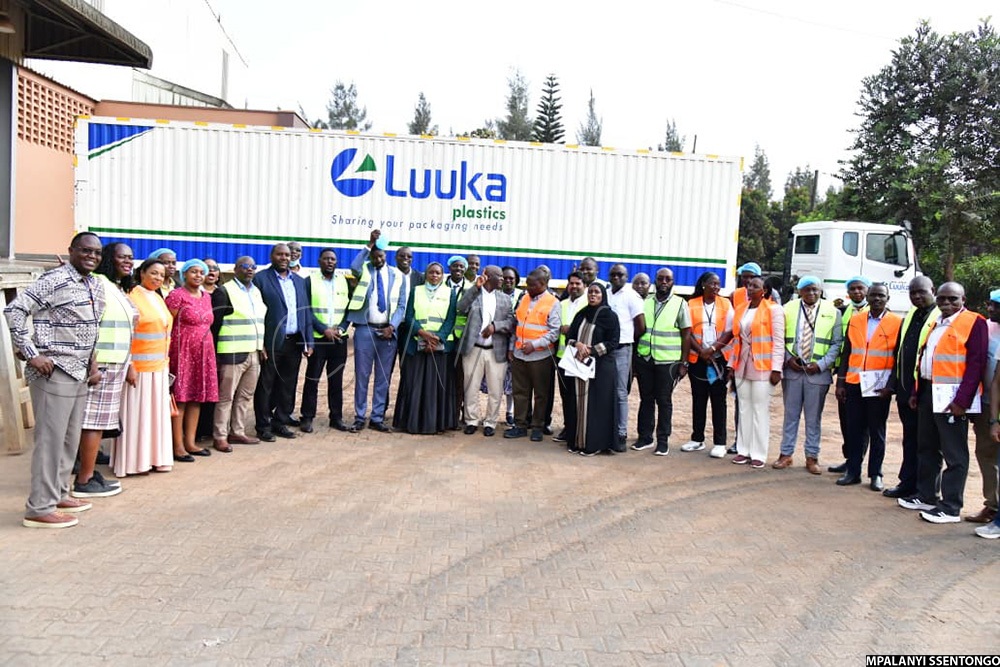
"We are making every effort to drive down the cost of technology and to fill the gaps that are obtained in the process of skilling our people," he said.
He explained that graduates still need hands-on exposure and a practical understanding of how to transfer their book knowledge into practical applications.
The proprietor of Staunch Machinery and the honorary consul of Uganda to Lebanon, Mohammad Hussein, commended the conducive investment environment in Uganda, saying the country's stability and investment policies continue to attract international investors.
Hussein said many other investors from Lebanon are looking forward to coming to Uganda to establish industries, expressing confidence that continued government support would further strengthen the country's manufacturing sector.
Presidential CEO Forum chief executive officer Irene Mugisha said the Namanve visit was the forum's second information tour following an earlier engagement in Kapeeka, where recommendations are already being implemented.
"We really want to be able to plug into the vision of this country that is industrialisation, but also be able to speak to the how," Mugisha said.
She noted that bringing together institutions such as URA, UNBS, the Electricity Regulatory Authority, the Ministry of Works and Transport, and labour officials enables investors' concerns to be addressed by the responsible agencies without delay.
UIA board chairman Dr Kyamanywa said investments in Namanve Industrial Park have created nearly 144,000 direct and indirect jobs across sectors, including manufacturing, agro-processing, ICT, energy and logistics.
"Notably, over 70% of investors in this park are Ugandans," Kyamanywa said, describing the figure as evidence of growing indigenous participation in industrialisation.
He said the UIA remains committed to improving infrastructure, providing serviced industrial land and strengthening investor support services while encouraging more Ugandan entrepreneurs to establish factories.
"This was not Namanve 10 years ago. And I want to assure you, it will not be Namanve five years from now,” he said.
Bahati, on his part, said the government is shifting from rhetoric to practical problem-solving.
"We are now working as one government, but we have also shifted from making speeches to really addressing people's issues," Bahati said.
He commended the manufacturers visited during the tour for their contribution to Uganda's economy, noting that together they pay more than sh250b annually in taxes while employing over 3,000 people.
"We support you, local investors. But please understand that whoever puts up a factory, whether foreign or Ugandan, is welcome to Uganda,” Bahati said.
"We are making every effort to drive down the cost of technology and to fill the gaps that are obtained in the process of skilling our people," he said.
He explained that graduates still need hands-on exposure and a practical understanding of how to transfer their book knowledge into practical applications.
The proprietor of Staunch Machinery and the honorary consul of Uganda to Lebanon, Mohammad Hussein, commended the conducive investment environment in Uganda, saying the country's stability and investment policies continue to attract international investors.
Hussein said many other investors from Lebanon are looking forward to coming to Uganda to establish industries, expressing confidence that continued government support would further strengthen the country's manufacturing sector.
Presidential CEO Forum chief executive officer Irene Mugisha said the Namanve visit was the forum's second information tour following an earlier engagement in Kapeeka, where recommendations are already being implemented.
"We really want to be able to plug into the vision of this country that is industrialisation, but also be able to speak to the how," Mugisha said.
She noted that bringing together institutions such as URA, UNBS, the Electricity Regulatory Authority, the Ministry of Works and Transport, and labour officials enables investors' concerns to be addressed by the responsible agencies without delay.
UIA board chairman Dr Kyamanywa said investments in Namanve Industrial Park have created nearly 144,000 direct and indirect jobs across sectors, including manufacturing, agro-processing, ICT, energy and logistics.
"Notably, over 70% of investors in this park are Ugandans," Kyamanywa said, describing the figure as evidence of growing indigenous participation in industrialisation.
He said the UIA remains committed to improving infrastructure, providing serviced industrial land and strengthening investor support services while encouraging more Ugandan entrepreneurs to establish factories.
"This was not Namanve 10 years ago. And I want to assure you, it will not be Namanve five years from now,” he said.
Bahati, on his part, said the government is shifting from rhetoric to practical problem-solving.
"We are now working as one government, but we have also shifted from making speeches to really addressing people's issues," Bahati said.
He commended the manufacturers visited during the tour for their contribution to Uganda's economy, noting that together they pay more than sh250b annually in taxes while employing over 3,000 people.
"We support you, local investors. But please understand that whoever puts up a factory, whether foreign or Ugandan, is welcome to Uganda,” Bahati said.