
Uganda’s economic growth failing to close unemployment gap, report says
Susan Atukunda, the principal investigator who reviewed the report, said economic growth alone could not guarantee improved living conditions without access to decent employment, affordable healthcare, quality education and productive opportunities.
Front row L-R: The state minister of finance in charge of general duties, Cissy Mulondo, launching the 13th annual report on the state of equal opportunities in Uganda, as the acting EOC chairperson, Habib Sseruwagi, principal investigator of the report, Suzan Atukunda and other officials look on. This was at Kampala Sheraton Hotel on Tuesday, November 24, 2026. (Photos by Francis Emorut)
________________
Uganda's economic growth is failing to translate into equal opportunities for millions of citizens, with youth unemployment, unequal access to public services and regional disparities threatening inclusive development, a new government report has revealed.
The Equal Opportunities Commission's (EOC) 13th Annual Report on the State of Equal Opportunities in Uganda for 2025/2026 questions whether economic expansion and increased public investment are improving the lives of ordinary citizens, particularly those in underserved communities.
Launched at Sheraton Kampala Hotel on November 24, under the theme Bridging Inequalities, Leaving No One Behind, the report highlights a widening gap between economic progress and people's ability to benefit from it.
Susan Atukunda, the principal investigator who reviewed the report, said economic growth alone could not guarantee improved living conditions without access to decent employment, affordable healthcare, quality education and productive opportunities.
"One of the clearest illustrations of Uganda's development paradox is the country's youth employment crisis," Atukunda said.
Uganda's economy grew by 6.4% in 2025/2026, with growth projected to reach 10.2% in 2026/2027. However, the report says the expansion has not generated enough jobs to absorb the growing labour force.
About 700,000 Ugandans enter the labour market annually, but only between 200,000 and 238,000 secure employment, leaving an annual jobs gap of up to 500,000.
The report estimates that 5.25 million young people, representing 50.9% of the country's 10.77 million youth population, are neither employed nor participating in education or training. The proportion rises to 57.5% among young women.
Youth unemployment stands at 16.1%, while 19% of employed young people are underemployed and 90.1% work in the informal sector.
"Many therefore have jobs but earn insufficient incomes, operate under insecure working conditions and lack meaningful social protection," Atukunda said.
The commissioner for youth and children affairs at the gender ministry, Mondo Kyateeka, warned that failure to create opportunities for young people could entrench poverty across generations.
He called for a rethink of government interventions, arguing that policymakers should use research findings to develop more effective solutions.
The report also identifies missed opportunities in domestic production, noting that Uganda imported tomatoes worth $19.18 million and fresh potatoes worth approximately $78.32 million from Kenya in 2025.
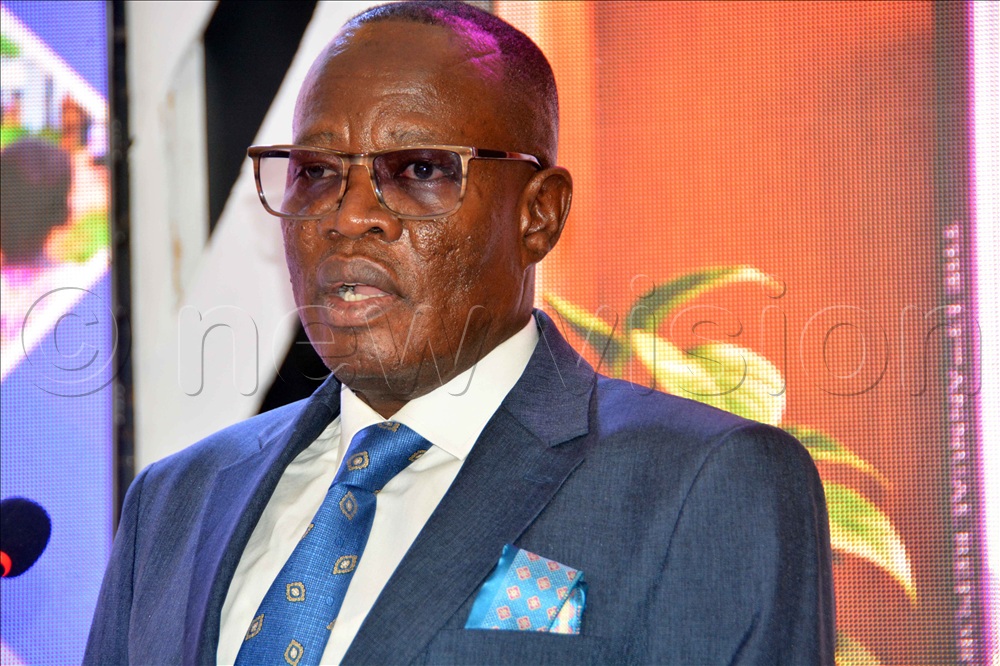
The EOC secretary, Dr Nasser Mukwaya, addressing participants during the report launch ceremony at Kampala Sheraton Hotel on Tuesday, November 24, 2026.
The commission says greater domestic production could create jobs in agriculture, agro-processing, transport and trade.
Unequal distribution of public resources
The report also questions whether government spending adequately addresses the needs of disadvantaged communities.
Uganda's approved national budget increased to sh84.39 trillion, including sh22.055 trillion for development expenditure. Funding for integrated transport infrastructure rose by 38.61%, while investment in sustainable energy development increased by 107.14%.
However, the share of the national budget allocated to local governments declined from 9.9% in 2025/2026 to 9.7% in 2026/2027, below the National Development Plan III benchmark of 20.1%.
Kampala's per capita allocation, according to the report, was about three times that of Karamoja and nearly four times that of West Nile.
The five most deprived sub-regions collectively received only 17.58% of local government allocations.
The commission also found that the 2026/2027 National Budget Framework Paper scored 67% on gender and equity compliance, indicating shortcomings in integrating equity considerations into government planning and budgeting.
The state minister for finance in charge of general duties, Cissy Mulondo, defended the government's efforts, saying several programmes were aimed at improving household incomes and expanding economic opportunities.
"Government remains committed to ensuring that all Ugandans, irrespective of gender, age, disability or socio-economic status, participate in and benefit from national development," Mulondo said.
She cited the Parish Development Model (PDM), the Uganda Women Entrepreneurship Programme and the Youth Livelihood Programme as interventions intended to promote entrepreneurship, financial inclusion and household incomes.
EOC calls for more inclusive development
Beyond employment and public spending, the report identifies unaffordable healthcare, school exclusion and the marginalisation of vulnerable communities as persistent barriers to equal opportunities.
Dr Shaft Nasser Mukwaya, the EOC secretary, said inequalities were reflected in the daily experiences of individuals and communities whose circumstances continued to limit their access to public services and economic opportunities.
"Economic growth alone is not sufficient. What matters is how equitably the benefits of development are distributed among all the people," Mukwaya said.
He called on government institutions and non-state actors to integrate equity considerations into their policies, plans and budgets, particularly when addressing the needs of historically marginalised groups.
The Commission recommends increased financing for local governments, improved healthcare access and targeted interventions to expand economic opportunities for disadvantaged populations.