
Consortium targets 1,000 mass housing units in Namugongo, Naalya
The deal brings together the National Social Security Fund (NSSF), Housing Finance Bank (HFB), National Housing and Construction Company (NHCC), and Shelter Afrique Development Bank, alongside digital partner Kweli Capital Group. The alliance aims to solve Uganda’s housing shortage by lowering development costs, unlocking long term financing, and making home ownership accessible to average wage earners.
(L-R) Ayota, Kaijuka, Rebecca Nabwire Osogo, the Kweli Group CEO, Hann and Michael Mugabi, managing director at HFB, during the MOU signing at Serena Hotel in Kampala on November 24.
KAMPALA - Leading financial and housing institutions have signed a joint Memorandum of Understanding (MOU) to build about 1,000 unit mass housing pilot project in Namugongo and Naalya.
The deal brings together the National Social Security Fund (NSSF), Housing Finance Bank (HFB), National Housing and Construction Company (NHCC), and Shelter Afrique Development Bank, alongside digital partner Kweli Capital Group.
The alliance aims to solve Uganda’s housing shortage by lowering development costs, unlocking long term financing, and making home ownership accessible to average wage earners.
To test the model, the consortium is launching a pilot project of 1,000 housing units built at a density of 100 units per acre across 10 acres.
The pilot sites are located in Namugongo (8 km from the central business district) and Naalya (12 km from the central business district), leveraging existing roads, power, and water connections to cut infrastructure costs from 20% down to under 10%.

The project roadmap outlines forming a joint steering committee within two weeks, completing project concepts in one month, concluding feasibility studies by late February, establishing a Special Purpose Vehicle (SPV) within four months, and breaking ground within six months.
Uganda currently faces a housing deficit of over 2.5 million units, which grows by 300,000 units every year. About 60% of urban residents live in informal settlements, while mortgage penetration remains low at just 1.2% of Gross Domestic Product (GDP).
Despite these deficits, the construction sector is one of Uganda’s fastest-growing economic drivers, contributing 11% to GDP and expanding by 12% to sh2.9 trillion in 2025.
Speaking at the signing ceremony at Serena Hotel in Kampala, Thierno-Habib Hann, the managing director and chief executive, Shelter Afrique Development Bank, noted that pooling resources across the housing value chain will create a scalable model for the continent.
“The partnership we are about to sign today targets the working families who are the backbone of Uganda's economy but remain locked out of formal financing for housing. This partnership brings the whole value chain to the table, combining land, long term savings, mortgage expertise, digital tools, and catalytic financing to create a model that can be replicated across Africa,” he said.
The integration of NSSF into the consortium unlocks domestic pension savings to fund housing infrastructure. Patrick Ayota, managing director, NSSF said that providing decent shelter is fundamentally tied to the fund’s mandate of social protection.
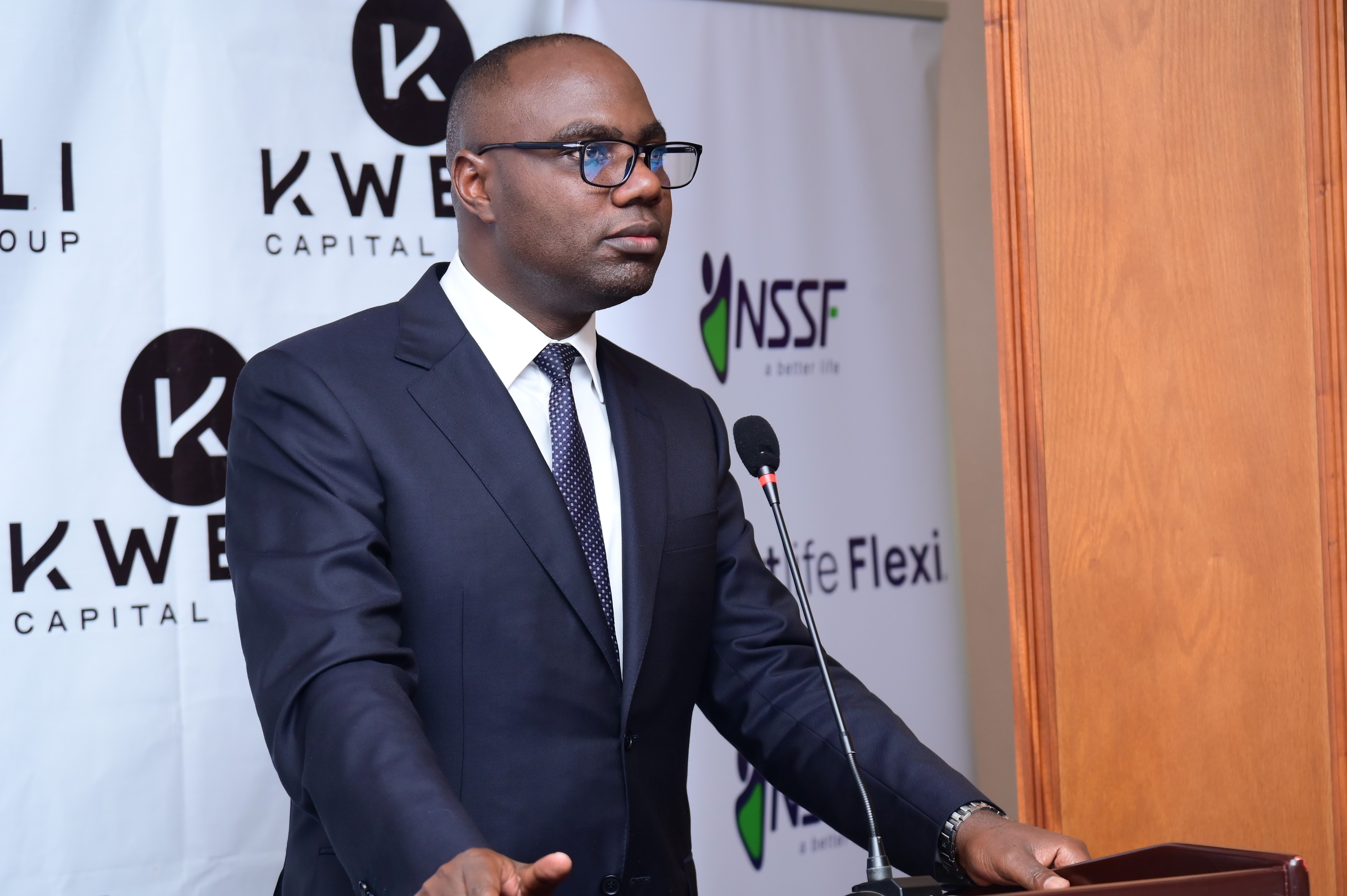
Finance minister Henry Musasizi
“At the end of the day, decent housing is social security because if people cannot have a place to live that is decent, there is a part of social security that is insecure, which is not the purpose of why we exist. The money we hold in NSSF belongs to workers, and whatever we do, we must make sure that we do it profitably while solving this national challenge,” he said.
Eng. Kenneth Kaijuka, chief executive officer, NHCC explained that the high price of houses stems from non construction expenses.
“When you assume a house costs sh100m, the actual hardware cost is only 35%, while infrastructure takes 20%, land 10%, taxes 10%, financing 15%, and preliminaries 5%. If this consortium resolves to offset and incentivize these cost centers, ordinary Ugandans will finally access planned, vertical housing instead of sprawling horizontally into wetlands,” he said.
Judith Nabakooba, the Minister for Lands, Housing and Urban Development, urged developers to construct vertically to save agricultural land and preserve green spaces.
Persis Namuganza, the State Minister for Lands, added that true affordability for Ugandans means homes priced between sh50m and sh75m, with monthly payments of sh280,000 to sh300,000 over 10 to 15 years.
Finance Minister Henry Musasizi pledged government support on tax policies and concessionary financing, encouraging NSSF to diversify away from fixed income and into high-impact infrastructure.