
Uganda delegation seeks more IMF/World Bank support, engages American investors
The IMF/World Bank Spring meetings, which started on Monday, will end on Saturday with several papers to be presented, including on the state of the global economy and the East African Community.
Musasizi (Right) and Ggoobi interacting with an American investor during the Uganda-USA Investment Forum on Monday, April 13, 2026, in Washington, DC. (Courtesy)
_________________ The Uganda delegation was received and hosted by Robie Kakonge, Uganda Ambassador to Washington, DC and Head of Mission. (Courtesy) Minister Musasizi speaking during the Uganda-USA Investment Forum on Monday in Washington, D.C. (Courtesy)
A delegation of Uganda ministers and technocrats is in the USA in Washington, DC, to attend the ongoing IMF and World Bank annual spring meetings, which started on Monday, and to also engage American investors on the investment opportunities in Uganda
The Minister of State for Finance in charge of General Duties, Henry Musasizi, has told potential investors in Washington DC that Uganda, which is exceptionally naturally endowed with a rapidly growing economy, has enormous, highly rewarding investment opportunities which they need to utilise.
Musasizi is leading the Finance Ministry team that is participating in the 2026 Spring meetings of the International Monetary Fund and the World Bank in Washington DC, running from April 13 to 18,2026 under the theme: “Building Prosperity through Policy.”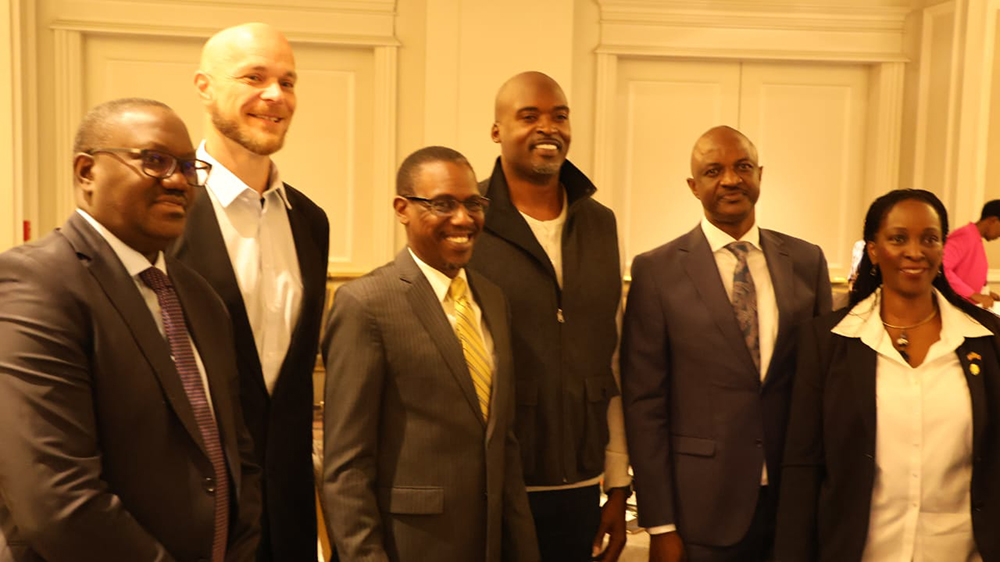
The Uganda delegation was received and hosted by Robie Kakonge, Uganda Ambassador to Washington, DC and Head of Mission. The delegations include, among others, the Attorney General Kiryowa Kiwanuka, the Minister of Science and Technology Dr Monica Musenero, Bank of Uganda Governor Dr Michael Atingi-Ego, the Finance Ministry’s Permanent Secretary and Secretary to the Treasury (PSST) Dr Ramathan Ggoobi and the Permanent Secretary for the Ministry of Foreign Affairs Vincent Bagiire.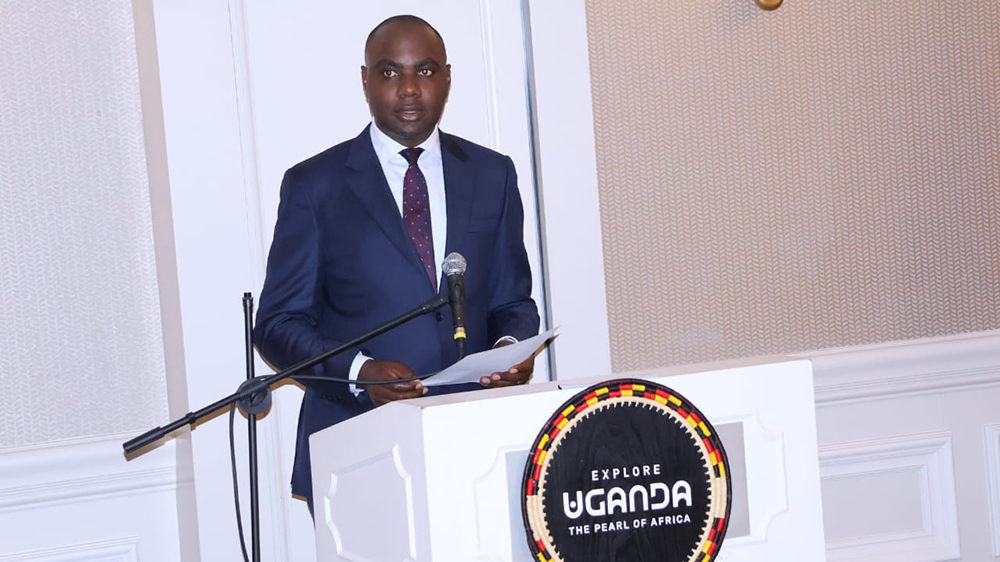
In his opening remarks, Musasizi told the gathering of US investors and business leaders that Uganda is better placed to offer stable business and investment opportunities that can make all parties more prosperous.
The forum is part of ongoing efforts by the Ministry of Finance to seek partnerships for advancing her development agenda.
“Uganda has maintained strong real GDP growth relative to regional peers, private sector activity indicators (PMI) have remained expansionary for consecutive months and export receipts have grown strongly, supported by coffee, gold, and industrial products. Our venture and innovation ecosystems are emerging, especially in fintech and agric-tech,” Musasizi noted.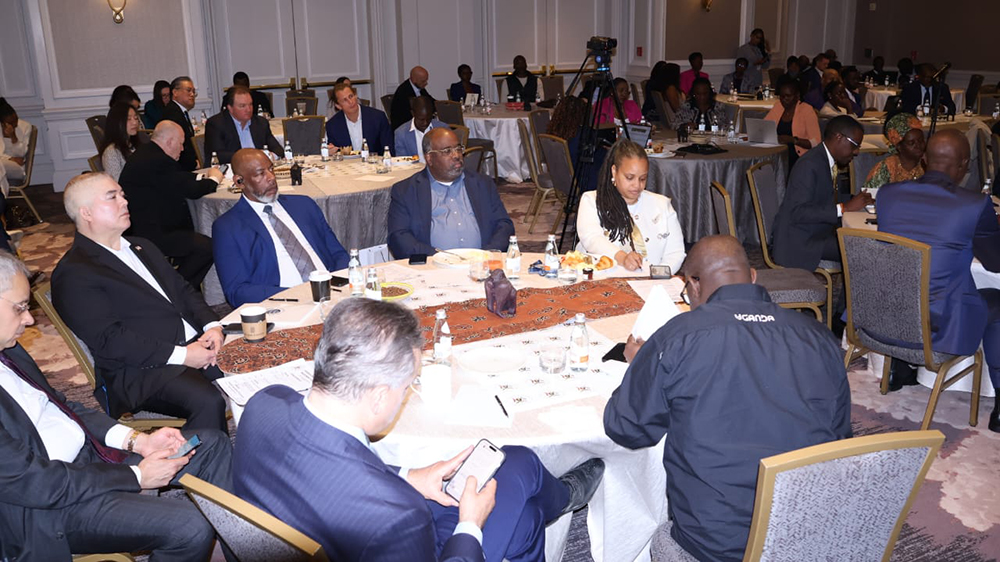
Participants listening to presentations from the Uganda delegation. (Courtesy)
He outlined Uganda’s ambitious national target to grow the economy tenfold by 2040 from the current $50b to $500b, stressing that the budget for 2026/2027 aims to support these initiatives and ensure the country's transition to upper middle-income status.
Musasizi explained that the Government of Uganda's vision for the economy is anchored on sustained investments in the ATMS (agro-industrialisation, tourism, minerals, and science and technology) and key enablers of growth, with a long-term ambition to double GDP every five years.
“We want partners in investment, trade, tourism, and technological upgrading to achieve this strategic goal. Uganda offers “inexhaustible opportunities in agro-industrialisation, tourism, minerals and the entire extractive sector, science and technology, and infrastructure development,” Musasizi told American investors.
The PSST Dr Ramathan Ggoobi, who delivered a detailed investment pitch, told potential partners that Uganda has been ranked the best investment destination in Africa.
He highlighted the country’s macroeconomic stability, saying it has the lowest macro risk in the region yet delivers the highest returns on investment.
“Uganda offers peace, easy taxes and a tolerable administration of justice. Our government is pro-private sector and supports private investment, generous tax & non-tax incentives, the legal/regulatory frameworks have been strengthened, Company Act amended to enhance corporate governance, Access to EAC, COMESA and AfCFTA markets with a combined population of a billion people and a GDP of about $3tn are benefits we offer,” Ggoobi explained.
He revealed that the government is strengthening and deepening capital markets, a deal flow facility which identifies and supports small and medium enterprises to become investment-ready and operational.
Meanwhile, Uganda is fast-tracking its engagement with global financial institutions to secure fresh financing and reinforce macroeconomic stability at the 2026 Spring Meetings of the International Monetary Fund and the World Bank in Washington, DC.
The IMF/World Bank Spring meetings, which started on Monday, will end on Saturday with several papers to be presented, including on the state of the global economy and the East African Community.
“I’m leading the Ministry of Finance team to participate in the 2026 Spring meetings of the International Monetary Fund and the World Bank in Washington, DC, from April 13 to 18, 2026. This gathering has brought together policy makers, government leaders, private sector leaders and development partners to deliberate on the state of the global economy, financial stability, growth outlook and development, as well as poverty reduction,” Musasizi told New Vision.
While in Washington, the minister revealed the Uganda delegation was scheduled to take part in the second US-Uganda Business and Investment Forum, and also meet with the US Administration and the World Bank Vice-President for the Africa region. The team would also engage the IMF Africa Department Director, Mr Abebe Selassie and participate in the Coalition of Finance Ministers’ on Climate Action meeting.
The gathering comes at a critical time when economies, particularly in Sub-Saharan Africa, are grappling with slow economic growth, rising debt burdens and external shocks, with the instability in the Middle-East the latest.
“At the Spring meetings, the global leaders will explore how policy, investment and innovation can support job creation and unlock private investment to drive economic growth. The leaders have to find practical approaches to delivering results across sectors such as energy, water, agriculture, health and digital development,” the minister stated.
Ggoobi disclosed that the government's immediate priority is to negotiate a new Extended Credit Facility (ECF) programme with the IMF.
The anticipated ECF programme is expected to provide Uganda with low-cost, long-term financing to support fiscal consolidation, strengthen foreign exchange reserves and enhance investor confidence.
“Our focus this year will be on advancing negotiations for a new Extended Credit Facility (ECF) programme with the IMF, and also negotiating for more concessional financing from the World Bank for our transformative projects and for financing the national budget through Development Policy Operations,” Ggoobi revealed.
The concessional funding, on the other hand, will be critical in bridging financing gaps for infrastructure and socio-economic development programmes, particularly in energy, water, agriculture, health and digital transformation.
“Our relationship with the World Bank is now fully restored. We’re running a portfolio of 18 projects worth $4.7b. The Bank is committed to increasing concessional financing for our transformative projects,” Ggoobi stated.
For Uganda, outcomes from the Spring Meetings could prove pivotal in shaping its medium-term fiscal strategy, unlocking affordable financing and reinforcing investor confidence at a time when external vulnerabilities continue to test emerging and developing economies.
According to the latest Africa Economic Update by the World Bank (April, 2026), Sub-Saharan Africa’s economic recovery from successive global shocks is losing momentum, with growth projections for 2026 revised downwards.
The report proposes a pragmatic ecosystem-based approach that aligns policy tools with country capabilities to deliver productivity gains and structural transformation.
The geopolitical spillovers from the conflict in the Middle East, the high debt service burdens and structural weaknesses are some of the factors limiting growth prospects, according to the report.