
Small and Medium Enterprises list proposals to digital growth
The Federation’s proposal centres on two key legislative amendments: reducing the excise duty on mobile money cash withdrawals and removing import duties and Value Added Tax (VAT) on entry-level smartphones.
Amos Kankunda Finance committee Chairperson and MP Rwampara County, and Dickson Kateshumbwa the Member of Parliament for Sheema municipality during the finance committee of parliament on April 15, 2026. (Credit: Maria Wamala)
___________________
The Federation of Small and Medium Enterprises-Uganda (FSME) has urged the Parliamentary Committee on Finance, Planning, and Economic Development to slash Mobile Money and smartphone taxes to fuel digital growth.
In a detailed memorandum submitted on April 14, 2026, the Federation argues that high taxes are currently stifling financial inclusion and the growth of the digital economy.
The Federation’s proposal centres on two key legislative amendments: reducing the excise duty on mobile money cash withdrawals and removing import duties and Value Added Tax (VAT) on entry-level smartphones.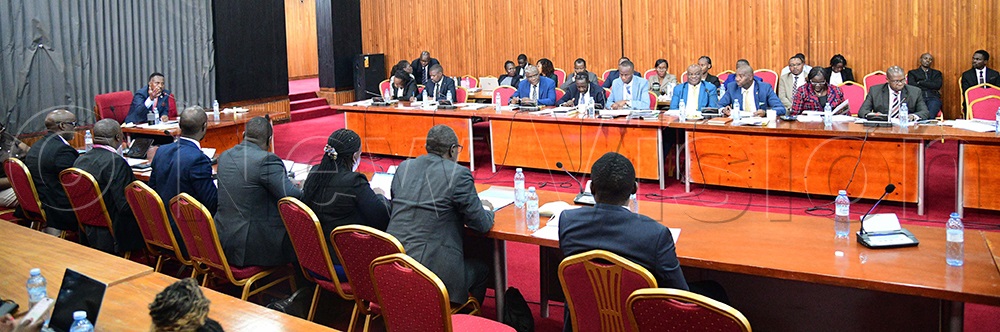
A cross section of the finance committee of parliament during the tax bills stakeholder consultations at parliament of April 15, 2026. (PHOTO BY MARIA WAMALA)
Easing Mobile Money Burden
Under the current Excise Duty Act, Cap 336, mobile money cash withdrawals are subject to a 0.5% tax. FSME is proposing that this rate be halved to 0.25%, with a maximum cap of sh5,000 per transaction.
“Uganda's mobile money ecosystem has quietly done what many formal banking reforms have struggled to achieve: bringing millions into the financial system and enabling commerce at the last mile,” said Abubaker Mayanja, an Economist at the Federation.
However, he noted that the current 0.5% withdrawal levy imposes a disproportionate cost on the very system that has driven the country’s financial inclusion success.
According to FSME, the current tax structure essentially taxes liquidity and discourages scale and creates friction in the digital economy by making transactions more expensive, which often pushes small businesses back toward a cash-based economy.
The Federation said the proposed reform could lower transaction costs by up to 27% for some users.

Karim Masaba, the Member of Parliament for the Mbale Industrial City Division in Mbale City and Moses Goli Ogwal MP Dokolo North County during the finace committee of parliament on April 15, 2026. (Photo by Maria Wamala)
Bridging Smartphone Gap
In addition to mobile money reforms, the Federation is calling for the removal of the 10% import duty and the 18% VAT on entry-level smartphones with a Cost, Insurance, and Freight (CIF) value of up to sh500,000.
John Walugembe, the Executive Director of FSME, emphasised that smartphones should no longer be viewed as luxury items.
“Smartphones are not consumption goods; they are gateway infrastructure to the digital economy. A targeted VAT zero-rating regime for entry-level devices would lower barriers to entry, accelerate digital inclusion, and support ecosystem development,” Walugembe stated.
The Federation pointed out that smartphone penetration in Uganda currently stands at approximately 33%, with affordability remaining the primary constraint.
A 2023 FSME study further revealed that only 34% of MSMEs nationwide own a smartphone, highlighting a significant digital divide that hinders productivity.
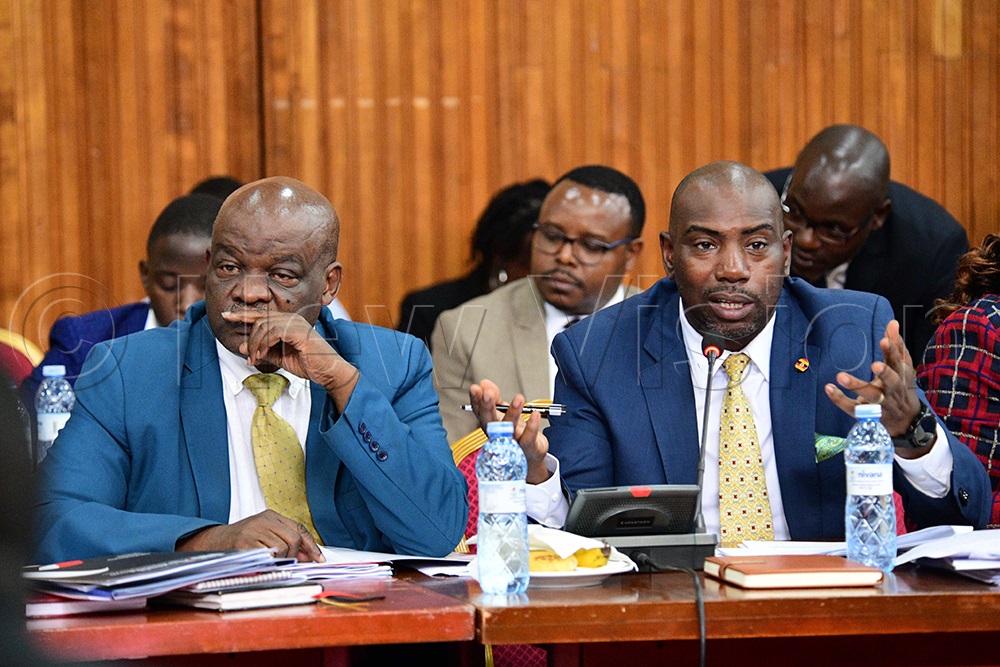
Dickson Kateshumbwa, the Member of Parliament for Sheema municipality and Moses Goli Ogwal MP Dokolo North County during the finance committee of parliament session on April 15, 2026. (Photo by Maria Wamala)
A Win-Win for Government, Small Businesses
While the proposed tax cuts might seem like a revenue loss in the short term, FSME argues they will lead to a broader and more sustainable tax base in the long run.
By making mobile money more affordable and smartphones more accessible, the Federation predicts a surge in digital transactions that will ultimately boost government revenue through other channels.
For instance, the Federation projects that if these proposals are adopted, MTN Uganda's mobile money customer base could grow to 24.2 million by 2030.
Furthermore, the number of mobile money agents could increase to approximately 424,000, creating thousands of new jobs.
“The objective of taxation in a digitalising economy should not be to extract value at the point of friction, but to enable flow and capture value across a more dynamic system. This reform achieves exactly that,” Mayanja said.
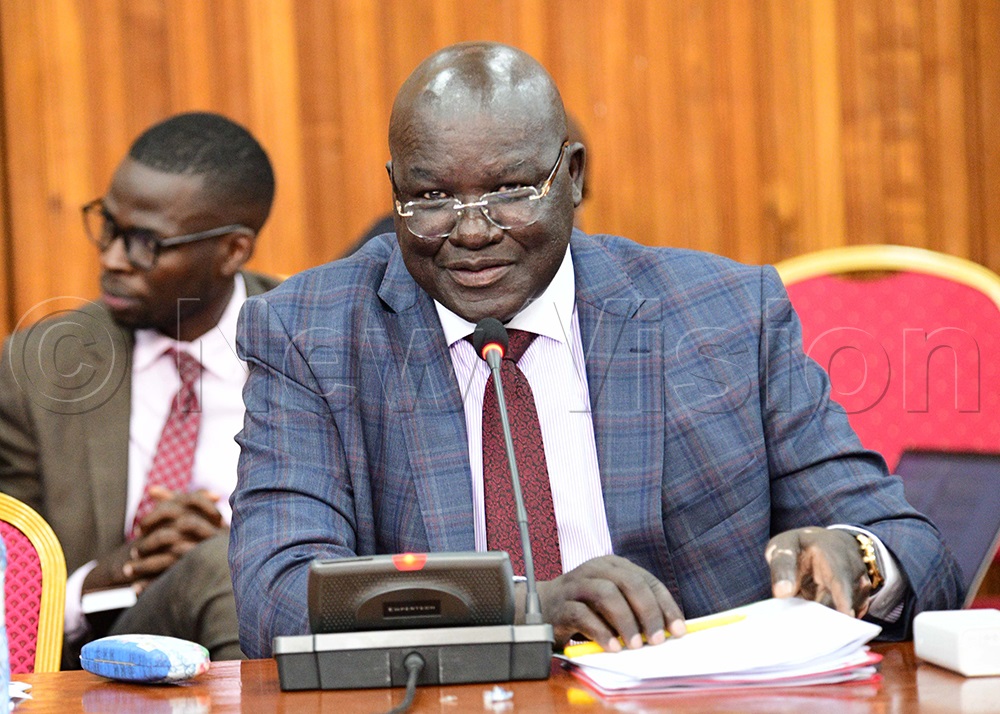
Paul Omara MP Otuke County during the finance committee of parliament on April 15, 2026. (Photo by Maria Wamala)
The committee, which was presided over by Paul Omara, Otuke County (NRM), assured the federation that they will look into their proposals and act accordingly.
“I want to thank you very much for coming and for sharing with us. We seriously take your input, but it will have to undergo the normal process that we do as parliament and take part of the input into the tax bills,” he said.