
Experts want alternative financing solutions for Africa in wake of uncertainty
This conference is organised by Makerere University in partnership with the French Embassy, the Konrad Adenauer Stiftung and the Alliance Française de Kampala, with focus on Africa's position in a rapidly changing global order.
Dr Asumani Guloba, Senior Manager Development Planning at the National Planning Authority (NPA), rallied for effective and efficient expenditure of available resources by African Countries. (Courtesy)
___________________
Experts recommend that African countries focus on growing innovative locally developed financing and boost domestic resource mobilisation in the wake of a range of external factors that continue to threaten economic growth.
They observe that uncertainties originating from the United States, China, Russia, and several Gulf states, such as the United Arab Emirates, Saudi Arabia, and Qatar, continue to expose Africa to unprecedented instabilities and stifle economic growth.
The sentiments were raised during the opening of the 9th edition of the Kampala Geopolitics Conference 2026 on Wednesday, running between April 15–16 at Makerere University.
This conference is organised by Makerere University in partnership with the French Embassy, the Konrad Adenauer Stiftung and the Alliance Française de Kampala, with focus on Africa's position in a rapidly changing global order.
Speaking during a panel discussion themed: New Faces of Development Assistance: Towards Solidarity Based, Sustainable Investment, Dr Asumani Guloba, Senior Manager Development Planning at the National Planning Authority (NPA), rallied for effective and efficient expenditure of available resources by African Countries.
“Uganda is currently implementing the NDP IV with a focus on Tenfold growth, and we cannot pretend like the external uncertainties do not affect our plans. This meeting is timely, and we need to discuss alternative financing models for our continent,” he said.
In her remarks, the Ambassador of France to Uganda, H.E. Virginie Leroy, highlighted the need to establish sustainable financing solutions that align with the priorities of African countries and support long-term growth.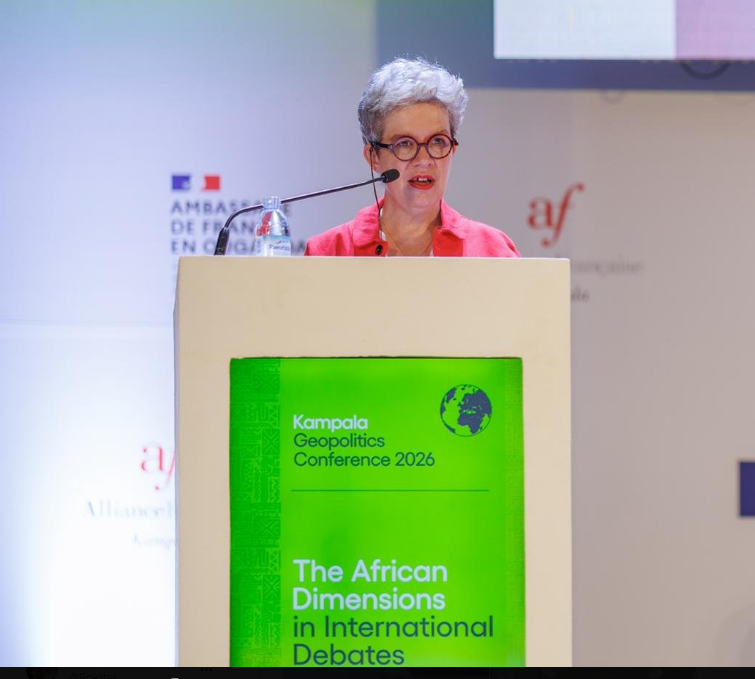
H.E. Virginie Leroy, ambassador of France to Uganda. (Courtesy)
She also rallied for innovative partnerships and financing solutions that respect the national sovereignty of the continent rather than adhering to financing that comes with pressures.
“In June, France will be hosting the G7 Summit, and we are hoping that the outcomes are considerate and support our input. Today’s discussions at the Kampala Geopolitics Conference 2026 only set the pace for us to go and stand out for our priorities,” the ambassador added.
She also highlighted the need for students to translate the classroom knowledge and skills acquired to realities of the world, emphasising that hiding away from global discussions only exposes ignorance on critical matters.
Meanwhile, Prof. Sarah Ssali, First Deputy Vice Chancellor, Academic Affairs, Makerere University, in a speech read for her by the University Secretary, reaffirmed their commitment to telling African stories our way.
She commended the Kampala Geopolitics Conference for what she described as a platform for fostering intelligence exchange and debate that shapes the world.
“We need this dynamic stage to discuss critical global developments and the impact on Africa. We also need a structured framework for continued engagement beyond the two days we are spending here,” Prof. Ssali noted.
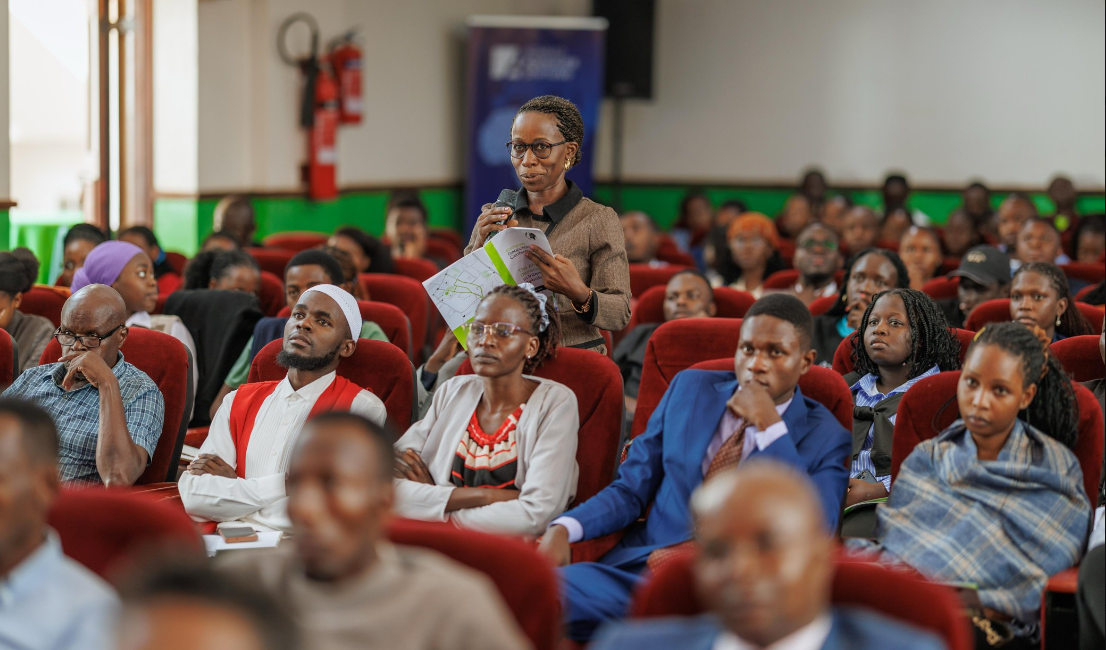
A participant asks a question at the ongoing Kampala Geopolitics Conference 2026 at Makerere University. (Courtesy)
During the next two days, the conference is expected to tackle how youth can shape public policies in Africa, given that it's the youngest continent in the world. According to projections by the United Nations, more than 60% of its population is under the age of 25, and by 2050.
This demographic reality represents both a strategic opportunity, the “demographic dividend”, and a major challenge for African states. Despite their demographic weight and growing influence in social, economic, and digital spheres, young people remain largely underrepresented in formal decision-making spaces.
The gap between a predominantly young population and institutions often dominated by older generations raises important questions about whether public policies truly reflect youth needs, aspirations, and innovations.
Another area of focus will be Africa and External Powers: Shaping the Terms of Engagement as Africa becomes an increasingly prominent arena of international engagement amid shifts in the global distribution of power.