
Tumukunde tasks NSSF with using workers’ money to drive economy
“For the kind of volumes of money we are dealing with, is the best thing being done to turn around the economy? Success is relative. This sh32.8 trillion; what effect do you have on the economy? Are you helping this economy to grow?” he asked management during a meeting at Serena Hotel, Kampala, on Thursday.
Tumukunde also challenged NSSF to intensify efforts to expand social security coverage, particularly among workers and employers who are currently outside the formal system (Credit: Richard Sanya)
KAMPALA - Minister for Gender, Labour and Social Development Lt. Gen. Henry Tumukunde has challenged the National Social Security Fund (NSSF) to move beyond protecting workers’ savings and use its growing investment portfolio to drive Uganda’s economic transformation.
A real measure of NSSF’s success, he said, should not only be the growth of its assets or the returns credited to members, but also reflect the extent to which the Fund’s investments are contributing to the growth of the wider economy.
Addressing stakeholders at the NSSF’s 14th Annual Members’ Meeting on Thursday, September 24th, Tumukunde questioned whether the Fund was doing enough with the billions of dollars under its management.
“For the kind of volumes of money we are dealing with, is the best thing being done to turn around the economy? Success is relative. This sh32.8 trillion; what effect do you have on the economy? Are you helping this economy to grow?” he asked management during a meeting at Serena Hotel, Kampala, on Thursday.
In his report, NSSF Managing Director Patrick Ayota said the Fund had recorded strong growth in the financial year 2025/26, with total assets rising 26.4% to Shs32.87 trillion, up from about Shs26 trillion the previous year.
According to Ayota, the sh6.86 trillion increase was supported by higher member contributions and strong investment performance.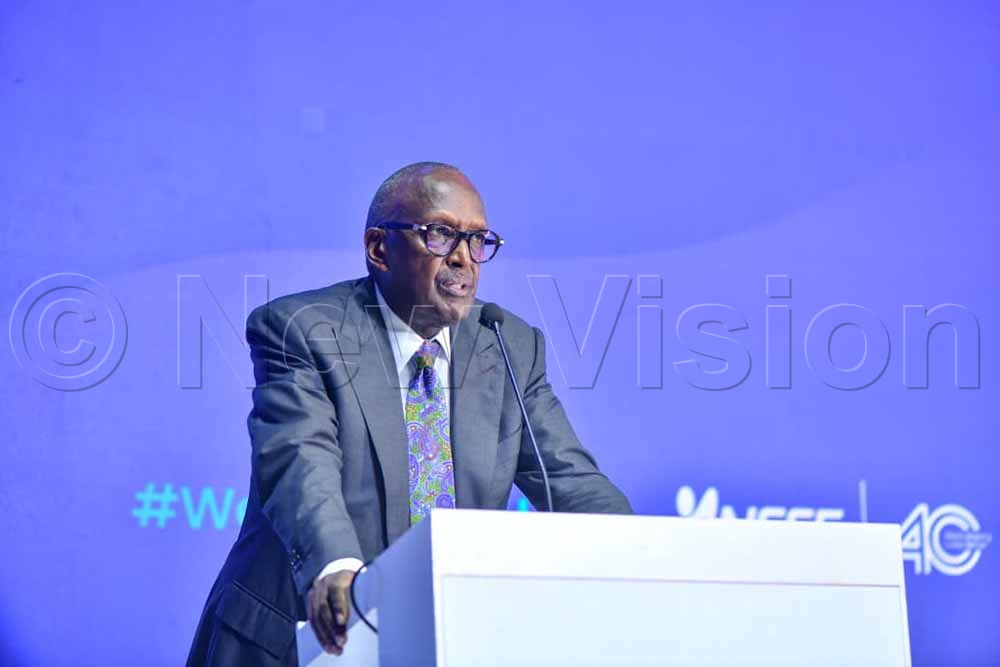
Addressing stakeholders at the NSSF’s 14th Annual Members’ Meeting on Thursday, September 24th, Tumukunde questioned whether the Fund was doing enough with the billions of dollars under its management. (Credit: Richard Sanya)
“The Fund’s total income surged 85.1% to Shs6.51 trillion, from Shs3.52 trillion in 2024/25. Interest income rose 21.5% to Shs3.50 trillion, while dividend income increased 55% to Shs369 billion. NSSF also recorded Shs2.45 trillion in net fair-value gains, while foreign-exchange performance improved from a Shs274 billion loss to a Shs173 billion gain,” Ayota stated in his account.
Contributions, which form the core source of members’ savings, increased 13.7% to Shs2.42 trillion, from Shs2.13 trillion. The Fund attributed the growth to a 10% increase in active membership, the reactivation of about 55,000 dormant members and increased voluntary saving.
Tumukunde acknowledged NSSF’s steady growth and praised its management for being cautious and protective of members’ savings but said that was not enough.
He said a strategy that focuses heavily on protecting the Fund from investment risks could limit its potential contribution to economic development.
“I thank you very much. You have been very protective, you are very cautious, and there has been steady progress, but what is the money doing in the economy?” he said.
Tumukunde argued that because the money belongs to workers, it should be deployed in ways that maximise both returns to members and its productive impact on the economy.
“You appreciate that this money is from the contributors. It is supposed to be turned around to its maximum level,” he said.
He questioned whether NSSF was behaving like a competitive financial institution or simply relying on the automatic inflow of workers’ contributions while concentrating on relatively low-risk investments.
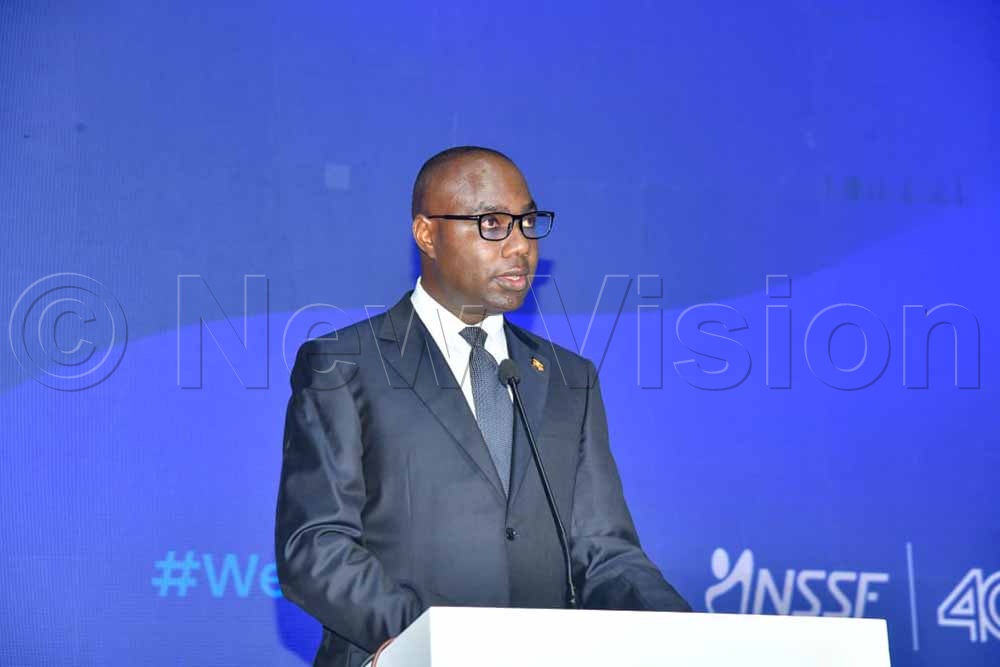
Finance minister Henry Musasizi. (Credit: Richard Sanya)
“Are you trying to bring yourself to a typical private-run enterprise, or are you simply protecting the gains?” Tumukunde asked.
“You get automatic money from the public, it comes to you, you invest it in the most risk-averse areas, and as far as you are concerned, this is steady progress.”
Tumukunde said NSSF should demonstrate how its investments are affecting Uganda beyond the Fund’s own balance sheet.
“This money should be turning around this economy,” he said.
He urged the Fund to study how social security institutions in other countries deploy their resources and contribute to economic development.
Tumukunde said NSSF should therefore stop viewing itself primarily as a custodian of workers’ savings and instead position itself as an active participant in economic transformation.
His comments came as NSSF reported strong financial performance for the year ended June 2026, including growth in its assets, contributions and investment income.
The Fund has declared a record 22.53% interest rate for the financial year, the highest annual return in its history.
Tumukunde also questioned the governance arrangements at NSSF, particularly the continued retention of individuals in leadership positions without sufficient competition.
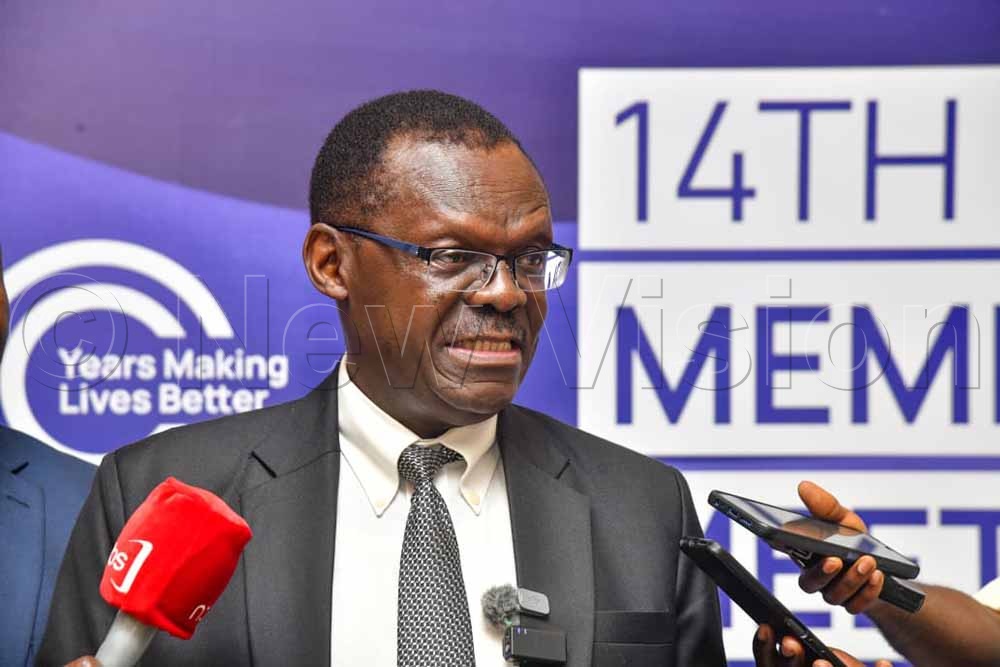
In his report, NSSF Managing Director Patrick Ayota said the Fund had recorded strong growth in the financial year 2025/26, with total assets rising 26.4% to Shs32.87 trillion, up from about Shs26 trillion the previous year. (Credit: Richard Sanya)
“Why do you have to maintain people in your machine just because they started with you? Why don't people compete to continue to be capable?” he asked.
He said positions in an institution managing workers’ money should be subjected to standards of competence and performance.
“People must leave if they don't qualify to stay on the board,” he said.
Tumukunde also questioned the criteria used to appoint members of the NSSF board, arguing that representation through trade unions should be accompanied by competence.
“Don't you think you also have to qualify to be a board member? We can't leave it to anyone with ability to assemble a trade union to qualify to be a board member,” he said.
Trade union representatives, according to Tumukunde, should also compete on merit for board positions, arguing that board members need sufficient knowledge to scrutinise the institution’s executives.
Tumukunde said those entrusted with protecting workers’ money must themselves have the necessary qualifications and understanding of financial management.
Tumukunde further questioned the relationship between the Ministry of Finance and the ministry responsible for Labour and social development in overseeing NSSF
He argued that the minister responsible for workers’ interests should have a meaningful role in understanding how the Fund’s resources are allocated.
“This is not a financial institution that must run on the rules of public service permanently and intentionally. It must run on the rules and competitiveness of a proper financial institution,” he quipped.
Tumukunde also challenged NSSF to intensify efforts to expand social security coverage, particularly among workers and employers who are currently outside the formal system
The Fund, he said, should strengthen enforcement against employers who fail to make mandatory contributions.
Tumukunde said expanding coverage would increase the pool of savings available for investment while extending social protection to more Ugandans.