
Private refiners eye regional dominance as BOU gold plan takes off
Under the arrangement, gold suppliers will deliver the mineral to the refineries, where it will be tested, processed and certified before being purchased by the central bank. The gold will then be further refined to meet international standards of about 99.95% purity required for monetary gold.
Benard Feni (C) of EuroGold Refinery having a chat with Bank of Uganda officials during the company visit. (Credit: John Musenze)
KAMPALA - Following the signing of two local gold refiners by the central bank, Uganda’s private sector is setting its sights on a bigger prize of becoming a regional hub for gold refining and trade.
The Bank of Uganda has contracted EuroGold Refinery Ltd and Feldstein Trading Limited, both 100% locally based and owned, to kick-start a new programme to purchase gold for national reserves, a move that is already energising ambitions within the country’s nascent refining industry.
The two firms highlighted that the deal is more than just a supply contract, noting that it signals Uganda’s readiness to build a gold value chain anchored on local capacity.
“We are very happy. This is a big milestone for us as a local company to be selected to refine gold for the central bank. It demonstrates that Ugandans can compete and deliver at both national and international levels,” said Benard Feni of EuroGold Refinery.
Feni said the company now aims to position Uganda as a regional gold hub, supplying high-quality bullion to international markets.
“By 2030, we want Uganda to be known not just for exporting raw materials, but for producing high-quality, 24-karat bullion for the global market,” he said.
Under the arrangement, gold suppliers will deliver the mineral to the refineries, where it will be tested, processed and certified before being purchased by the central bank. The gold will then be further refined to meet international standards of about 99.95% purity required for monetary gold.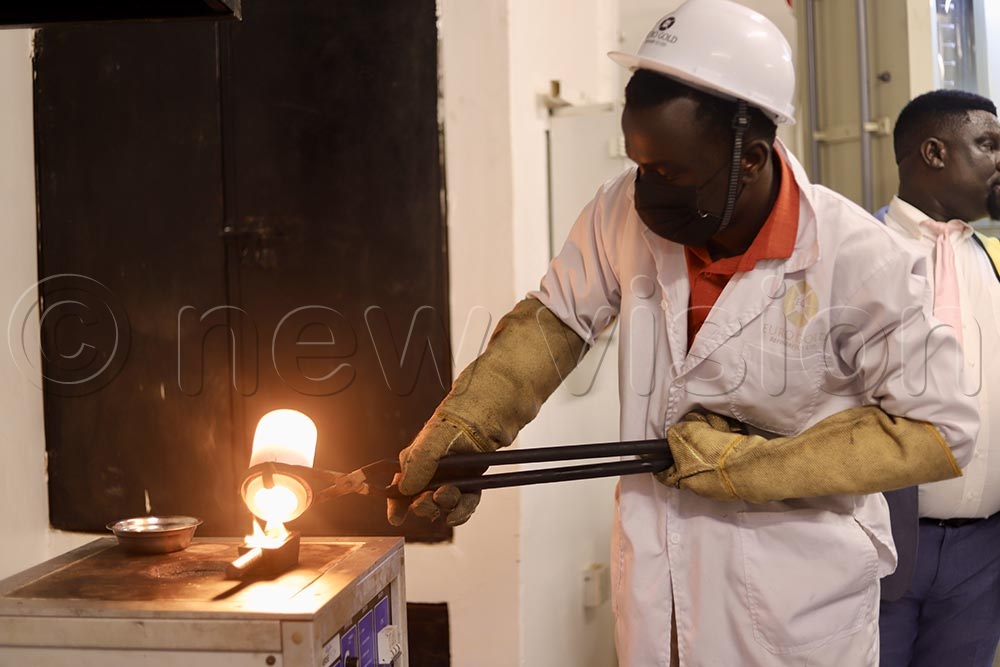
An expert from EuroGold refineries showing how gold is refined. (Credit: John Musenze)
The initiative marks a shift in Uganda’s gold trade, which has long been dominated by imported gold that is refined and re-exported with limited value addition. By working directly with local refiners, the central bank is expected to support the domestic industry while retaining more value within the economy.
At the heart of this transition is a growing network of artisanal and small-scale miners who are being drawn into more formal supply chains.
A EuroGold executive director said the company has partnered with more than 3,000 miners in Mubende, helping them to upgrade the quality of their gold and meet market requirements.
The company has also supported miners in Abim to obtain licences and formalise operations, while expanding sourcing activities to areas such as Yumbe District.
“We are helping miners move from raw gold to refined products so they can fetch better prices on the international market,” Feni said.
This growing ecosystem is seen as critical to Uganda’s ambitions of becoming a regional player in gold refining, especially as the country continues to source gold from neighbouring countries such as the Democratic Republic of Congo and Tanzania.
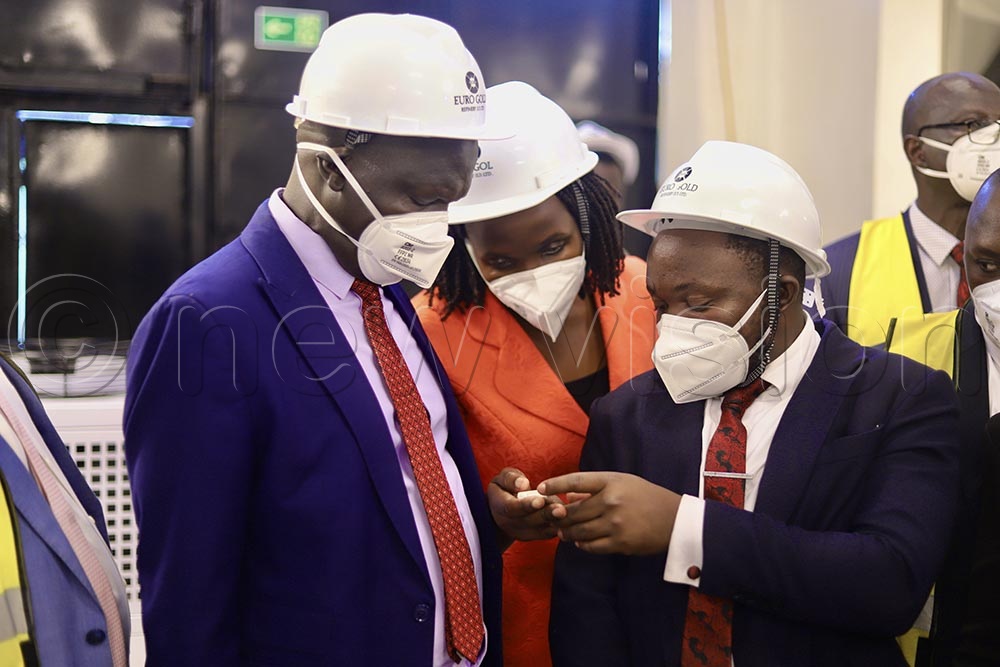
Bank of Uganda officials during a site visit at EuroGold after signing and MOU. (Credit: John Musenze)
At least 20 companies are understood to have bid for the contracts, but preference was given to locally owned refiners capable of meeting regulatory and technical requirements.
According to the central bank, the programme will begin with an initial purchase of 100 kilogrammes of gold and is expected to scale up to at least 1,000 kilogrammes annually.
Governor Michael Atingi-Ego said the bank will rely on licensed refineries to ensure that all gold purchased is locally sourced and meets the required purity standards before it is added to the country’s reserves.
“These two gold refineries, these are the two refineries that have been licensed by Bank of Uganda. We've signed contracts with them, so they will be the ones that will be refining the gold that we'll be buying, because also we've signed contracts with gold suppliers. So the gold suppliers will be taking the gold to these refineries where the Bank of Uganda will be meeting them to buy," he highlighted.
“We want to ensure that the gold we are buying is mined locally and meets the required purity standards. The refineries have the equipment to test and certify this before it is stored in our vaults,” Atingi-Ego added.
Beyond building reserves, industry players see the initiative as laying the groundwork for a more competitive and self-sustaining gold sector, one where Uganda is not just a transit point for gold, but a centre for refining, value addition and trade in the region.