
Over 500 youth benefit from govt-funded production facility
The Presidential Small-Scale Common User Facility, located in Mulago, provides free access to machinery, workspace and electricity for young people engaged in shoe-making, bag production, fashion and design, production of reusable sanitary pads, making of jewellery, knitting and other enterprises.
Young people being guided during the government-funded production facility established by State House. (Photo by Hannington Nkalubo)
____________________ Youth leaders guiding them and teaching them how to carry out the activities. (Photo by Hannington Nkalubo) (Photo by Hannington Nkalubo)
More than 500 young people in Kampala are benefiting from a government-funded production facility established by State House to enable skilled youth to manufacture products, start businesses and create employment without incurring high production costs.
The Presidential Small-Scale Common User Facility, located in Mulago, provides free access to machinery, workspace and electricity for young people engaged in shoe-making, bag production, fashion and design, production of reusable sanitary pads, making of jewellery, knitting and other enterprises.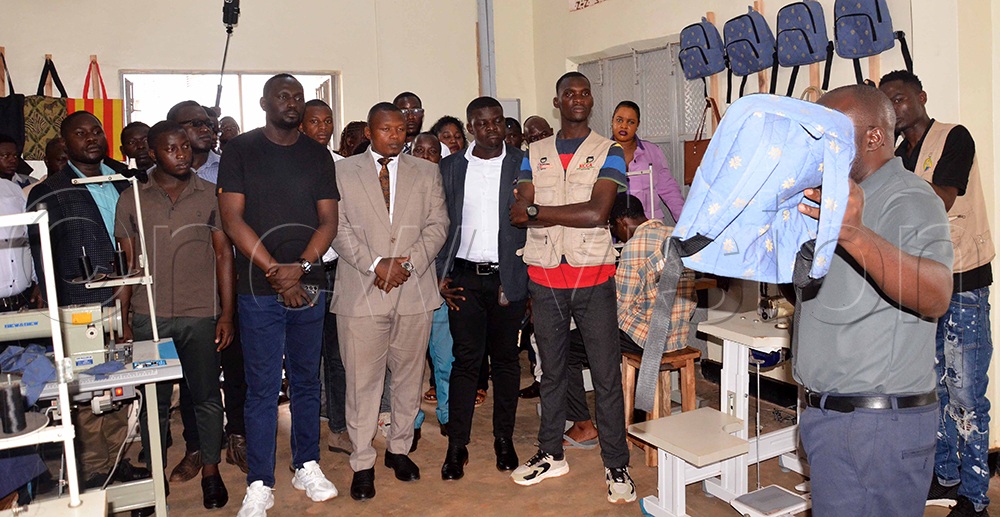
The facility also accommodates women and refugees with valid refugee identification cards, giving them an opportunity to utilise their skills to produce goods for the market.
Moses Byaruhanga, the Senior Presidential Advisor on Political Affairs, said the initiative was established to address challenges faced by young people who graduate from government skilling programmes, but lack capital and equipment to establish their own production facilities.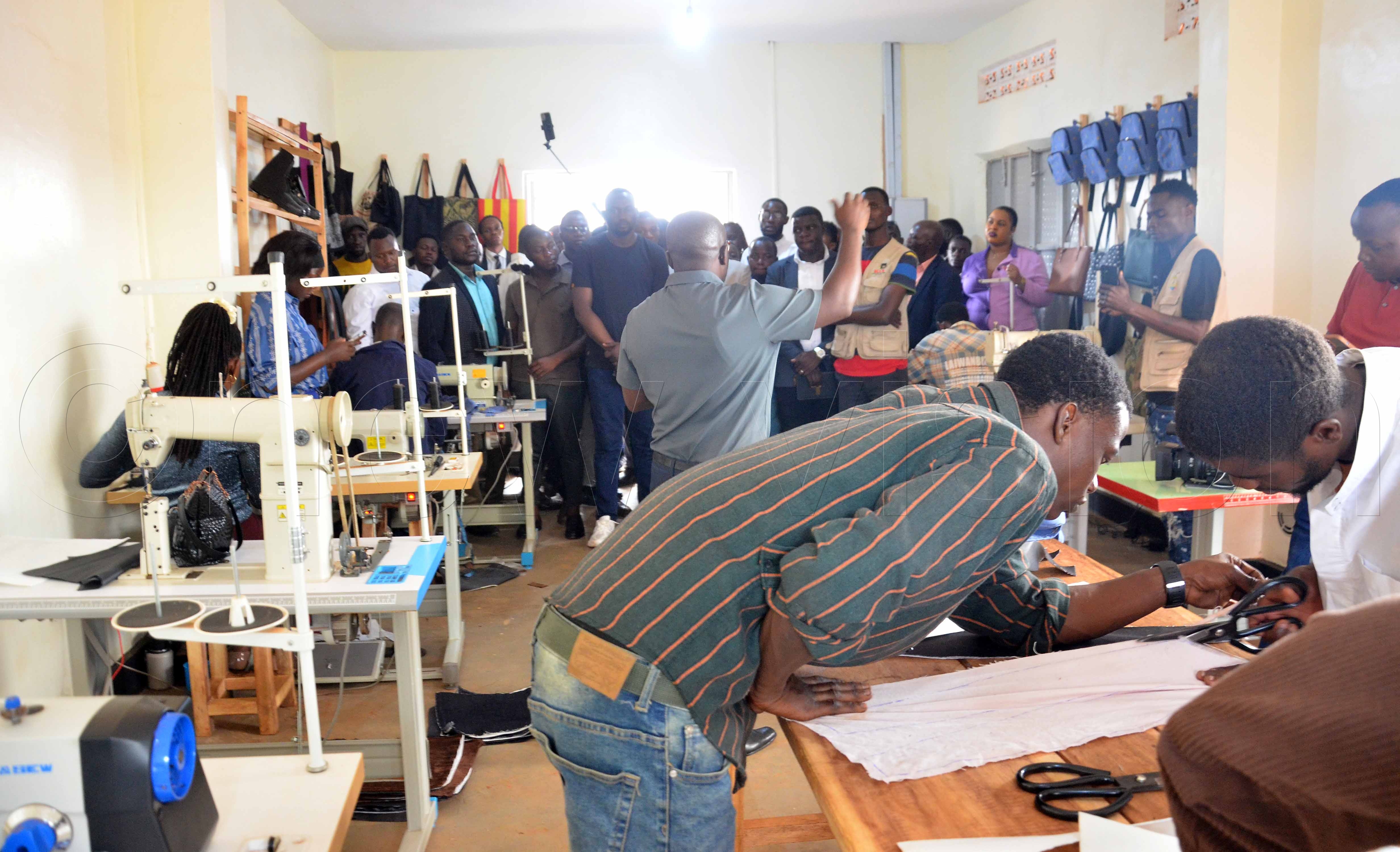
Byaruhanga made the remarks on November 20 during a meeting with youth leaders from Kampala's five divisions at the facility in Mulago, where he was the chief guest.
According to Byaruhanga, some skilled youths had complained about the high charges imposed by private operators, who provide machinery and services needed to manufacture products such as shoes and bags.
“We started this common-user facility because the President had already started the skilling centres in Kampala and around the country. When these young people learn the skills and graduate, they are supposed to go and be on their own and start working,” he said.
He explained that the facility was intended to provide shared equipment where beneficiaries could bring their raw materials, manufacture products and sell them without spending heavily on production.
“They just bring their materials, make their shoes, bags, sanitary pads and many other items. The idea was to have them do the work at a low cost,” Byaruhanga said.
He added that access would initially be free for six months, after which management would assess operations and determine affordable user charges.
“We agreed that in the first six months, we shall not charge them any fee. They will be accessing the facility free of charge so that we determine how much they will be paying later, at a cost lower than what they would be charged in the private sector,” he said.
Byaruhanga said the Government would consider establishing similar facilities in other divisions of Kampala if the Mulago centre became successful and attracted more users.
Isaac Ssebuufu, the Kawempe Division youth chairperson, said the engagement was organised to enable youth leaders to present practical solutions to unemployment, inadequate capital and limited access to government empowerment programmes.
Ssebuufu, who represents 127,638 young people from Kawempe, said he had joined fellow leaders from Makindye, Kampala Central, Rubaga and Nakawa to discuss how the facility could benefit young people across the city.
“Our youth are facing challenges of unemployment, so, we decided to have a dialogue with Mr Moses Byaruhanga. This is a time when we, the youth leaders, can discuss key issues and have practical solutions,” he said.
He observed that many young people operating in Kikuubo and other business areas lacked the capital to establish enterprises, while others had neither formal education nor vocational training.
Although the Government has introduced programmes such as the Youth Livelihood Programme (YLP) and the Parish Development Model (PDM), Ssebuufu said some divisions were facing funding challenges that affected their ability to support young people.
“We have programmes like YLP, but most of the divisions right now have no finances. So, we decided as the youth of Kampala to raise our voices. But we are not just raising our voices; we want to come up with practical solutions,” he said.
He emphasised that the youth leaders were not seeking confrontation but wanted constructive engagement with Government to address challenges affecting their constituents.
“We are not a generation of lamenting. We are not a generation of romancing ideas. We are a generation of practical ideas and practical solutions,” Ssebuufu said.
Beneficiary speaks out
One of the beneficiaries, Mariakevin Namatovu, said access to the facility had enabled her to establish a company, Comfort Wear, through which she produces reusable sanitary pads and other textile products.
She credited the facility's director, Didus Businge, for supporting her enterprise and helping her improve the quality and range of products.
Namatovu's products include reusable sanitary pads, baby bedsheets, breast pads, reusable diapers, scrunchies, bonnets, laboratory coats, overcoats and round-neck T-shirts.
“This place has helped me to open up a company called Comfort Wear. I thank the director because he has helped me add something to my products. They are now of good quality,” she said, adding that the facility had provided her with machinery, production space and electricity, enabling her to manufacture products without incurring additional operational expenses.
“I am an engineer by profession, but I use my skills. I make things, take them to the market and sell. If you have a skill, don't sit at home. Get out of your comfort zone and come to this facility because it is free of charge,” said Namatovu.
On his part, the facility's managing director (Businge) said the centre had different production departments equipped to support young people engaged in various enterprises.
He listed shoe-making, bag production, jewellery, book-making, peanut butter processing, fashion and design, sweater-making and knitting among the activities undertaken at the facility. He said the facility was open to all Ugandans with relevant skills, including women and refugees with valid identification documents.
“It was a donation from President Yoweri Museveni, so, it is free of charge to all the youth, women and all people to make their products, take them to the market and sell,” Businge said.
He clarified that the facility was not a training centre but a production hub for people, who had already acquired practical skills and needed equipment to manufacture their products.
Beyond providing machinery, Businge said management was also helping beneficiaries develop business skills, including marketing, customer care, business registration, product certification and proposal writing. He said the additional support was intended to help young entrepreneurs improve their businesses and access more market opportunities.
Shoe maker becomes instructor
The meeting also highlighted the transformation of Derrick Champali Nakibingi, a shoe maker who progressed from being a beneficiary of the Presidential Initiative on Skilling the Girl and Boy Child (PISGBC) to becoming a skilling instructor.
Nakibingi joined the State House-funded six-month programme in 2024/25 as a student and was subsequently retained as an instructor after demonstrating his commitment.
He said the opportunity had transformed his life, enabling him to establish a workshop and employ other young people, including former peers who had been involved in criminal activities.
He thanked President Museveni for supporting the initiative and Dr Faith Katana for her mentorship and guidance.
“I responded to the call of the President for us to change our mindset, get some work and build Uganda. I came for skilling and completed the programme. My managers appreciated me, and I became a testimony in Uganda, from the ghetto to becoming an instructor,” he said.
Nakibingi urged young people to embrace vocational skills and productive work, saying he was committed to helping others transform their lives.
“Ten years ago, when I would walk around alone in the community, people would be terrified just to see me. They would call the police to arrest me. But now, they are calling me instructor,” he said.
More than 80 youth representatives attended the meeting, including leaders from Rubaga, Kawempe, Makindye and Nakawa. The facility is located in Mulago near the Presidential Initiative on Skilling the Girl and Boy Child centre.