
Govt capitalises UDB to sh2.2 trillion to drive industrial, export growth
“Uganda’s next phase of economic transformation requires strong institutions with the capacity to mobilise long-term capital and channel it towards productive investments,” Musasizi said.
Finance Minister Henry Musasizi said the strengthened capital base will enable UDB to play a greater catalytic role in financing investments aligned with Uganda’s development priorities, including agro-industrialisation, manufacturing, tourism, mineral-based industrialisation, science, technology and innovation. (Credit: Richard Sanya)
KAMPALA - Government has capitalised Uganda Development Bank (UDB) to Sh2.2 trillion, including an additional Sh442.2b provided in FY2026/27, strengthening the Bank’s capacity to provide affordable, long-term financing for industrialisation, export growth, value addition and other strategic investments.
Finance Minister Henry Musasizi said the strengthened capital base will enable UDB to play a greater catalytic role in financing investments aligned with Uganda’s development priorities, including agro-industrialisation, manufacturing, tourism, mineral-based industrialisation, science, technology and innovation.
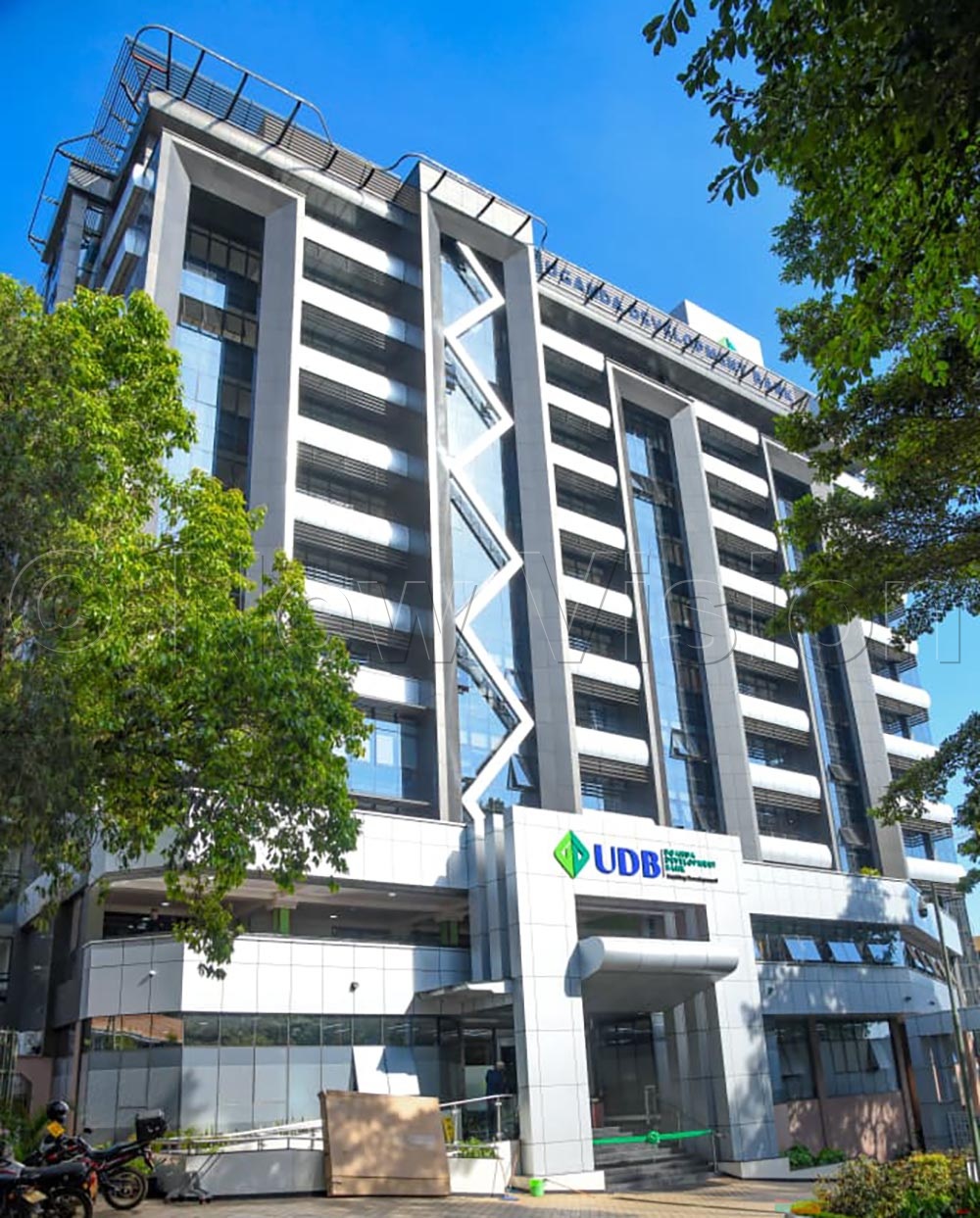
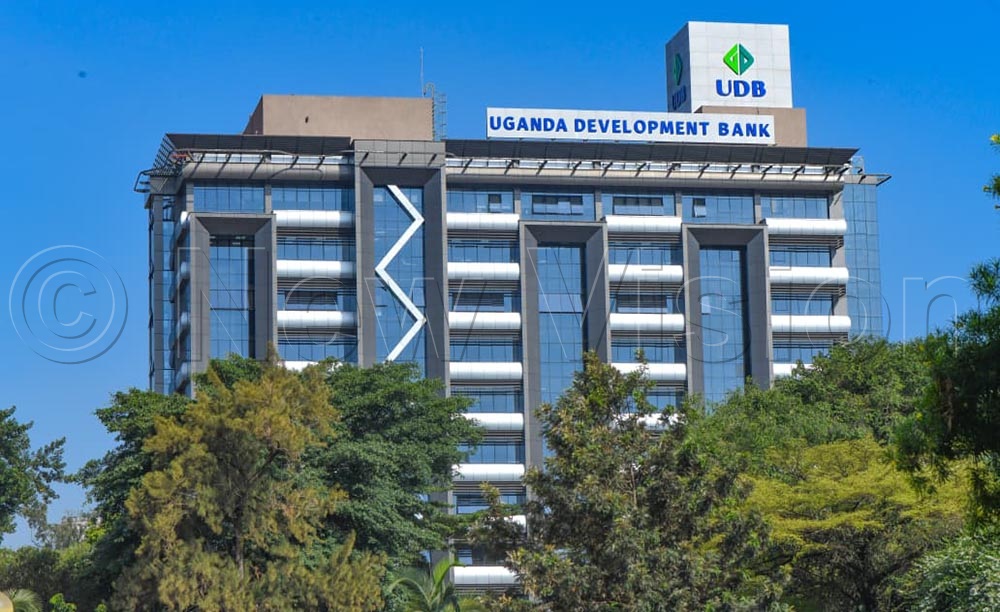
Musasizi made the remarks on Tuesday while officiating at the commissioning of UDB Tower, the Bank’s renovated 14-storey head office on Plot 22, Hannington Road, Kampala.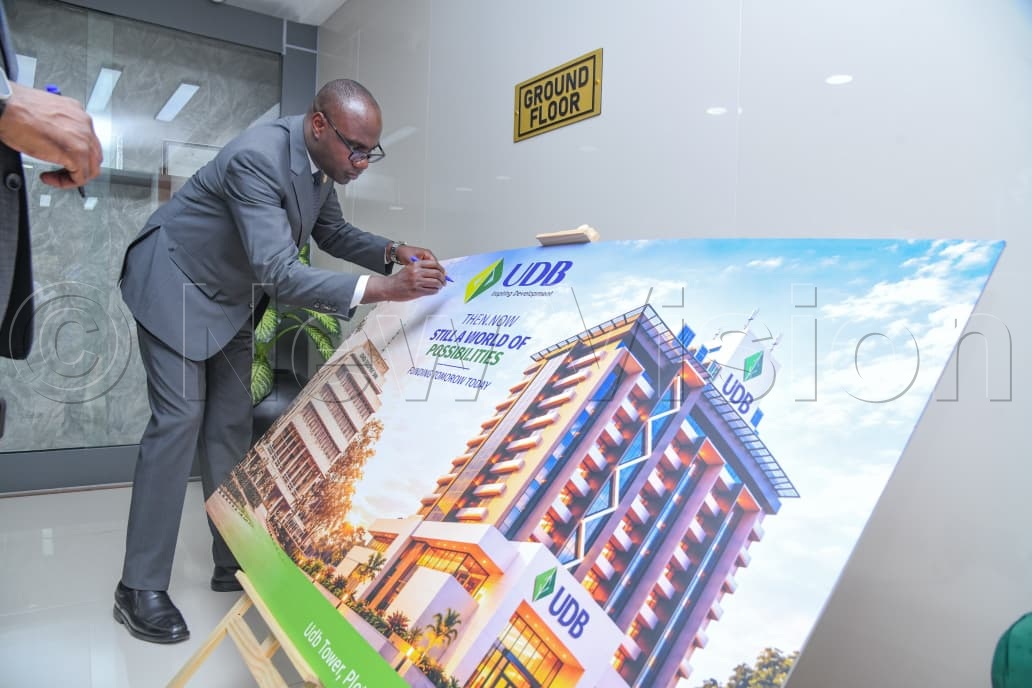
“Uganda’s next phase of economic transformation requires strong institutions with the capacity to mobilise long-term capital and channel it towards productive investments,” Musasizi said. (All Photos by Richard Sanya)
He said Government’s continued support to UDB is intended to strengthen its ability to provide patient, affordable and sustainable financing to productive sectors critical to expanding Uganda’s economic base.
“Uganda’s next phase of economic transformation requires strong institutions with the capacity to mobilise long-term capital and channel it towards productive investments,” Musasizi said.
He said UDB’s role is particularly important as Uganda seeks to increase domestic production, expand value addition, grow exports, create jobs and raise household incomes.
The Minister said UDB’s mandate is aligned with Government’s Tenfold Growth Strategy, which targets transforming Uganda into a $500b economy by 2040.
Uganda Development Bank
He noted that achieving this ambition will require substantial mobilisation of domestic resources, private capital and foreign direct investment, with UDB expected to play a catalytic role in crowding in additional financing
Musasizi also tasked the Bank to deepen innovative financing through private equity, structured and project finance, corporate bonds, blended financing and public-private partnerships, while using de-risking and credit-enhancement mechanisms to attract more private capital into strategic investments.
He further urged UDB to accelerate digitalisation to improve efficiency, reduce the cost of accessing development finance and expand the Bank’s reach across the country. “To further improve efficiency, I encourage UDB to continue investing in digital platforms, data analytics, automated credit processes and customer-centric services.”
He said full digitalisation would enable the Bank to serve more customers at lower cost while improving the speed and efficiency of financing.
“Full digitalisation will significantly reduce transaction costs, improve turnaround time for borrowers, and expand outreach to all parts of the country at less cost,” he said.
The scale of UDB’s financing is already reflected in its support to productive sectors. The Bank has approved about Sh3.965 trillion and disbursed Sh3.309 trillion across sectors including manufacturing, agro-industrialisation, infrastructure, primary agriculture, tourism, health, education and oil and gas.
Uganda Development Bank
UDB’s 2025 Development Impact Report further shows the economic contribution of its financing. The 525 enterprises assessed generated Sh6.261 trillion in gross revenue, Sh1.158 trillion in net profit after tax and Sh387b in tax contributions.
The enterprises also created and maintained 69,202 jobs, including 50,221 for young people and 27,641 for women, while generating Sh1.847 trillion in foreign exchange earnings.
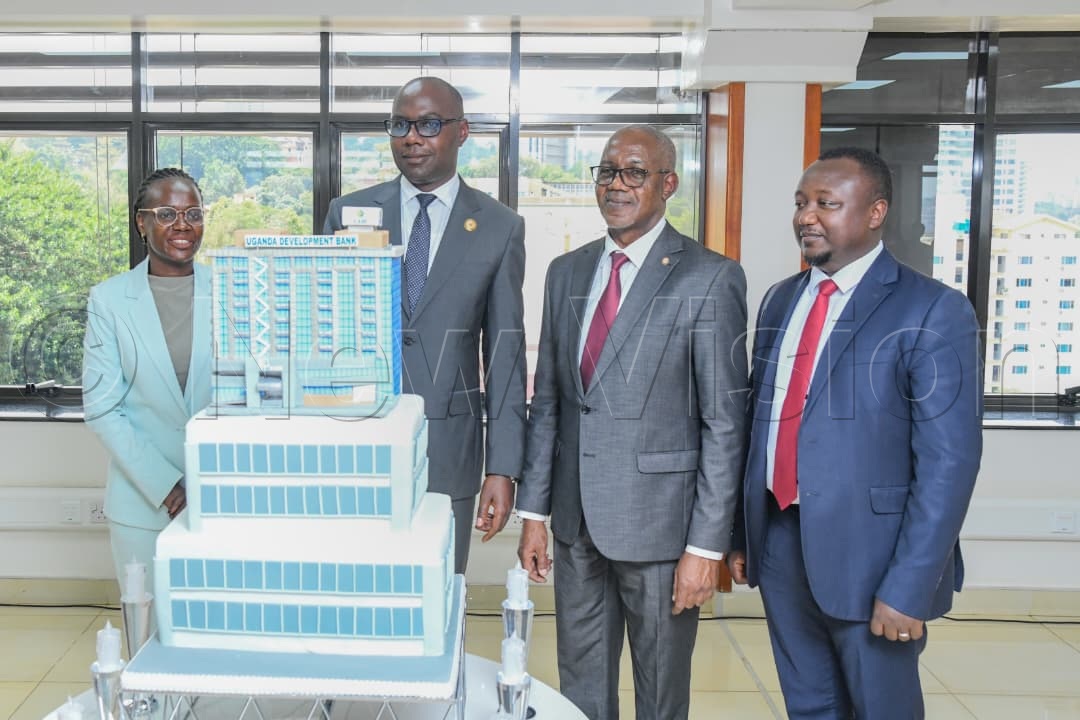
UDB Board Chairman Geoffrey T. Kihuguru said the new headquarters represents a long-term investment in the institution’s ability to finance Uganda’s development ambitions. “Our responsibility is to build a development finance institution that is not only relevant to Uganda’s needs today, but one that has the capacity and resilience to serve generations to come.”\

“UDB Tower represents a major milestone in our institutional journey. Beyond providing a modern and efficient working environment, it brings our people and operations together in a space designed to strengthen collaboration, innovation and service delivery,” Ojangole said.
Kihuguru said UDB must continue strengthening its governance, human capital, infrastructure and capacity to mobilise capital, support productive enterprises and catalyse investments of national significance.
UDB Managing Director Dr. Patricia Ojangole said the commissioning marks an important milestone in the Bank’s institutional transformation, bringing its people and operations together in a modern facility designed to strengthen collaboration, innovation and service delivery.
“UDB Tower represents a major milestone in our institutional journey. Beyond providing a modern and efficient working environment, it brings our people and operations together in a space designed to strengthen collaboration, innovation and service delivery,” Ojangole said.
She said the Bank’s mandate requires it to invest for the long term and continue strengthening its capacity to serve clients and partners while supporting investments that contribute to Uganda’s socio-economic transformation.