
BoU takes financial literacy campaign to schools, churches
“We are going to engage schools, churches and other religious institutions. We shall also bring on board commercial banks, insurance companies, fintechs and mobile money institutions so that everyone participates in building a stronger economy.”
Deputy Governor Prof. Augustus Nuwagaba said the initiative forms part of activities marking the central bank's 60th anniversary, aimed at equipping Ugandans of all ages with knowledge about saving, responsible financial management and the country's financial system. (Courtesy Photo)
KAMPALA - The Bank of Uganda (BoU) will expand its financial literacy campaign to schools, churches, financial institutions and communities across the country as it seeks to build a stronger saving culture and improve Ugandans' understanding of money management.
Deputy Governor Prof. Augustus Nuwagaba said the initiative forms part of activities marking the central bank's 60th anniversary, aimed at equipping Ugandans of all ages with knowledge about saving, responsible financial management and the country's financial system.
“We are going to engage schools, churches and other religious institutions. We shall also bring on board commercial banks, insurance companies, fintechs and mobile money institutions so that everyone participates in building a stronger economy.”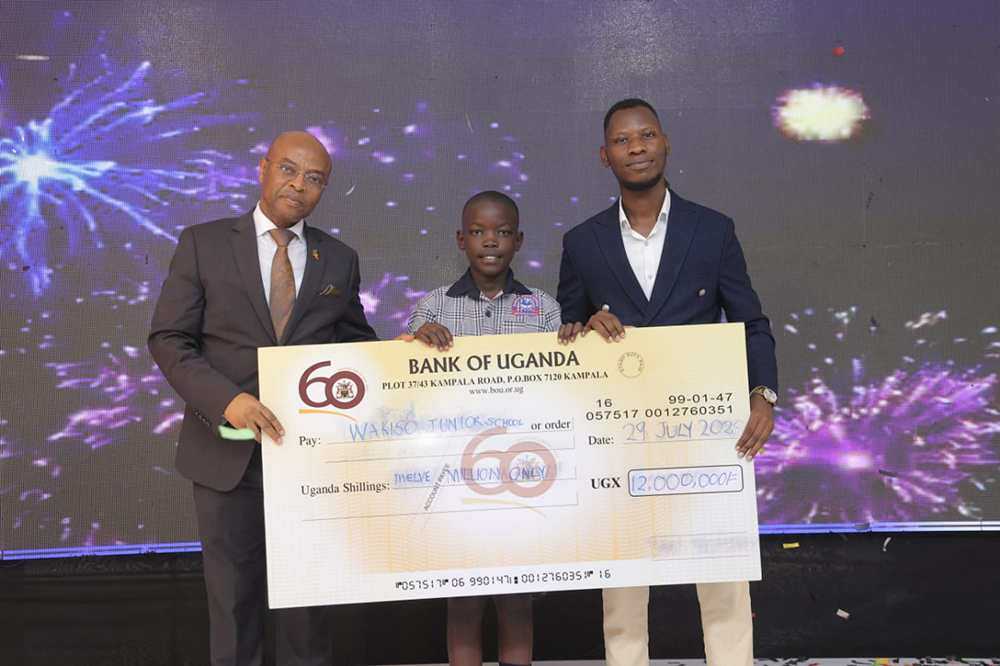
Gibril Rwenzaho of Wakiso Junior School who emerged the overall winner with the dummy check, on the right is Deputy Governor Prof. Augustus Nuwagaba and left is his trainer Peter Bwengye.
He said the campaign was driven by concerns that many Ugandans still have weak saving habits, making financial literacy a priority for the central bank.
“The problem we have in Uganda largely is a poor saving culture. By engaging children at that early stage, we are building values of saving, respecting money and investing wisely,” he said.
“As they grow, they become responsible citizens who can make sound financial decisions.”
Prof. Nuwagaba was speaking during the judging ceremony of the Bank of Uganda @60 Primary Schools Poetry Competition held at the Bank’s headquarters in Kampala on July 29, 2026.
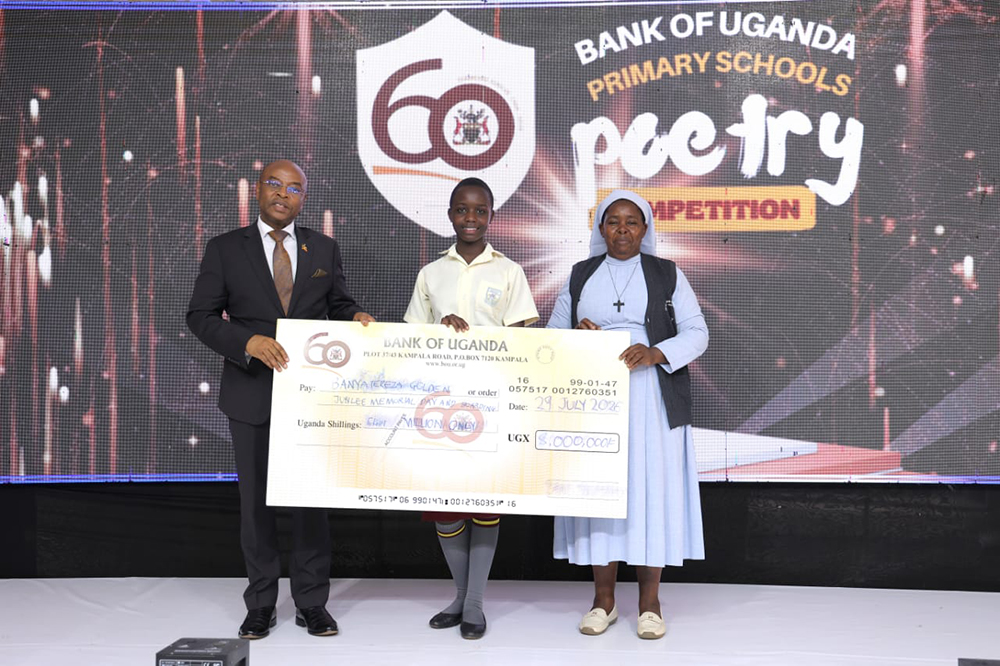
First runner-up Lenity Manzi of Banyatereza Golden Jubilee Memorial School.
The championship challenged primary school pupils to write poems on the benefits of saving money, proper handling of Uganda’s currency and the importance of using regulated financial institutions.
It attracted 3,390 entries from pupils across more than 40 districts, and judges shortlisted 192 poems before selecting 22 finalists who performed during the event.
Responsible money habits
Bank of Uganda Director Currency Christine B. Alupo said teaching children about money at an early age was important because financial habits are often formed during childhood.
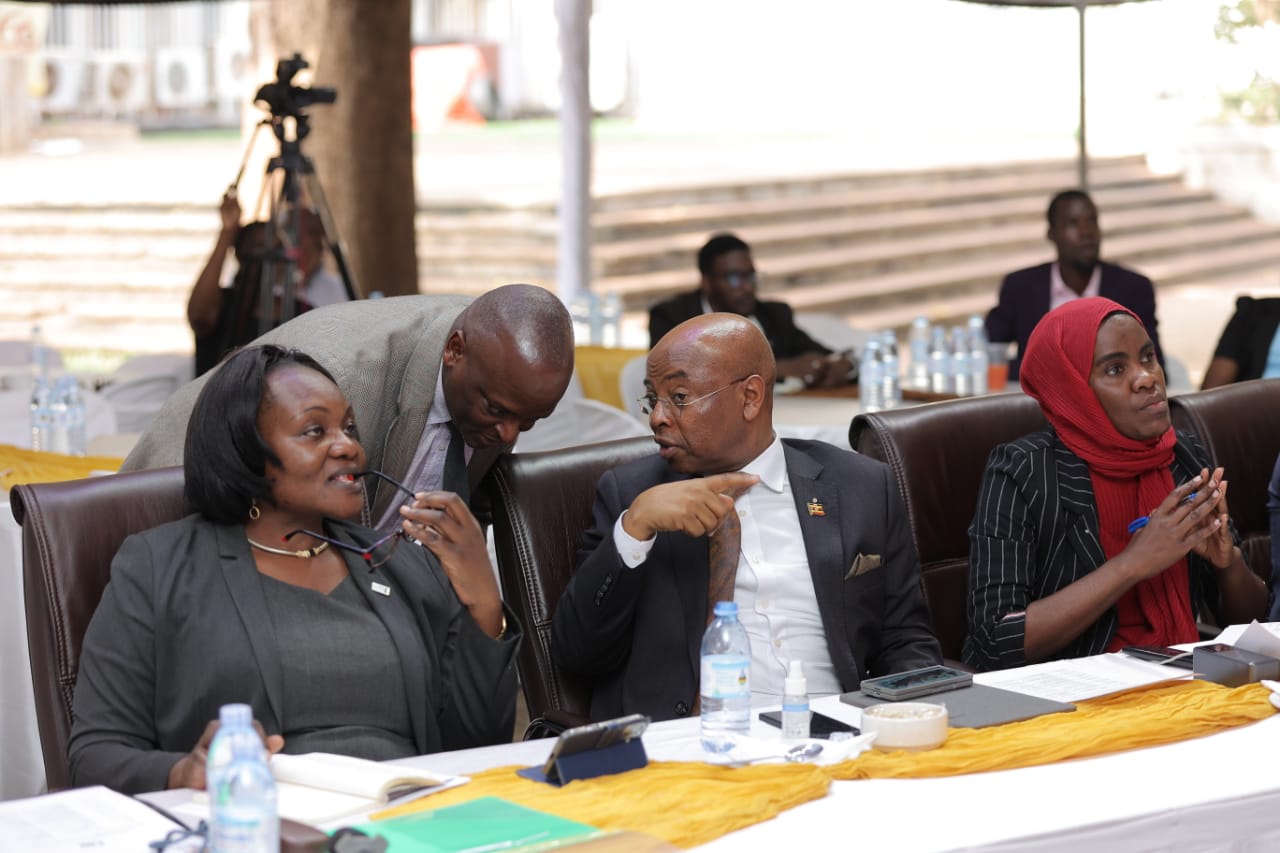
Christine Alupo (L), Director Currency, and Deputy Governor Prof. Augustus Nuwagaba (C) and judges during the competitions.
Alupo said helping children understand saving, responsible spending and proper currency handling would contribute to raising financially responsible citizens.
“When children understand the value of money, how to save, how to spend responsibly and how to care for currency, they grow into more financially responsible citizens,” she said.
She added that proper currency handling also helps protect Uganda’s banknotes by reducing damage and the cost of replacing worn-out notes.
Alupo urged children and the public to treat currency as a shared national asset, warning against practices that shorten the lifespan of banknotes.

Elnathan Tumwebaze from Peak Primary school together with his teacher recieve a dummy check after emerging second runners up.
“Some of the common mistakes we see are notes folded excessively, stapled, written on, or exposed to water, dirt and excessive heat. These habits damage the currency and shorten its lifespan,” she said.
She encouraged Ugandans to also familiarise themselves with security features on banknotes to help identify genuine currency.
“The message we want children to take home is simple: Know Your Money,” she said.
Financial lessons
Prof. Nuwagaba said poetry was chosen as a way of making financial literacy lessons more engaging for young learners.
“We believe financial literacy should begin early because the habits children develop today become the habits they carry into adulthood.”
“Poetry helps young learners understand important issues in an engaging and creative way,” he said.
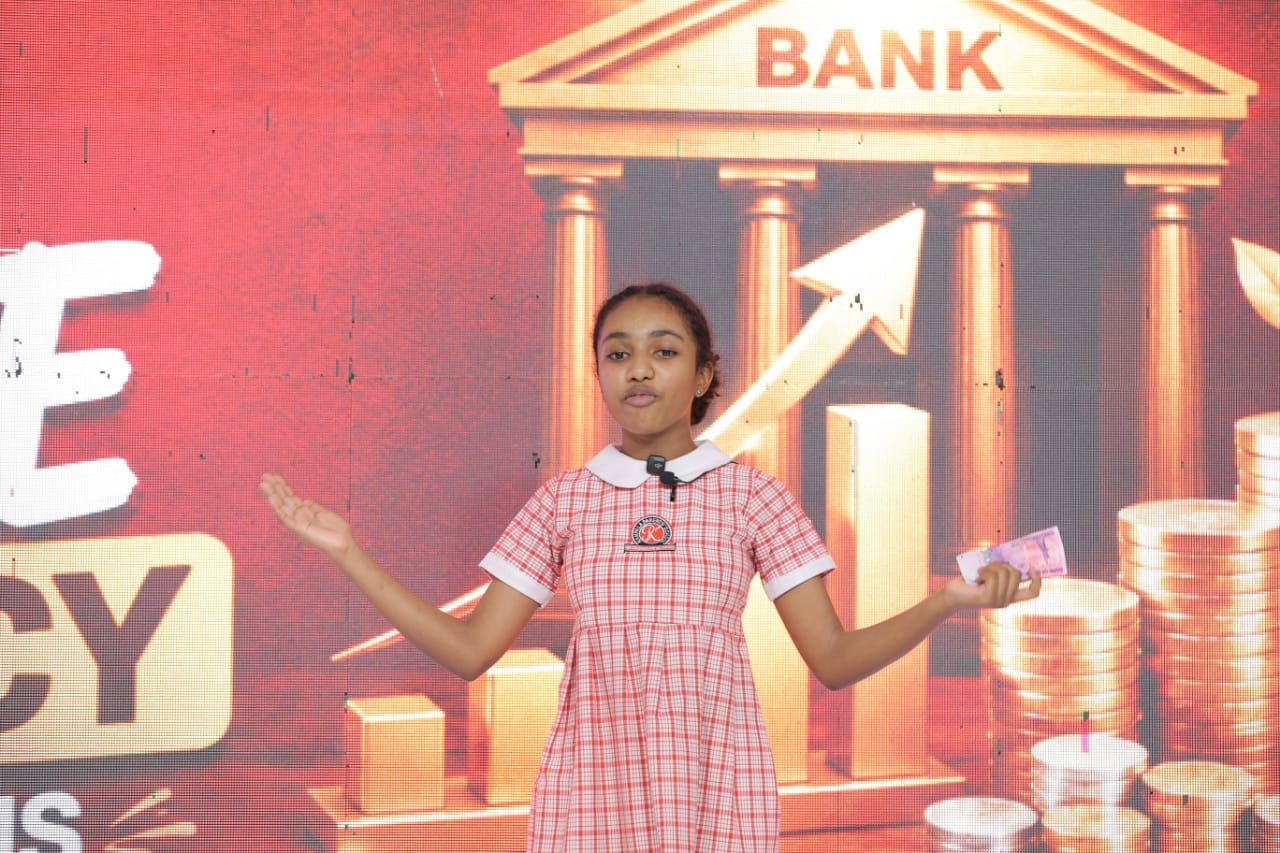
Peter Bwengye, a public speaking trainer at Wakiso Junior School, said the competition had helped learners build confidence while improving their communication skills.
“When children perform poems before an audience, they learn confidence, expression and public speaking. They also improve their language and become better communicators,” he said.
Schools and parents welcome initiative
Teachers said the competition had helped make financial literacy more relatable for learners by allowing them to participate actively.
Alice Nansereko, Headteacher of Luzira Hill Parents School, said the initiative had increased children’s interest in understanding money management.
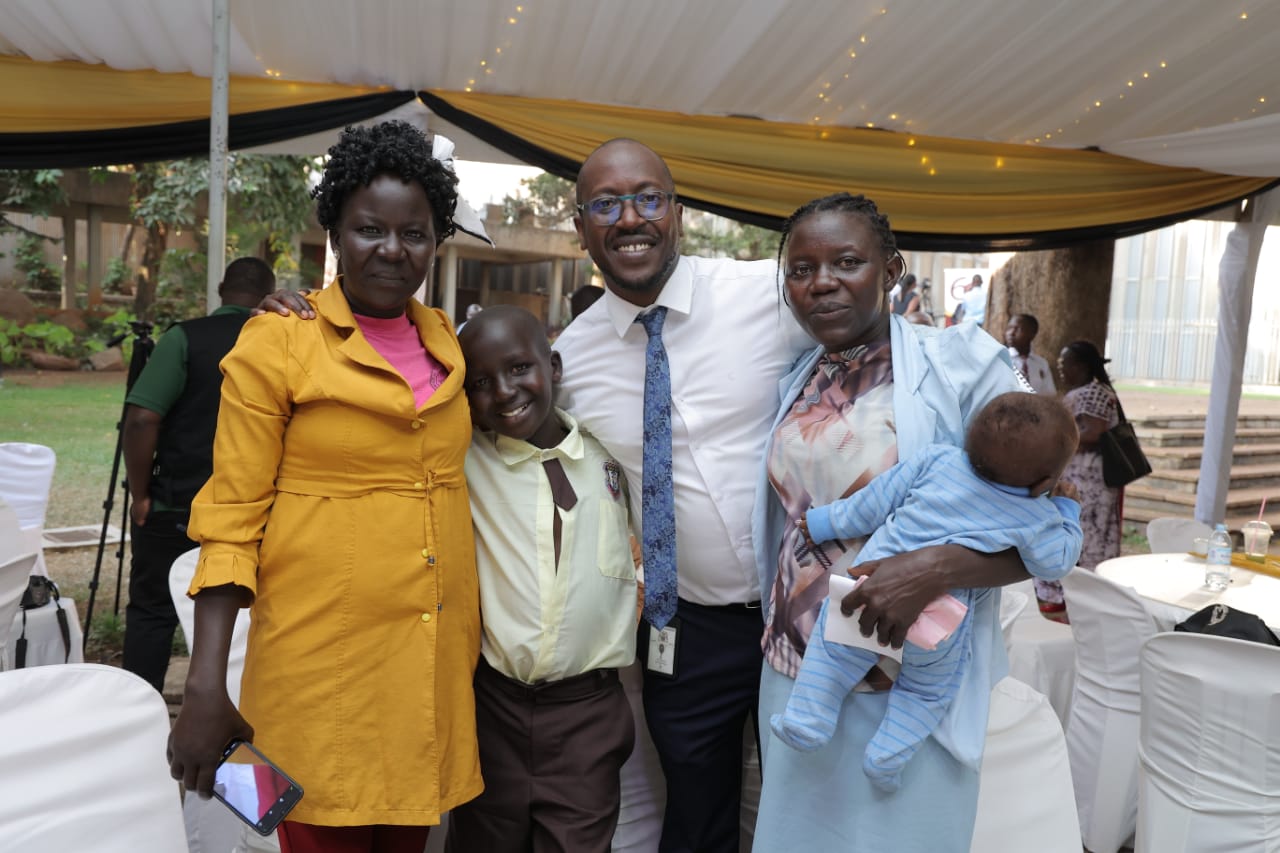
“Bank of Uganda has taught children how to handle money properly through poetry. They are now more interested in learning because they are actively involved,” she said.
Parents also welcomed the programme, saying early lessons on saving could help children develop better financial habits.
Polly Grace Akullu, a parent from West Nile, said many families do not always teach children about saving.
“When children begin saving while they are still young, they grow up understanding the value of planning for the future,” she said.
The Bank of Uganda will publish the 192 shortlisted poems in an anthology as part of its 60th anniversary celebrations, preserving the children’s creative work and providing schools with a resource that can continue promoting financial literacy.
The competition crowned Gibril Rwenzaho of Wakiso Junior School as the overall winner. He received a Shs5 million bursary, while his school was awarded Shs12 million.
First runner-up Lenity Manzi of Banyatereza Golden Jubilee Memorial School from Fort Portal received a Shs4 million bursary, while second runner-up Elnathan Tumwebaze of Peak Primary School received a Shs3 million bursary.
The winning poems will also feature in the anniversary anthology.
The poetry competition is among activities marking 60 years of the Bank of Uganda, which was established on August 15, 1966, and continues to play a role in maintaining price stability, supervising the financial sector and safeguarding the value of the Uganda Shilling.