
NARO begins multiplication of new irish potato varieties
In the latest report, the National Agricultural Research Organisation (NARO) states that a solution has been got. With the newly developed generation of potato varieties, hope has been restored and expectations are high among are raising expectations among farmers, processors, and seed producers.
Harvesting of the newly released potato seed at the National Agricultural Research Organisation (NARO) station in Kabale district. (Courtesy)
_______________ Dr Prossy Namugga, A Naro Potato Breeder, With Some Of The New Potato Variaties Being Harvested In Kabale. (Courtesy)
For farmers in Uganda’s highland Irish potato-growing areas, access to quality seed remains one of the biggest barriers to unlocking the full potential of the crop.
In the latest report, the National Agricultural Research Organisation (NARO) states that a solution has been got. With the newly developed generation of potato varieties, hope has been restored and expectations are high among are raising expectations among farmers, processors, and seed producers.
NARO on Wednesday, August 26, 2026, unveiled first seed harvest of NAROPOT 7, NAROPOT 8, NAROPOT 9 and NAROPOT 10. The four newly released Irish potato varieties officially launched by the Minister of Agriculture, Animal Industry and Fisheries, Hon. Frank Tumwebaze, during last year’s World Food Day celebrations.
NARO officials report that the varieties have attracted huge attention because they combine high yield potential, disease resistance, shorter maturity periods and processing qualities, attributes that researchers say were deliberately built into the varieties in response to the needs of farmers and the market.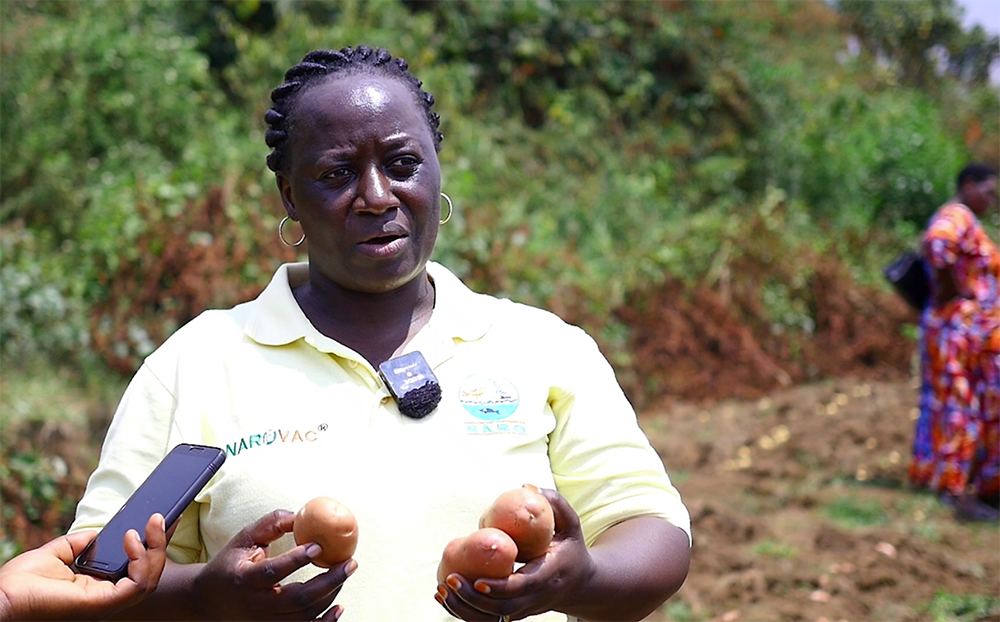
NARO potato breeder Dr Prossy Namugga says that the strength of the new varieties lies in their specific attributes and the deliberate effort to develop potatoes that respond to real market requirements.
She reveals that the breeding programme did not focus solely on yield.
"As NARO sought varieties suitable for industrial processing, samples were taken to processors, including Psalms Food Industries and Café Javas, whose feedback helped inform the selection and improvement of the varieties.
Since we were looking for varieties for industrial use, we took our samples to processors. We considered their recommendations for improvements,” Dr. Namugga explained.
A release issued by Frank Mugabi the Senior Communications Officer NARO states that the result is a portfolio of varieties designed to serve different segments of the potato value chain.
NAROPOT 7 is an early-maturing variety taking approximately 90–100 days, with a yield potential of 30.2 tonnes per hectare. Its disease resistance and relatively short maturity period give farmers an opportunity to reduce production costs and, where conditions allow, potentially grow two crops in a year.
NAROPOT 8 has a 22.1 percent dry matter content, making it particularly attractive for processing into crisps and chips.
NAROPOT 10 stands out for its exceptionally high 28.1 percent dry matter content, making it particularly suitable for industrial processing. It takes approximately 100–120 days to mature and also offers strong disease resistance.
Farmers already seeing the difference
For some farmers, the new varieties are no longer simply research products, they are already being tested in farmers’ fields. Mr Fidel Kamali, Chairperson of the Kisoro District Potato Growers Cooperative Union, says access to clean seed has been a longstanding challenge in Kisoro and across Uganda.
Kamali, according to the NARO release obtained five kilogrammes of NAROPOT 9 and planted it on his farm. He says the variety has performed remarkably well. “Along the way, I found that it is drought-resistant and tolerant to potato blight, so there was no need to spray. On average, I harvested nine to 13 tubers per plant. Its performance is better than the other varieties.
We are praying to government to support seed multiplication so that planting materials can be made available to farmers,” he said. The reduced need for fertilizer and chemical sprays, he adds, could further reduce the cost of production for farmers.
NARO reports that the enthusiasm is equally strong among Uganda’s seed producers.
Mr. Stephen Tindimuboona, Chairperson of the Uganda National Seed Potato Producers Association (UNSPPA), says seed producers are encouraged by NARO's efforts to develop varieties that respond to longstanding gaps in the market.
Tindimuboona, who has been involved in Uganda’s seed system since 1995, says producers have long searched for potato varieties that combine processing quality, drought tolerance and short dormancy.
“We pioneered farmer-based seed production, and along the way we have been searching for varieties good for processing, tolerant to drought and with short dormancy to enable planting twice in a year. These new varieties ticked off these requirements, and farmers are eager to get the seed,” he said.
With this development, NARO’s Kachwekano Zonal Agricultural Research and Development Institute (KAZARDI) in Rubanda District, is also positioning itself as a major centre for potato seed multiplication in the highlands.
The institute has been selected to host a potato hub expected to produce up to one million plantlets annually, which will be distributed through other Zonal Agricultural Research and Development Institutes serving the Mount Elgon, Rwenzori and Zombo areas.
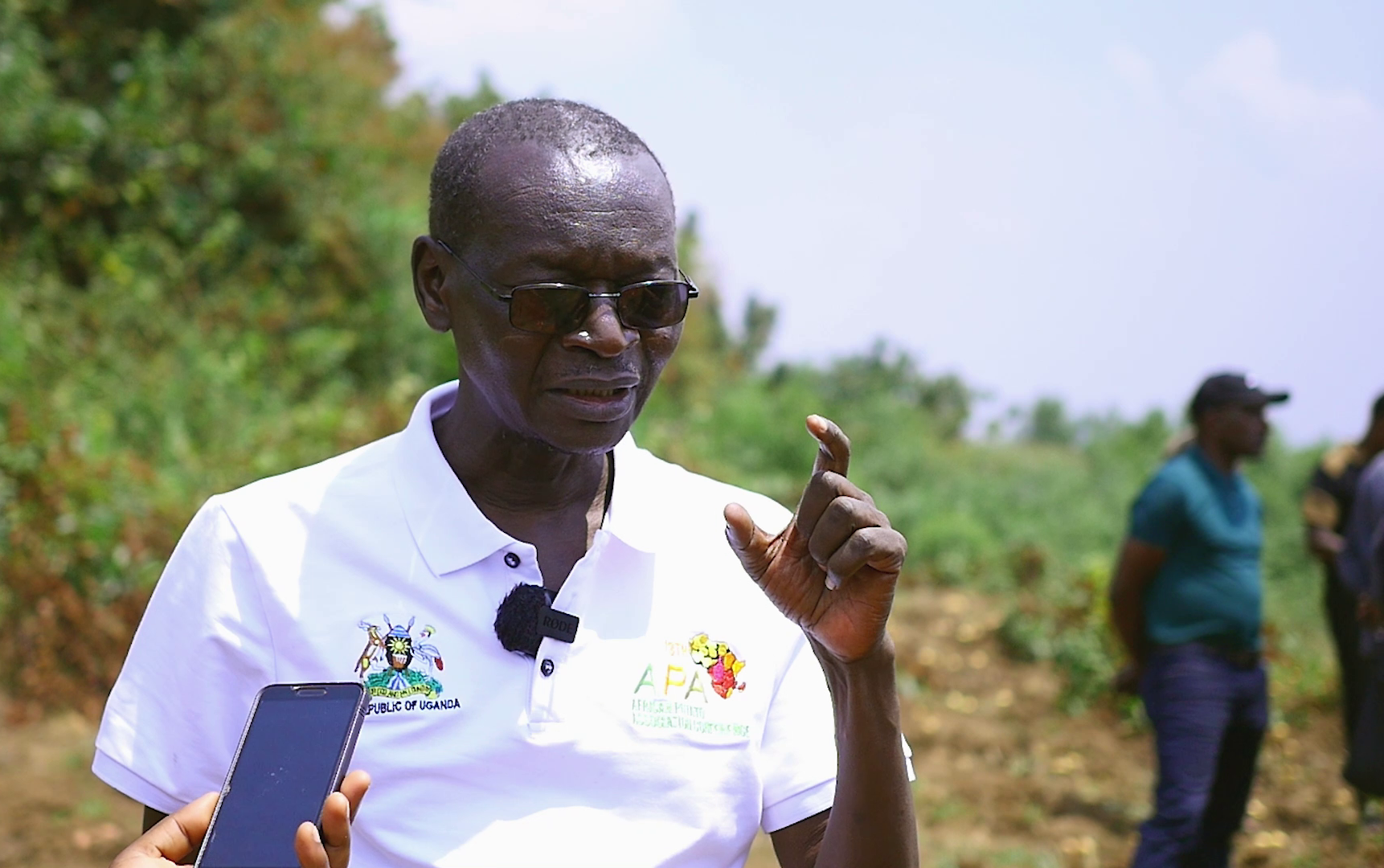
Dr Jerome Kubiriba, Director of Research at Kachwekano Agricultural Research and Development Institute, speaks about the newly released potato varieties. (Courtesy)
Dr Kubiriba Jerome, Director of Research at KAZARDI revealed that designs for the facility have been completed, with construction expected to begin this quarter.
The institute is also planning coffee screen houses for multiplication of planting materials.
Beyond research infrastructure, NARO is developing a master plan for KAZARDI that will include offices, laboratories and facilities for visiting scientists and guests, with the scenic Lake Bunyonyi providing an opportunity to strengthen agricultural tourism.
Turning Uganda’s hills into productive farmland
According to Dr Kubiriba the need for productive and climate-smart technologies is particularly urgent in Uganda’s highland areas. He says that protecting the soil must be at the centre of agricultural development in these areas.
About 80 percent of the Kigezi region is hilly, with steep slopes that are highly vulnerable to soil erosion. Similar challenges affect other highland areas, including Mount Elgon, the Rwenzori region and Zombo.
“When we talk about climate-smart agriculture, focus should be placed on these regions. Saving the soil sets a foundation for producing crops and having a very productive farming system,” he said, according to the release
The consequences of soil erosion are visible beyond the farms. Sediment washed down the hills is deposited in water bodies such as Lake Bunyonyi, contributing to siltation and the development of wetlands.
“It is a double tragedy for the farmers and the lake. We need technologies to save the hills so that farmers can practise productive agriculture while also saving the lakes,” Dr. Kubiriba said.
He notes that hills account for about 25 percent of Uganda’s land area but support approximately 40 percent of the population, making investment in these landscapes particularly important.
“We need affirmative support due to the vulnerability of people in these areas. We can make these hills productive. This will stem migration from the hills and its associated challenges while increasing productivity,” he said.
NARO is promoting technologies such as Calliandra and Napier, which can help improve soil health while providing livestock feed, supporting a more sustainable farming system.