
Luwero young mothers lead climate action through tree planting
Elizabeth Kalemera, executive director of Anthill Foundation Uganda, said the Power Her Up programme was established to support young mothers and out-of-school girls through school re-entry and skills development opportunities.
Organisers said involving young mothers in environmental activities was intended to demonstrate that adolescent mothers returning to school can become active contributors to community development rather than being viewed only as recipients of support.
LUWERO - Shovels broke the ground as young mothers, pupils, teachers, health workers and local leaders gathered in Bubuubi parish, Luwero district, carrying fruit tree seedlings in an effort to promote environmental conservation and inspire hope.
By the end of the exercise, at least 500 fruit trees had been planted across four schools and two health centres in Ziroobwe subcounty.
The initiative aimed to promote environmental conservation while supporting girls' education and the return of adolescent mothers to school.
The tree-planting activity was organised by Girls Not Brides Uganda in partnership with Anthill Foundation Uganda, Touch the Heart Uganda and Roofings Group Uganda. It brought together adolescent mothers enrolled in the school re-entry and vocational skilling programme at Central Girls Vocational School.
The initiative comes against the backdrop of challenges affecting girls' education in Luwero, where Anthill Foundation Uganda says the district continues to grapple with teenage pregnancy, child marriage and barriers that prevent some girls from continuing their education.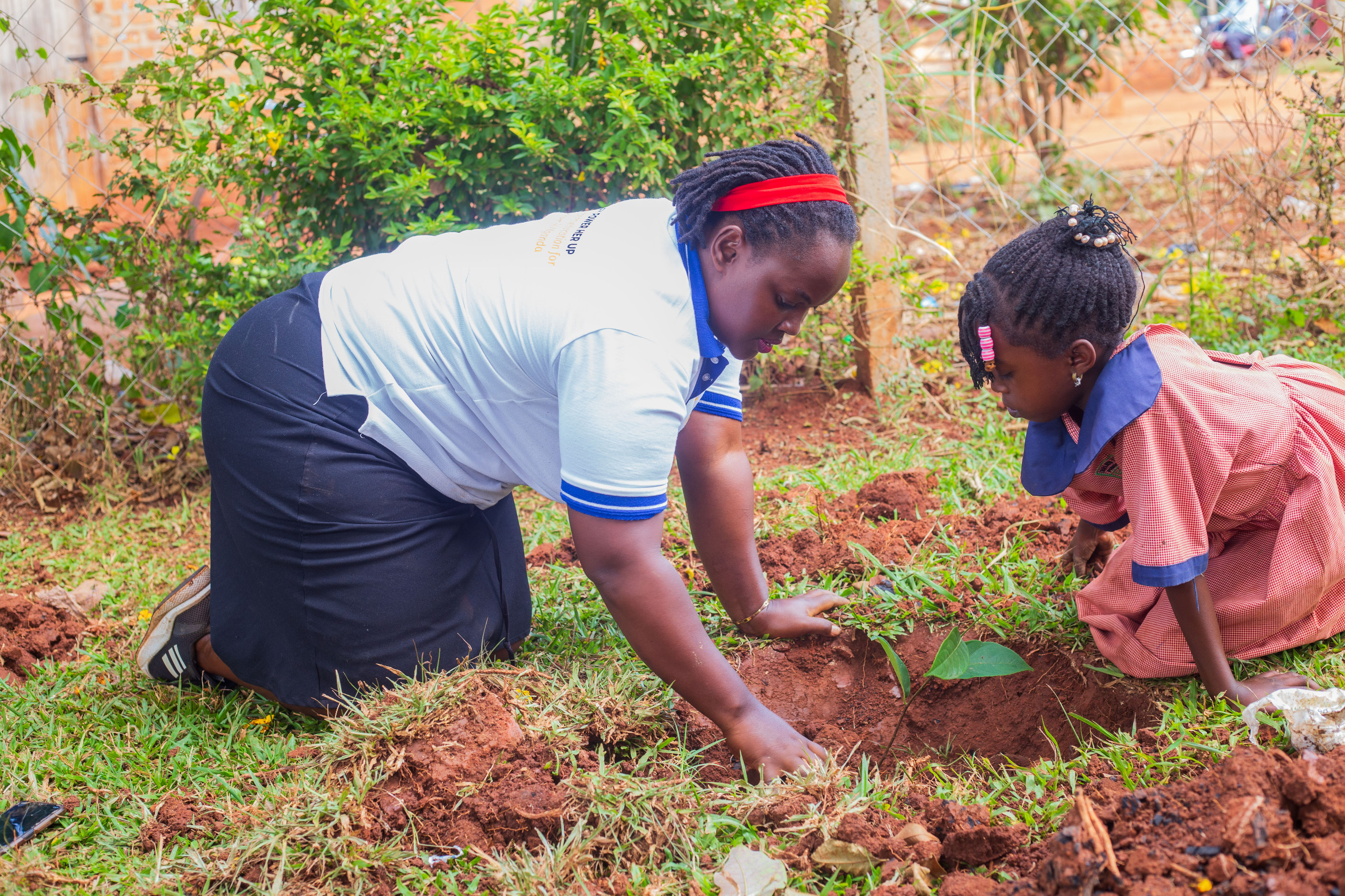
The initiative aimed to promote environmental conservation while supporting girls' education and the return of adolescent mothers to school.
Keeping girls in school
Elizabeth Kalemera, executive director of Anthill Foundation Uganda, said the Power Her Up programme was established to support young mothers and out-of-school girls through school re-entry and skills development opportunities.
“There is a huge negative cost to society if no effort is made to address and respond to issues of parenting, teenage pregnancy, child marriage and barriers to education.”
“Collective action is called for to best increase the numbers of young people that meaningfully contribute to the economy and society at large,” she said.
According to her, Anthill Foundation's Keep Girls Safe and Powered Up initiative has reached 1,258 adolescent girls and young women affected by teenage pregnancy and child marriage.
Meanwhile, Ian Kikomeko, the central region coordinator for Girls Not Brides Uganda, said the initiative aligns with efforts to protect girls' rights and create opportunities for them to pursue education.
“Our focus remains ensuring that girls are given the opportunity to grow, learn and achieve their potential. Girls should be girls, not brides,” Kikomeko said.
Creating a better future
The programme has supported the re-enrolment of 202 students at Central Girls Vocational School.
Among them is Alice Bukirwa, a member of the first cosmetology cohort, who said the tree-planting exercise represented an opportunity for young mothers to contribute to their communities while rebuilding their own futures.
“As a young mother who is also involved in agriculture, I believe initiatives like these contribute to a greener Uganda and create a better future for communities.”
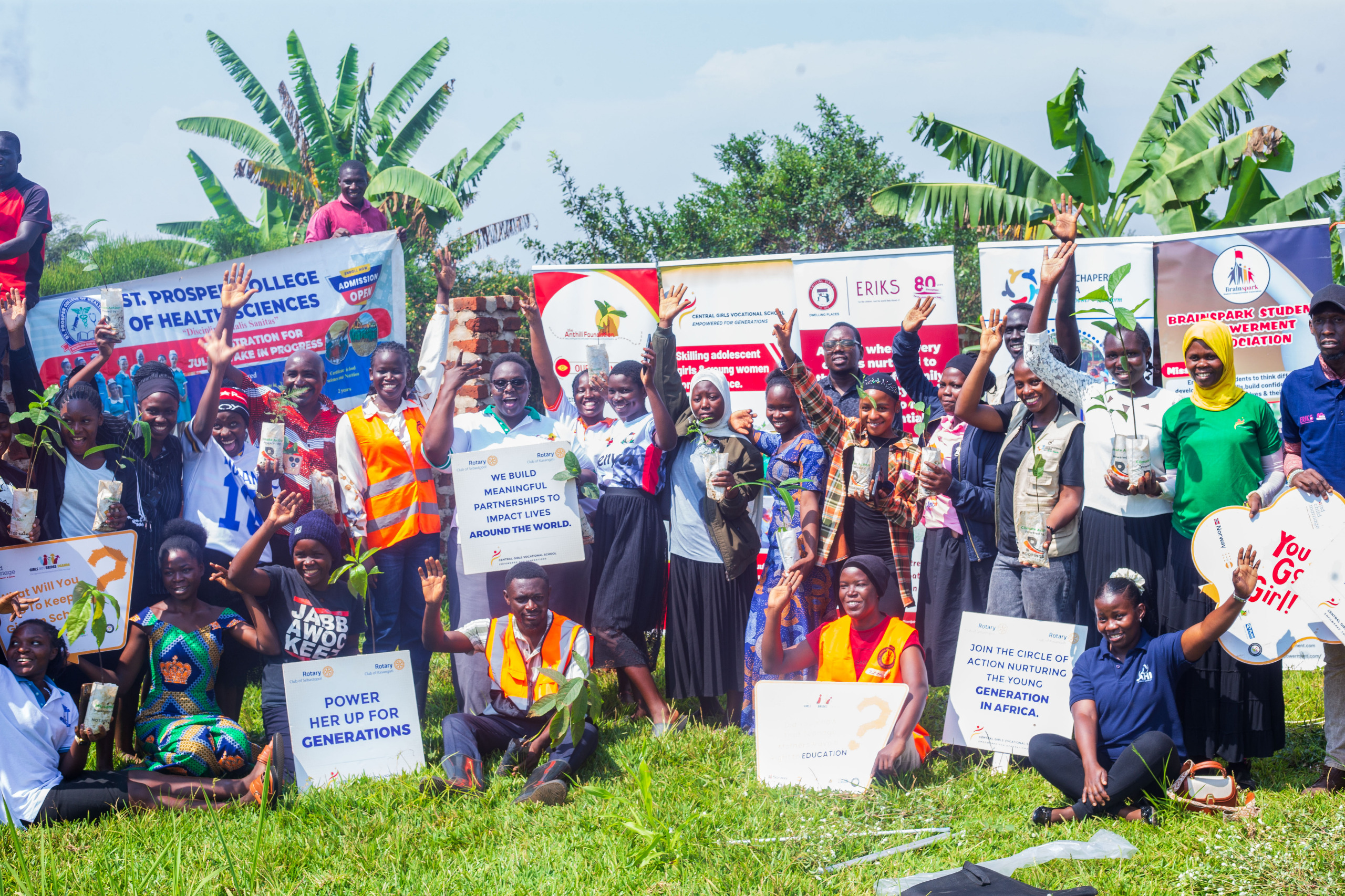
Phionah Nantumbwe, the parish chief of Bubuubi, commended the school re-entry initiative, saying young mothers who completed the programme in 2025 are now undertaking different projects to support themselves and their children.
“I call upon parents not to abandon their girls when they become pregnant, but instead support them to continue with their education and rebuild their futures,” Nantumbwe said.
Organisers said involving young mothers in environmental activities was intended to demonstrate that adolescent mothers returning to school can become active contributors to community development rather than being viewed only as recipients of support.
The tree planting exercise, held on July 17, 2026, followed discussions held during the Central Region Girls' Summit in November 2025, where government officials, educators, parents, civil society organisations and adolescent girls discussed the importance of ensuring that girls, including young mothers, have opportunities to return to school, complete their education and acquire skills for a dignified future.
Sharon Joy Kemigisha, an officer at Central Girls Vocational School, said fruit trees were intentionally selected because of their wider benefits to communities.
“We intentionally chose them because they offer additional benefits such as improving household nutrition and generating future income for schools and surrounding communities,” she said.
The trees are expected to support environmental conservation by improving tree cover, reducing soil erosion, conserving water and providing shade around schools and health facilities.
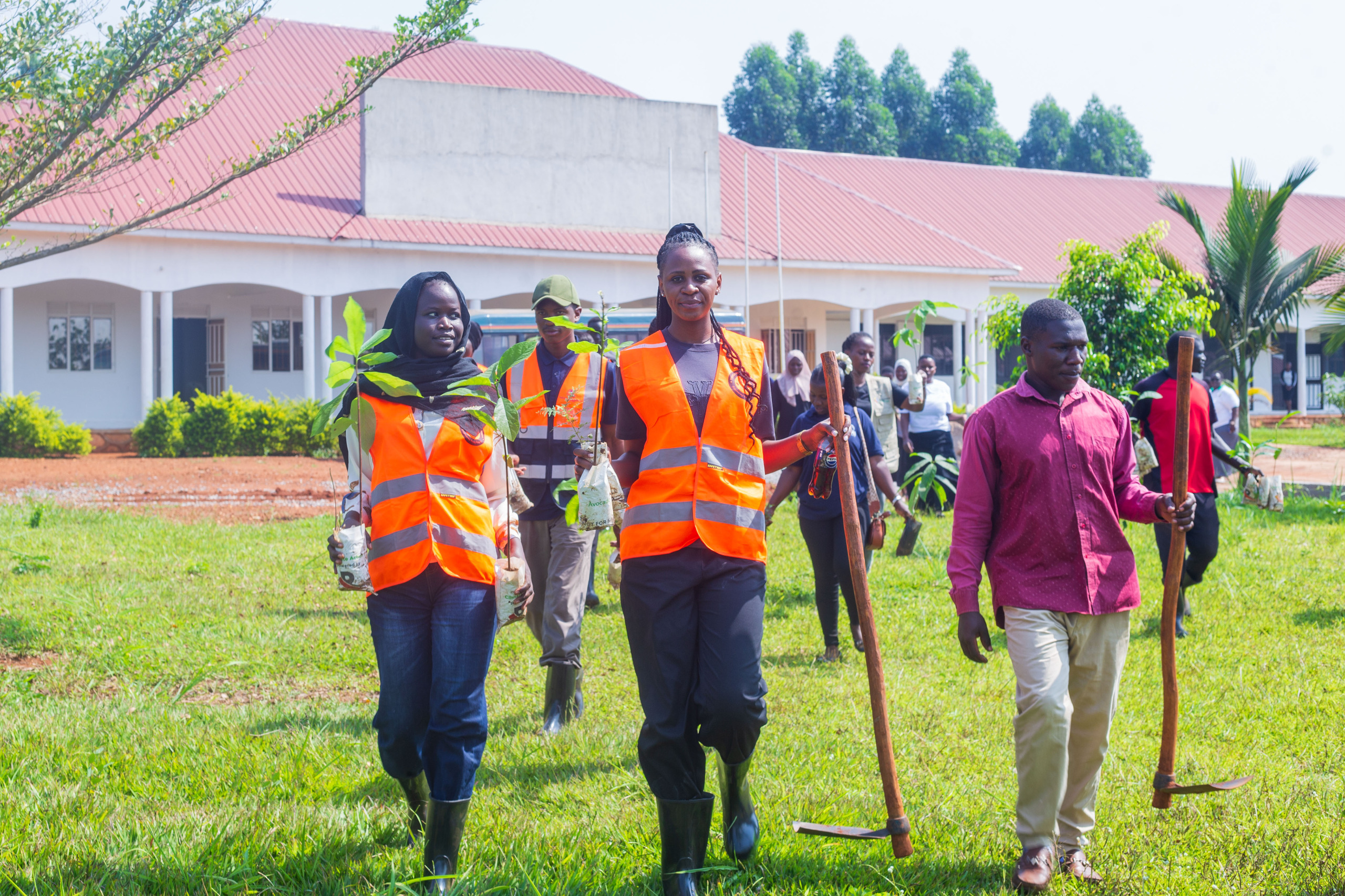
Organisers added that greener surroundings could contribute to more comfortable learning environments for learners and improved conditions for patients and health workers.
Sam Nkuubi, the LC1 chairperson of Bubuubi, urged households to play an active role in protecting the environment by maintaining tree cover and supporting initiatives that promote greener and safer communities.
“Keeping our environment green and safe should not be left to organisations alone. Every household has a role to play so that our children can grow up in a healthy environment and continue accessing education,” Nkuubi said.
The activity also comes at a time when communities across Uganda are experiencing environmental challenges, including prolonged dry seasons, unpredictable rainfall and land degradation.
Central Girls Vocational School principal Magezi Chrisostom said the institution plans to continue supporting tree-planting initiatives as part of its commitment to environmental conservation and girls' empowerment.
“The event has demonstrated that when communities invest simultaneously in girls, education and the environment, we cultivate a future that is healthier, more inclusive and sustainable for everyone.”
“We commit to this initiative annually, but community participation remains important in responding to these challenges.”